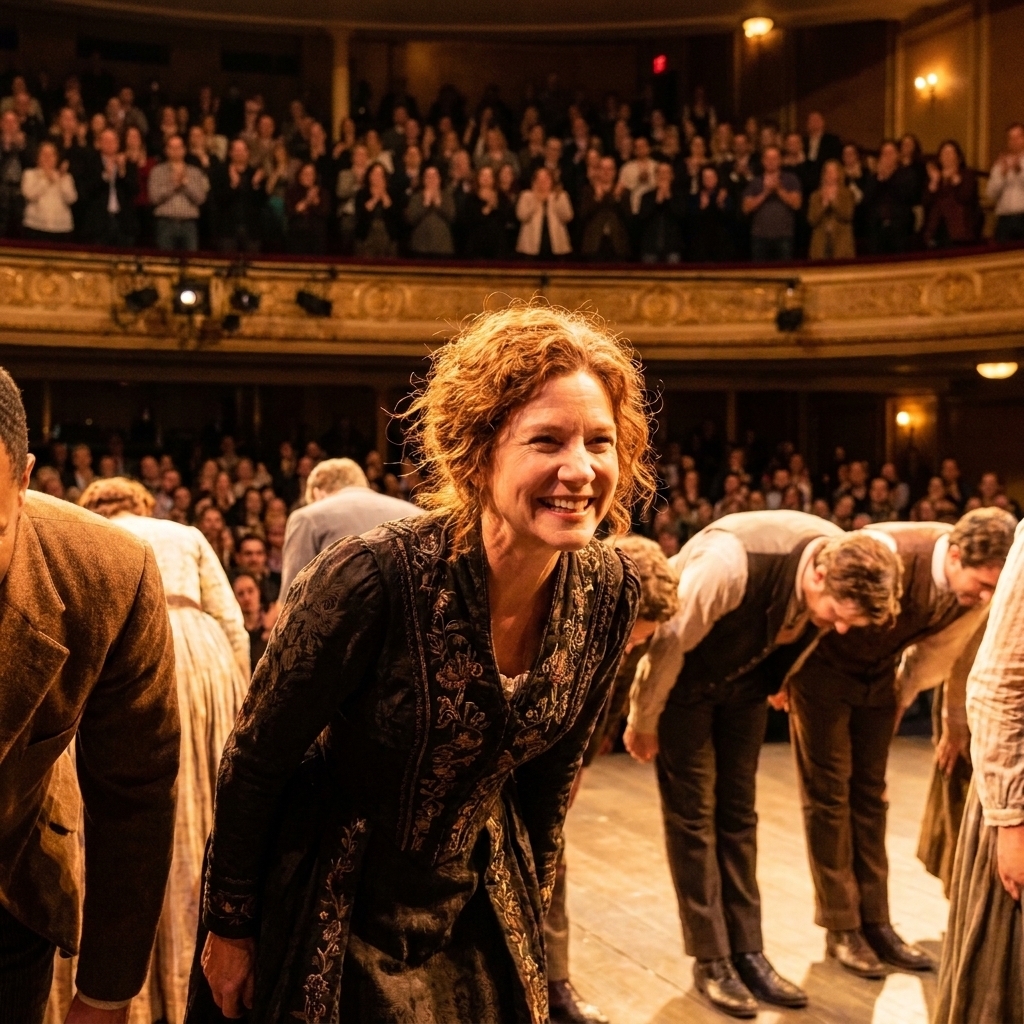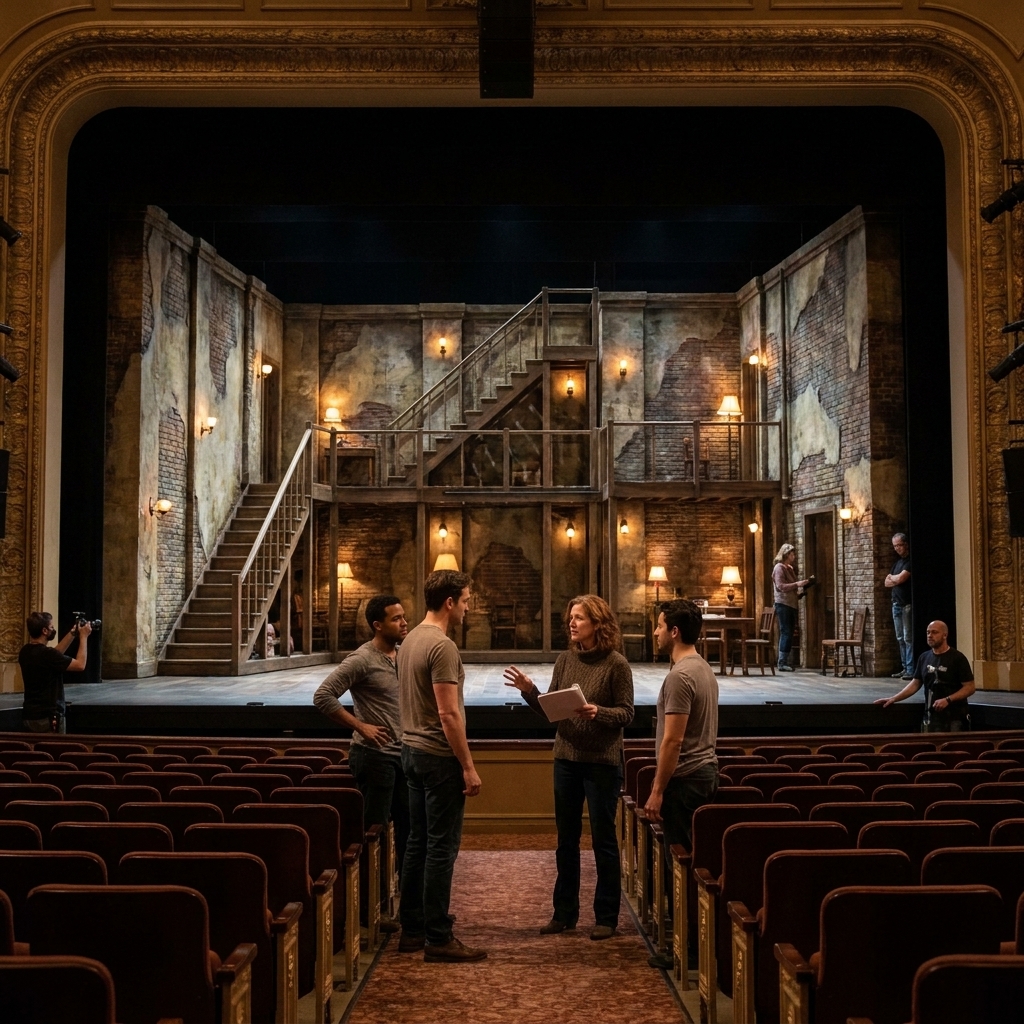
There is a particular hush that falls right before the first line. Programs stop rustling. Someone coughs as if it is their cue. The lights dim and, for a few hours, a room full of strangers agrees to feel something together.
Writing a theater review is the second half of that pact. You are still in the room, even after you leave it. Your job is to translate a live, fleeting event into language that is specific enough to be useful, vivid enough to be felt, and fair enough to be trusted.
This is my step-by-step framework for writing compelling theater criticism , whether you are filing for a publication, building a personal newsletter, or trying to get beyond “I liked it” and into what actually happened on stage.
Before you go: set yourself up to see clearly
Read the basics, not the spoilers
Do a quick pre-read: playwright, director, venue, runtime, and a one-sentence premise. If it is a classic, remind yourself of the spine of the story. If it is new work, keep your expectations loose. The goal is context, not pre-judgment.
Decide what kind of review you are writing
Not every review needs to be the final word. Knowing your format in advance keeps your evening focused.
- Consumer review: Should a reader spend their money and time?
- Critical review: How does the production work, and what is it trying to do?
- Essay review: What did this evening unlock about the world, the text, or the moment we are living in?
Bring a note strategy you can actually use in the dark
If you can jot discreetly, do it. If the venue discourages it, trust your memory but plan your recall.
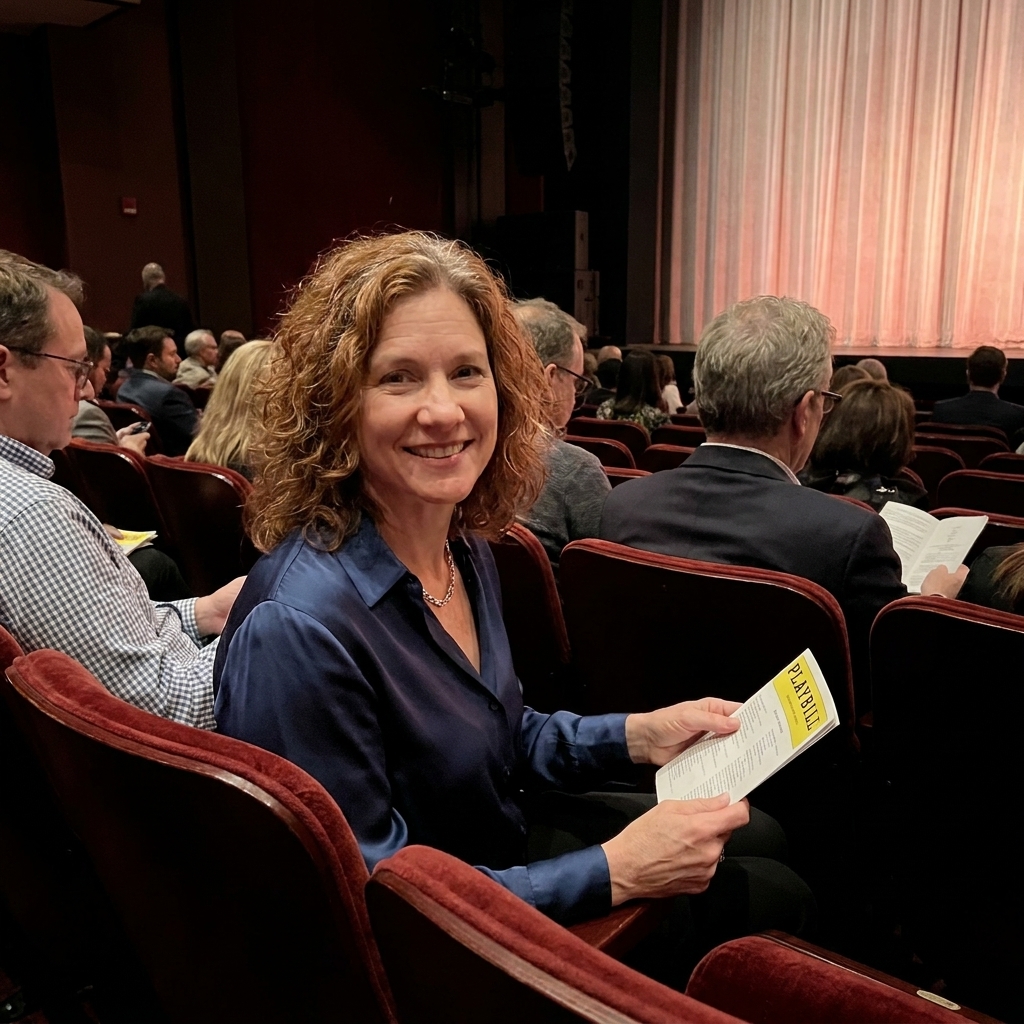
- Write down names before the lights go down: cast list highlights, designers, director.
- During the show, capture short “anchors”: a gesture, a line, a lighting shift, a sound cue.
- At intermission and immediately after curtain call, do a two-minute brain dump: what landed, what dragged, what surprised you.
A practical note on tools: a small notebook and pen are usually safer than a phone. Many houses prohibit screens, and even dim light can distract the people around you.
Think of it like stage management: you are not recording everything, you are logging what matters.
The core question: what is the show aiming for?
Every show sets an aim, even when it is messy or experimental . It might be “a sharply funny revival,” “a horror-tinged reimagining,” or “a movement-forward meditation on grief.” Your review becomes far more compelling when you evaluate the show against its own aim, not against a phantom ideal production in your head.
Ask yourself, as early as you can:
- What tone is the show courting?
- What relationship does it want with the audience: comfort, confrontation, seduction, distance?
- What is the central engine: story, language, image, music, concept, or performance?
Criticism gets sharper when it stops asking “Did I like it?” and starts asking “What is it doing, and does it do it well?”
What to watch for: a practical checklist
If you have ever left a theater knowing you felt something but not knowing why, this is your toolkit. You do not need jargon. You need specificity.
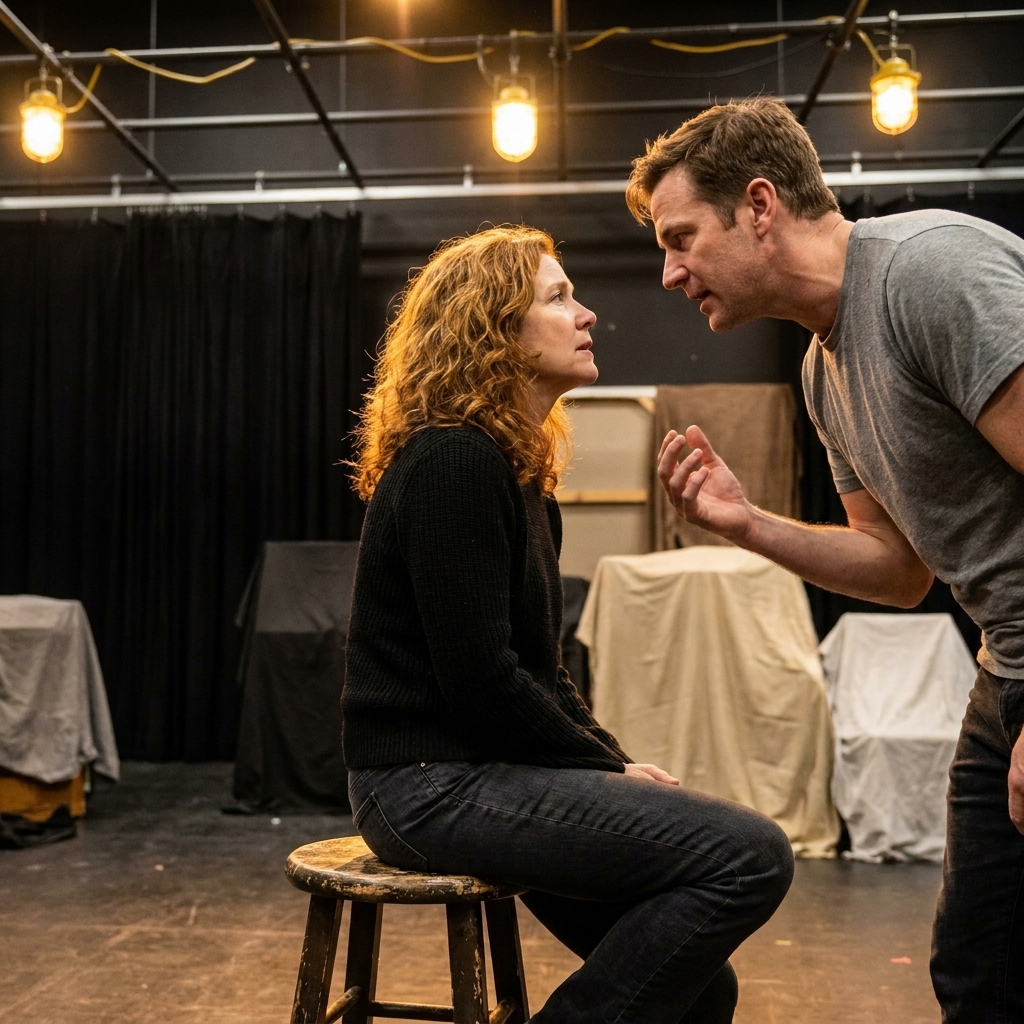
1) Acting: listen for intention, not volume
Strong acting is not just “believable.” It is active. The performer pursues something, moment to moment, and the pursuit changes them.
- Objective: What does each character want in a scene?
- Tactics: How do they try to get it? Pleading, teasing, intimidating, withdrawing?
- Transformation: Do we watch a shift, however small?
- Vocal and physical choices: Are they consistent, or intentionally evolving?
- Ensemble: Do actors truly respond to one another, or perform in parallel?
Concrete note examples that become great sentences later: “She speaks the apology like a dare,” “His stillness pulls focus the way a spotlight does,” “The laughs come a beat late because the actor is listening rather than pushing.”
2) Direction: who is steering attention?
Directing is often easiest to spot when it is absent. When it is good, the evening feels inevitable, even if it is surprising.
- Pacing: Does the production know when to let a silence breathe and when to cut?
- Stage pictures: Are key moments composed with intention?
- Transitions: Do scene changes build momentum or break it?
- Tone management: Does the show earn its shifts, especially between comedy and pain?
- Clarity: Can a first-time viewer follow the story or concept?
3) Text and dramaturgy: what is it saying beneath the plot?
You do not need a Master’s degree to talk about dramaturgy. You just need to notice structure and meaning.
- Theme: What question does the play keep returning to?
- Structure: Linear, episodic, circular, collage-like?
- Language: Naturalistic, heightened, poetic, fragmented?
- Adaptation choices: What was cut, added, relocated, or reframed?
If a script feels thin, be precise about how. Is it repetitive? Does it dodge consequences? Does it stack speeches where scenes should be?
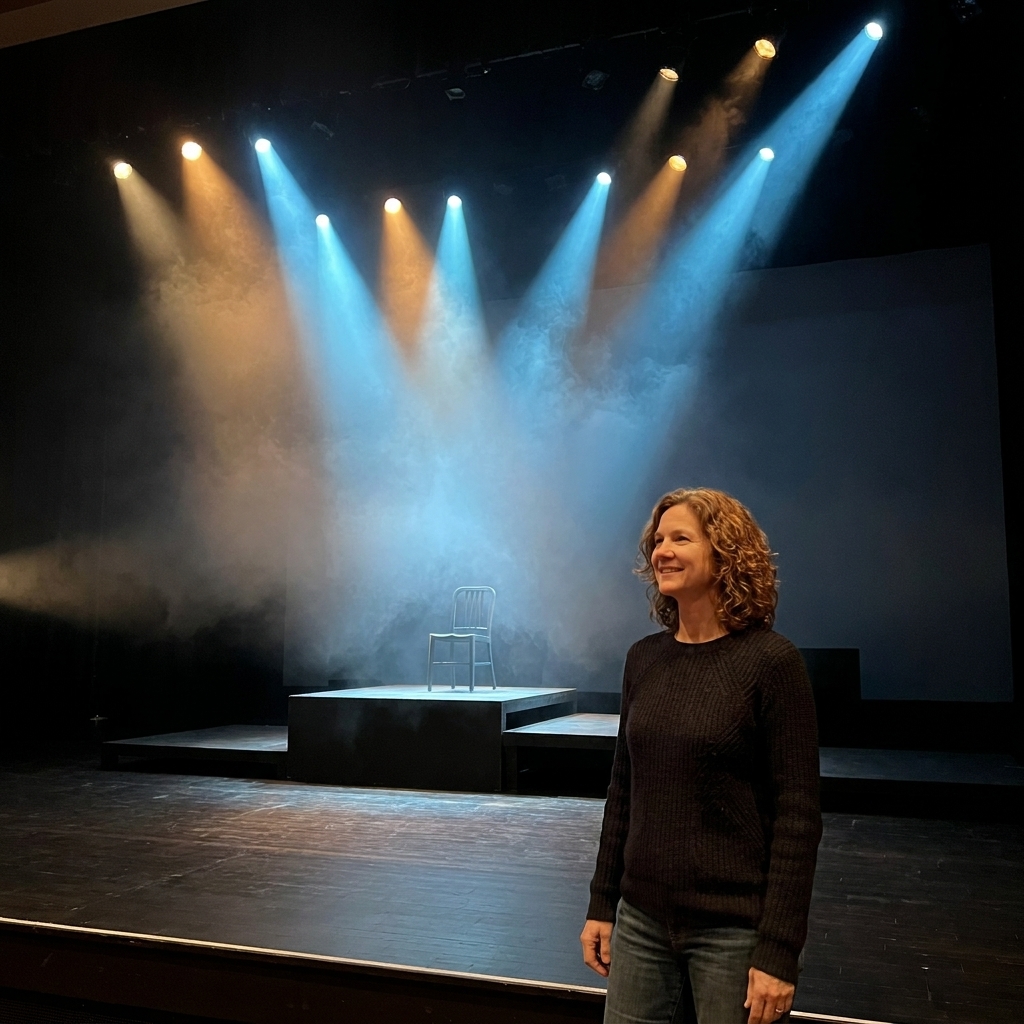
4) Design: the production’s silent storyteller
Design is not decoration. It is meaning delivered through sensation.
- Scenic design: What world are we in, and what rules does it have?
- Costumes: Do they reveal status, desire, concealment, transformation?
- Lighting: How does light sculpt mood, time, intimacy, threat?
- Sound: Is it atmospheric, narrative, psychological, percussive?
- Props: What objects carry emotional weight?
A good design note names the effect and the function: “The set’s exposed brick makes the apartment feel borrowed, not owned,” “The lighting turns confession into interrogation.”
5) Music and movement: rhythm, texture, force
If the night is carried by music or choreography, write about it like craft, not vibe.
- Composition and orchestration: What colors does the score use, and when does it withhold them?
- Lyrics and book: Do songs advance story and character, or pause them?
- Vocal direction: Are choices about blend, diction, and style clear?
- Choreography: Does movement reveal power, desire, community, conflict?
- Musical pacing: Where does the evening accelerate, breathe, or stall?
Try sentences like: “The choreography keeps breaking lines into clusters, turning romance into negotiation,” or “The score refuses a big release until the final scene, and the restraint is the point.”
Take notes like a critic: collect proof, not praise
Adjectives are dessert. Proof is dinner.
Instead of writing “amazing,” write what happened that made it amazing. Instead of “boring,” write where your attention drifted and why.
A simple note template
- Moment: What happened?
- Craft: Acting, direction, design, text, music, movement?
- Effect: What did it make you feel or understand?
- Meaning: What might the show be saying through this choice?
Example: “Midway through Act II, the chorus stops moving and just watches her. Craft: direction and ensemble work. Effect: the room feels suddenly judgmental. Meaning: community as witness, not comfort.”
Structure your review: a blueprint that reads professional
A good review is not a plot summary with opinions sprinkled on top. It is an argument, gently made, with the production as your primary source.
1) The lead: give us the night in one breath
In 2 to 4 sentences, set the scene. Name the production, venue, and what it feels like to sit in front of it. This is where your voice earns trust.
What works: “In this revival, the jokes land like thrown fruit, comic and a little dangerous.”
What to avoid: opening with a Wikipedia-style synopsis.
2) The nut graph: your thesis, plainly stated
Answer: What is this production trying to do, and how well does it succeed?
Think of it as your north star. Every paragraph after should either support, complicate, or refine that claim.
3) The body: organize by craft or by questions
You have two clean options:
- Craft-based: acting, direction, design, text, music, movement. Great for clear, teachable reviews.
- Question-based: “What does it mean to forgive here?” “Who gets to be seen?” Great for concept-heavy work.
Either way, keep returning to observed specifics: a scene, a choice, a repeated motif.
4) Context: zoom out without showing off
Context is most helpful when it clarifies stakes. Mention a playwright’s history, a genre tradition, or a prior production only if it illuminates this one.
Try: “This director has a gift for turning domestic rooms into pressure cookers, and the staging here continues that obsession.”
Skip: a list of credentials that does not change the reader’s understanding.
5) The ending: a verdict with texture
Close by returning to the experience of being in the room. Who will love this? Who might struggle with it? What lingers after the applause fades?
A great final line does not just judge. It leaves an image.
Ethics and disclosures: protect trust
Readers do not need your entire biography, but they do need to know if anything might tilt the frame.
- Tickets: If you attended on a press ticket or comp, say so if your outlet expects it.
- Relationships: If you have worked with the artists, studied with them, or are friends, disclose it or recuse yourself.
- Conflicts: If you are reviewing a competitor, a collaborator, or a company that employs you, do not pretend neutrality is a style choice. Handle it transparently.
Criticism is not just taste. It is credibility, built sentence by sentence.
Spoilers and surprises: handle with care
Some productions trade on a reveal. Others are so famous that the plot is cultural weather. Your job is to decide what serves the reader.
- If a twist is central, avoid detailing it in the opening and consider a brief spoiler warning before you get specific.
- You can often describe the effect of a reveal without naming it: what shifted in tone, staging, or audience breath.
- When in doubt, summarize premise and set-up, then focus on how the show tells the story rather than what happens next.
How to be critical without being cruel
One of the hardest lessons I learned moving between rehearsal rooms and review desks is this: theater is made by people. Tired people. Brave people. People trying to catch lightning on a schedule.
That does not mean you cannot be honest. It means you should aim your criticism at choices and outcomes, not at perceived worth.
Use this fairness checklist
- Critique the work, not the worker: “The performance feels under-directed,” not “She cannot act.”
- Name the standard: “For a farce, the pacing needs cleaner turns.”
- Acknowledge intention: “The production reaches for ambiguity, but the staging muddies the relationships.”
- Separate taste from craft: “I am not moved by sentimentality, but the final tableau is rigorously composed.”
If you find yourself writing a line that would make you dread going back into the theater as an artist, rewrite it. You can still tell the truth, just with accuracy instead of heat.
Common review mistakes (and how to fix them)
Too much plot
Fix: Summarize only what a reader needs to understand your critique. Use 2 to 5 sentences, max, unless the structure itself is your topic.
Adjectives without proof
Fix: For every big descriptor, add an example. “Electric” becomes “the actor shifts from whisper to laughter in the space of a breath, and the audience follows without being asked.”
Ignoring design
Fix: Give design at least one paragraph. Design is how theater thinks with its whole body.
Reviewing the audience you wish you had
Fix: Describe the room you were in. If the crowd was restless, say how the production met that restlessness, or failed to.
Forgetting the liveness
Fix: Note what could only happen in theater: shared laughter, audible breath, a pause that tightened the room, the risk of a live transition.
Access and house factors: note what shaped the night
Sometimes what you experienced was not only the production, but the conditions around it. If you are writing to help readers decide whether to attend, these details can matter.
- Sightlines: Was anything obstructed from your seat?
- Sound mix: Were lyrics, dialogue, or key cues hard to hear?
- Accessibility: Were captions, ASL interpretation, audio description, or sensory-friendly options available, and did they function well?
- Front-of-house impact: Late seating, loud audience behavior, or technical holds can affect reception. Describe it briefly and proportionally.
A mini rubric: score with words, not numbers
If you like a concrete framework, try this quick rubric before you start drafting. Write one sentence per category.
- Clarity: Did I understand what the show wanted from me?
- Craft: Which elements were strongest, and which were weakest?
- Cohesion: Did direction, design, and performance speak the same language?
- Risk: What did the show attempt that felt brave or distinctive?
- Resonance: What stayed with me the next morning?
Those five sentences are often the skeleton of a confident review.
Example phrases you can borrow
Sometimes the hardest part is simply finding language that is precise but not pompous. Here are a few flexible sentence stems.
- “The production’s central idea is ___, and the strongest evidence is ___.”
- “Where the staging shines is in ___, especially when ___.”
- “The performances share a common temperature: ___.”
- “The design does narrative work by ___.”
- “If the first act promises ___, the second act delivers ___.”
- “This is a show for viewers who enjoy ___, and a challenge for those who need ___.”
Use these as scaffolding, then swap in your own sensory detail. The sentence should still smell like the room you were in.
FAQ
How long should a theater review be?
Requirements vary by outlet. Many web publications run somewhere between 600 and 1,200 words, and some prefer tighter capsules in the 250 to 500 word range. If you are writing for an editor, follow the assignment. If you are writing for yourself, choose a length that lets you state a clear thesis and support it with specific moments.
Do I need to explain the whole plot?
No. Give the premise, name the setting or situation, and move on. Your reader is there for insight into the production, not a substitute for attending it.
Should I take notes during the show?
If the venue allows it and you can do it discreetly, yes, but lightly. Many theaters prohibit phones, and screen glow can pull focus. A small notebook is usually the best option. If note-taking pulls you out of the performance, prioritize watching and do a detailed write-down at intermission and immediately after.
How do I review experimental work that resists clarity?
Describe the experience and the rules you inferred. What patterns emerged? What did the piece ask you to notice? You can critique confusion, but do it specifically: was it intentional disorientation, or was the meaning simply inaccessible?
Final curtain: write like someone who was there
Theater is not a static object. It is a night. A room. A set of choices unfolding in real time. The most compelling reviews honor that liveness, and they do it with attention, proof, and a voice that feels human.
Go see the show. Notice what it is reaching for. Collect your specifics. Then write as if you are guiding a friend to the seat beside you, pointing out the places where the air changed.