There is a particular hush that falls over a theater right before the first line is spoken. In that hush, the set is already working. It is the first actor onstage, quietly telling us how to breathe, where to look, and what kind of world we have stepped into.
People sometimes talk about set design as “the backdrop,” but that is like calling a cathedral “a roof.” Masterful design is architecture and psychology, plus a kind of visual poetry that lands before you have words for it. It can make a comedy feel like it is happening in a sunlit kitchen where everyone forgives each other. It can make a tragedy feel like the walls are inching closer with every scene.
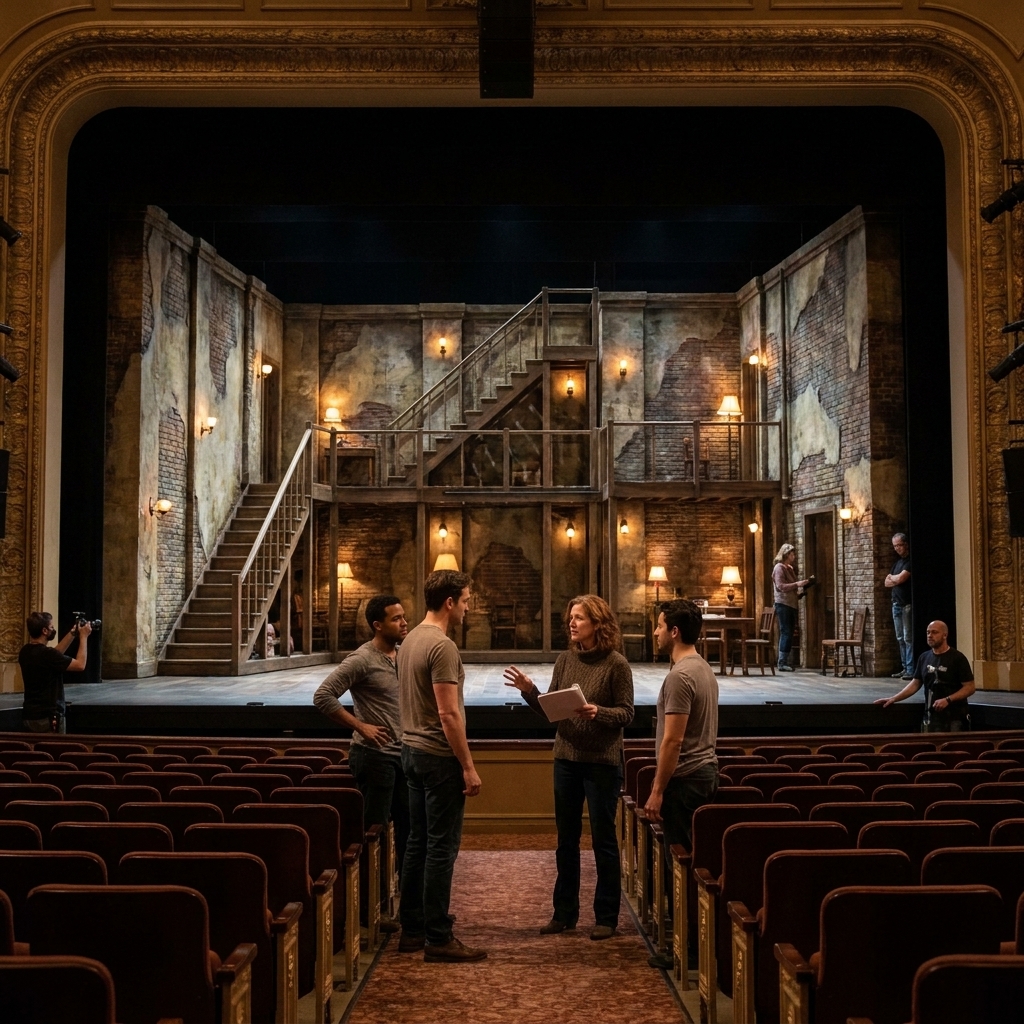
As someone who has spent equal parts of my life under gallery track lighting and backstage work lights, I love that set design lives right at the intersection of visual art and performance. It is where composition meets timing, and where materials meet meaning.
The set as a visual thesis
In the best productions, the set does not just “support” the story. It makes an argument about it.
A designer can tell you, in a single image, what the play believes about power, love, memory, class, faith, and time. You may not consciously translate it, but you will feel it. A slanted floor can make every entrance look like a struggle. A room with too much empty space can make loneliness audible. A home built with perfect symmetry can read as control, even before the family starts cracking.
Composition
Like a painter, a scenic designer composes the stage picture. Directors block action, but the set frames that action, offering sightlines and “natural” focal points. A door placed dead center is an invitation to watch who comes and goes. A window high above the stage can become a quiet shrine to longing. A staircase is practically a promise that someone will pause on it, caught between choices.
When you find yourself leaning forward, tracking a character without realizing why, chances are the set has gently guided you there.
A quick example
Imagine the same scene played two ways: two siblings arguing about whether to sell their childhood home. In one design, the living room is full, almost overfurnished, with family photos crowding the walls. The argument reads like grief with nowhere to put itself. In another, the room is nearly empty, with tape marks on the floor and a single packed box. Now the fight feels like a verdict. Same lines, same actors, different thesis.
Architecture shapes behavior
Actors do not perform in front of architecture. They perform inside it. And architecture changes how bodies move, how voices carry, and how relationships read from the audience.
Levels and power
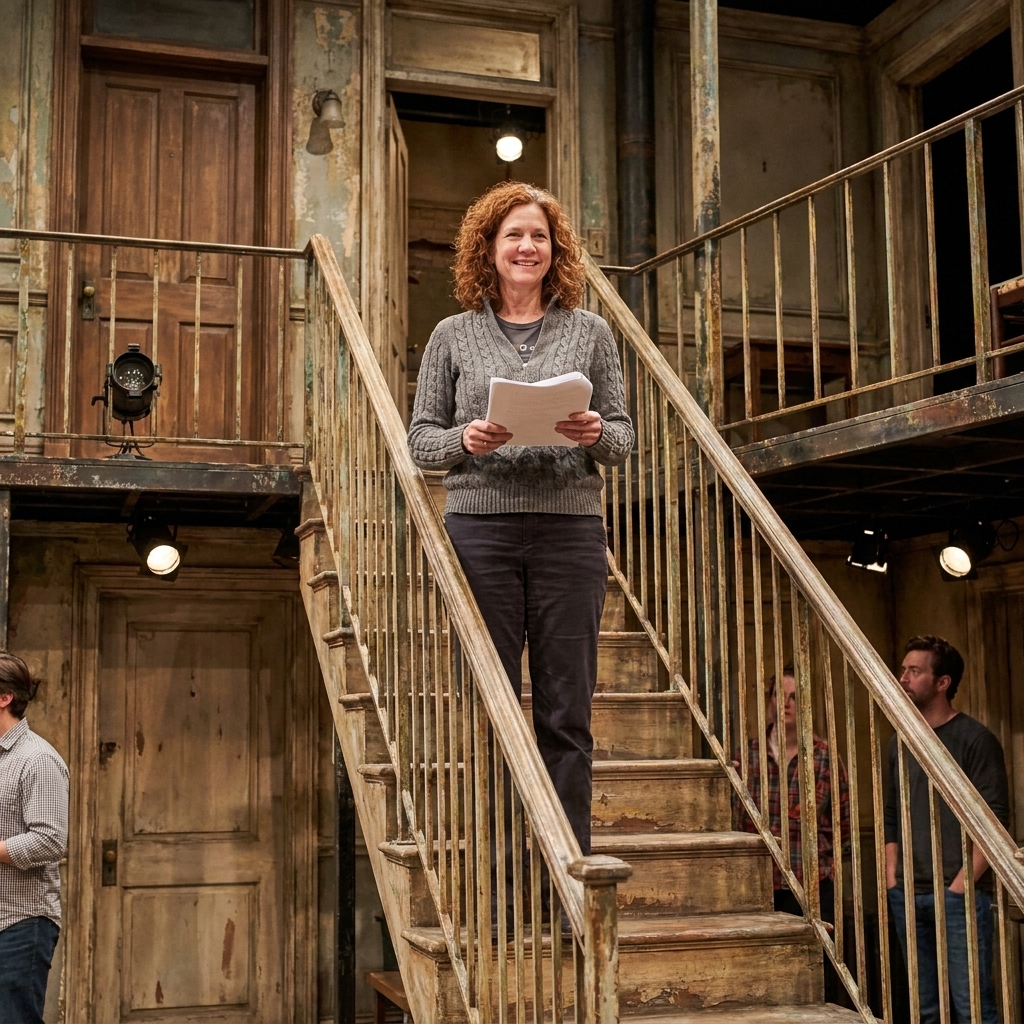
A raised platform can turn a character into a figure of authority or an object of scrutiny. A sunken area can suggest secrecy, shame, or tenderness, depending on how it is lit and used. Even something as simple as a long dining table can stage hierarchy: who sits at the head, who is pushed to the corners, who hovers behind chairs like a ghost in their own home.
- Verticality often reads as dominance, aspiration, or danger.
- Horizontal sprawl can read as comfort, excess, or emotional distance.
- Tight corridors and low ceilings can make conflict feel inevitable because there is nowhere to set it down.
Real doors and playable space
One of my favorite “you only notice it when it’s good” elements is a door that behaves like a real door. Weight, resistance, sound. A slam that shakes the air. A hesitant click that lands like punctuation. Practical architecture gives actors partners. It creates moments you cannot fake with a painted flat.
Lighting as a second skin
If set design is the body of a production, lighting is its circulation. It animates surfaces and decides what is visible, what is withheld, and what feels safe.
On many productions, lighting and scenic design are separate departments on paper. In the way the audience experiences them, though, they are inseparable. A wall painted the “wrong” shade can turn muddy under cool LEDs. A glossy floor can become a mirror that doubles a character’s isolation. A practical lamp can make a scene feel intimate in a way overhead light simply cannot.
Color temperature
Warm light can read as memory, nostalgia, domesticity. Cool light can read as interrogation, loneliness, morning-after reality. A shift from warm to cool can feel like betrayal, even if the script never says the word.
Shadow
Shadow is not an absence. It is a sculpting tool. The same set can become romantic, menacing, or absurd depending on where shadows fall and how they move. A patterned gobo across a wall can turn plaster into leaves, prison bars, or water, all without changing a single piece of scenery.
When lighting is truly aligned with design, the stage picture can change meaning between scenes even if not one chair is moved.
Props make it real
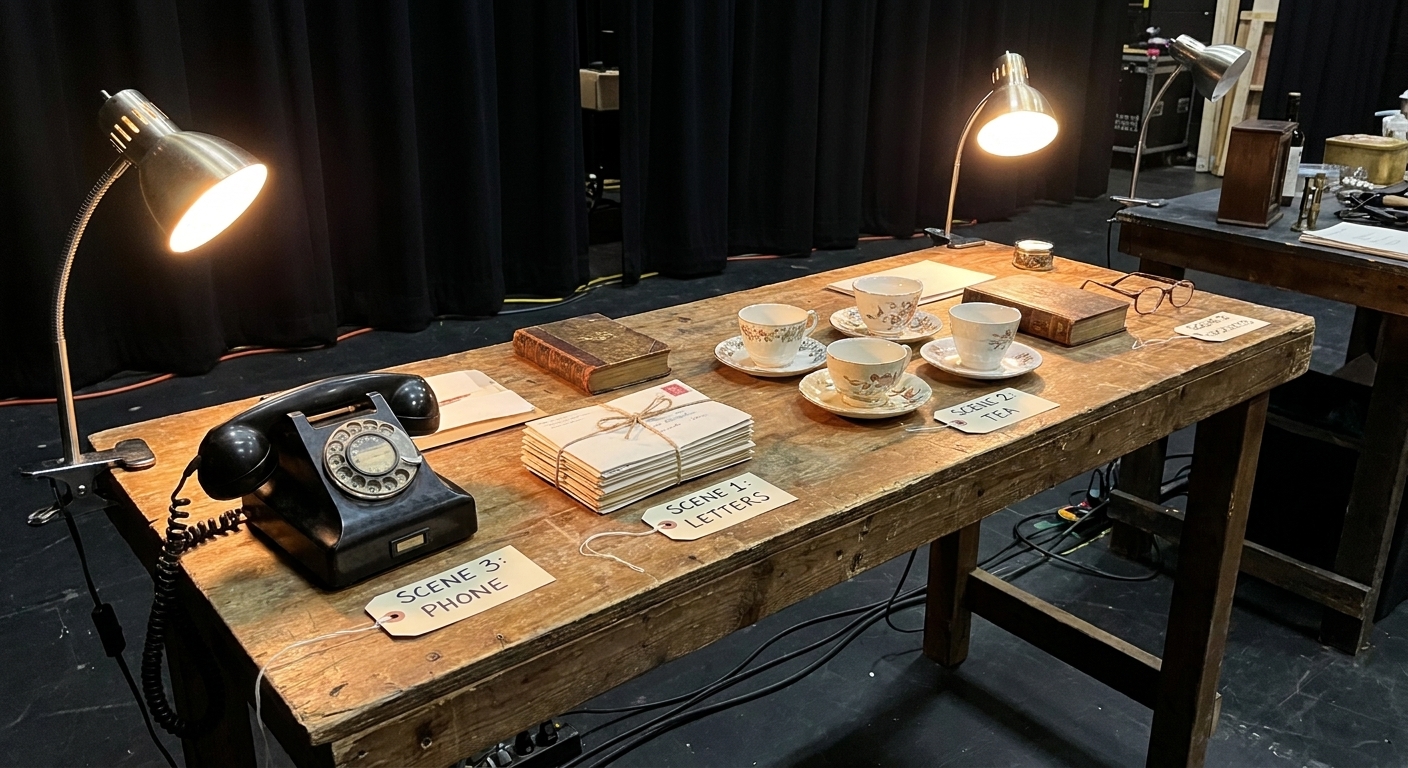
Props are often where audiences fall in love. Not because they are flashy, but because they are intimate. A prop is something a character touches, relies on, breaks, polishes, hides, or clings to. It carries the closeness of real life.
In visual art terms, props are the still-life objects that tell you who lives here. A chipped mug that returns every morning. A letter opener kept too carefully. A suitcase that never gets unpacked. These choices are design, but they are also storytelling.
Hero and quiet props
- Hero props are the ones the plot leans on, like a gun, a ring, a photograph, a contract. They must be readable and reliable, night after night.
- Quiet props are the ones that deepen character: a half-used hand cream, a stack of unpaid bills, a child’s drawing taped crookedly to the fridge.
The miracle is when both kinds feel inevitable. When the hero prop belongs to the room, not to “the moment.”
Texture and materials
One of the great secrets of set design is that realism is not always the goal. Sometimes a production wants naturalism down to the last hinge. Often, though, the goal is believability at theatrical distance. A painted brick wall might be more legible than actual brick. A slightly exaggerated wood grain might read as warmer from the back row.
What matters is whether the materials tell the truth of the play.
Patina
Patina is storytelling you can see. A scuffed threshold suggests years of arrivals and departures. Faded wallpaper suggests time passing without repair. A pristine, untouched room can suggest wealth, denial, or a kind of emotional vacancy. Even in minimalist sets, designers often build in small signs of use because we tend to trust surfaces that have lived a little.
Sound lives in the build
Design is also acoustic. The clink of a glass on a wooden table. The dull thud of shoes on carpet. The squeak of a stair. Those sounds are cues that tell the audience what the world is made of. A production that understands this does not just look designed, it feels designed.
Changes and reveals
There is a reason some scene changes make audiences gasp. They are tiny performances, built from mechanics, rhythm, and reveal.
Rotating stages, flying pieces, wagons, and tracks are the obvious tools, but the deeper artistry is in pacing. A fast change can feel like panic. A slow, deliberate reset can feel like grief. Sometimes a designer chooses to show the labor of transformation, letting crew move elements in view so the play’s themes echo in the very act of building and dismantling.
In a gallery, you can stand as long as you like in front of one painting. In theater, the room itself can transform while you sit there, eyes open, caught in the spell of “how did they do that?”
Constraints matter
Set design is imagination with a hard hat on. Every choice lives inside real constraints: budgets, build hours, safety, storage, load-in time, and the physics of what can travel if the production tours. A gorgeous staircase is also a fall risk that needs rails, tread, and rehearsal. A reflective floor is also a glare problem. A wall that looks “solid” still has to fly, roll, or strike in minutes.
This is part of why I admire the craft. Great sets are not only beautiful. They are buildable, repeatable, and safe night after night.
When it all fuses
My favorite productions are the ones where you cannot separate acting from environment. The set is not “around” the performance. It is inside the performance.
You see it when an actor uses a banister like a lifeline, or when a doorway becomes a boundary they cannot cross, or when a single chair placement turns a conversation into a standoff. You feel it when the light changes and suddenly the same room looks like a memory, not a present. You recognize it when a prop is handled with the muscle memory of a real habit.
That is the alchemy: visual art becomes time-based. Painting becomes breath. Architecture becomes emotional weather.
I have watched a rehearsal where one small adjustment, a chair moved six inches so it no longer “offered” comfort, changed the entire temperature of a scene. The actors did not become different. The room did.
How to watch
If you want to leave your next show with a deeper appreciation for the designers, here are a few gentle things to notice, no jargon required:
- Where does your eye go first? Ask yourself what the set is quietly prioritizing.
- How do actors enter and exit? Doors, stairs, and thresholds are almost always meaningful.
- What looks “used”? Wear and tear often reveals backstory faster than dialogue.
- What changes with light? Notice how surfaces behave when the color temperature shifts.
- What can be touched? Practical elements often create the most truthful moments.
- Who can see what? Sightlines, masking, and height are design decisions too. Sometimes a “missing” piece is missing so the back row can read the scene.
And if you are the kind of person who likes to linger afterward, take one extra minute to look at the stage when the curtain call ends. Sometimes, with the applause still in the air, you can finally see the set as its own artwork.
FAQ
What is the difference between set design and scenic design?
In everyday conversation, they are often used interchangeably. “Scenic design” can sound a bit broader, covering the full stage environment, while “set design” is commonly how audiences refer to what they see as the physical world of the play. In practice, the job is deeply collaborative with lighting, costumes, sound, stage management, and direction.
How early is set design decided?
Usually very early. Designers work from the script and the director’s concept, then move through sketches, models, and technical plans long before rehearsal is finished. Strong designs stay flexible enough to respond to discoveries in rehearsal.
Why do some sets look minimal?
Minimal does not mean simple. A sparse set can sharpen focus, speed up transitions, and create a more symbolic world. The key question is whether the choices feel intentional and emotionally specific, not whether there is “a lot” onstage.
What makes a set feel expensive?
Oddly, it is not always scale. It is usually coherence: materials that read as believable, details that hold up under light, smooth transitions, and practical elements that actors can truly use. A well-aged wall and a properly weighted door can do more than a mountain of decorative clutter.
Can you define a few common terms?
Practical: a working element, like a real lamp that turns on, or a faucet that runs. Flat: a lightweight framed panel used to create walls. Wagon: a rolling platform that carries scenery on and offstage. Gobo: a template placed in a lighting instrument to project a pattern, like leaves or windowpanes.