Shakespeare has a reputation for being “good for you,” like kale or cold plunges. But when it works, it is not homework. It is theater: breath, bodies, jokes that land a little sideways (subversive, delayed, and somehow sharper for it), and sudden emotional trapdoors you did not see coming.
The trick is not to become fluent in Early Modern English overnight. It is to learn a few reliable habits that keep you oriented while the play moves at full speed. Consider this your front row toolkit: how to hear the language, how to read the stage, and how to stay engaged even when a sentence knots itself into something elaborate.

Start with the big question: what does this scene want?
Before you chase individual words, ask the simplest, most actor-friendly question in the room: what is each person trying to get?
Shakespeare’s characters do not speak beautifully because they are showing off. They speak beautifully because they are in pursuit. They want love, power, forgiveness, an alibi, a delay, a kiss, a crown, a clean exit.
- Pick one verb per character per scene. Seduce. Humiliate. Stall. Recruit. Confess. Prove.
- Notice when the verb changes. A shift from “charm” to “threaten” is often the real plot point.
- Track who has leverage. In Shakespeare, power can change hands mid-sentence. That is the sport.
This is one of the fastest ways to keep your footing, even if you missed a metaphor or two. Desire is the spine. Language is the costume.
How to decode Early Modern English on the fly
If you have ever watched Shakespeare and thought, “I understand individual words but not the sentence,” you are not alone. Early Modern English is close enough to feel familiar and just different enough to trip you.
Use the “subject, verb, object” rescue method
When a line gets ornate, silently reduce it to its skeleton:
- Who is speaking about whom?
- What action is happening?
- What is the emotional temperature: teasing, pleading, boasting, grieving?
Example approach (not a quiz, just a habit): when Juliet says, “Wherefore art thou Romeo?” she is not asking where he is standing. She is asking why he has to be Romeo, the name attached to the family she is supposed to hate. Skeleton: “Why do you have to be you?” Once you have that, the poetry becomes garnish you can enjoy, not a lock you must pick.
Listen for signposts the actors cannot hide
Shakespeare is generous with internal stage directions baked into the language. Train your ear for these cues:
- Names and titles: “my lord,” “sweet friend,” “madam” often signal a shift in status or strategy.
- Questions: a question is usually an action, not just a request for information.
- Negations: “not,” “never,” “nor” are where arguments pivot.
- Commands: “go,” “mark,” “look,” “hear me” are the play grabbing you by the collar.
Keep a tiny glossary in your pocket
You do not need a dictionary. You need maybe fifteen repeat offenders that show up across plays.
- wherefore: why (not where)
- anon: soon, right away
- mark: listen, pay attention
- pray you: please
- nay: no (often no, and let me correct you)
- fie: shame on that
- wit: intelligence, cleverness
- cousin: a broad term for relative or close relation
- gentle: noble, well-bred, also kind depending on context
- presently: soon, often very soon
If you learn nothing else, learn wherefore. It saves entire scenes.
Let the verse do some of the work
Much of Shakespeare is written in iambic pentameter, a heartbeat-like rhythm. You do not need to scan it like a scholar. Just notice this: the rhythm often tells you what matters.
- When the rhythm breaks, something may be emotionally off balance, interrupted, or emphasized.
- When characters switch into prose, it can signal comedy, intimacy, scheming, practicality, or a shift in social footing. It is not a single code, but it is a clue.
- End-stopped lines (a sentence ends at the end of the line) can feel controlled or resolved.
- Run-on lines can feel urgent, breathless, in pursuit.
Stage directions: learn to see the choreography
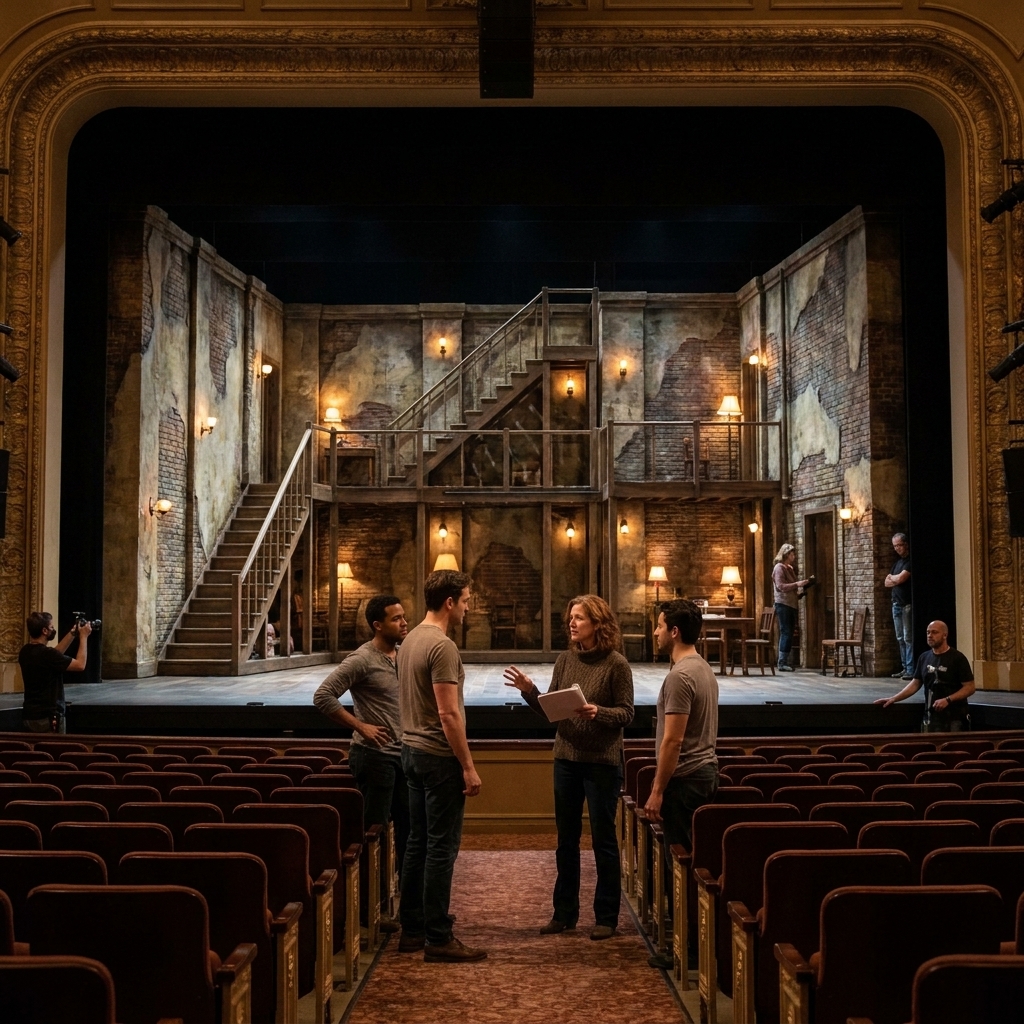
Printed texts can look spare, especially in some early editions, and stage directions can vary by play and by text. But overall, Shakespeare’s directions work like a minimalist score. They assume actors, space, and a live audience completing the circuit.
Translate the classics
- Enter: a new force arrives. Someone’s plan is about to be interrupted or assisted.
- Exit / Exeunt: the air changes. Watch who is left behind and what can now be said safely.
- Aside: private thought spoken aloud. Treat it like a confession offered directly to you.
- They fight: not just action, but a negotiation of status. Who initiates? Who retreats?
- Flourish / Trumpets: public power. Ceremony. Someone wants the room to know who they are.
Watch the doors, the letters, the rings
Shakespeare loves objects that move the plot . In modern productions these can be phones, keys, guns, a USB drive, a velvet pouch. The point is the same: a prop becomes a promise.
- Letters often equal misinformation, delayed truth, or fate with handwriting.
- Rings and tokens often equal identity, loyalty, or a trap.
- Disguises equal social permission: someone can say what they could not otherwise say.

Stay emotionally connected when you miss a line
Here is the quiet truth every theater professional knows: in live performance, everyone misses something. The winning move is to miss it without panic.
Follow the energy, not the sentence
If you lose the thread, do not rewind in your head. Come back to what is physically obvious:
- Who is advancing and who is retreating?
- Who is suddenly still?
- Who is trying to make the other person laugh?
- Who cannot meet someone’s eyes?
Shakespeare is written for bodies in space. The actor’s posture often translates the line faster than your brain can.
Use laughter and silence as subtitles
Audience response is a living guide. If people laugh, ask yourself: was it a pun, a surprise insult, a social reversal, a naughty reference, or a character exposing their own vanity? If the room goes quiet, notice what tightened.
Catch the repetition
Shakespeare repeats key words like a composer returning to a theme. If you hear the same word echoed across a scene, it is usually important.
- In tragedies: words like “night,” “blood,” “nothing,” “time,” “honor” often gather weight.
- In comedies: words like “love,” “true,” “fair,” “fool,” “dream” often become playful weapons.
Before you go: a 20-minute prep that helps
You do not need to read the entire play beforehand. In fact, many people enjoy Shakespeare more when the theater stays surprising. But a small amount of prep can reduce friction.
Do this, not that
- Do: read a one-page synopsis, then stop.
- Do: learn the main relationships (who is married to whom, who hates whom, who owes whom).
- Do: listen to 5 minutes of the play on audio to acclimate your ear.
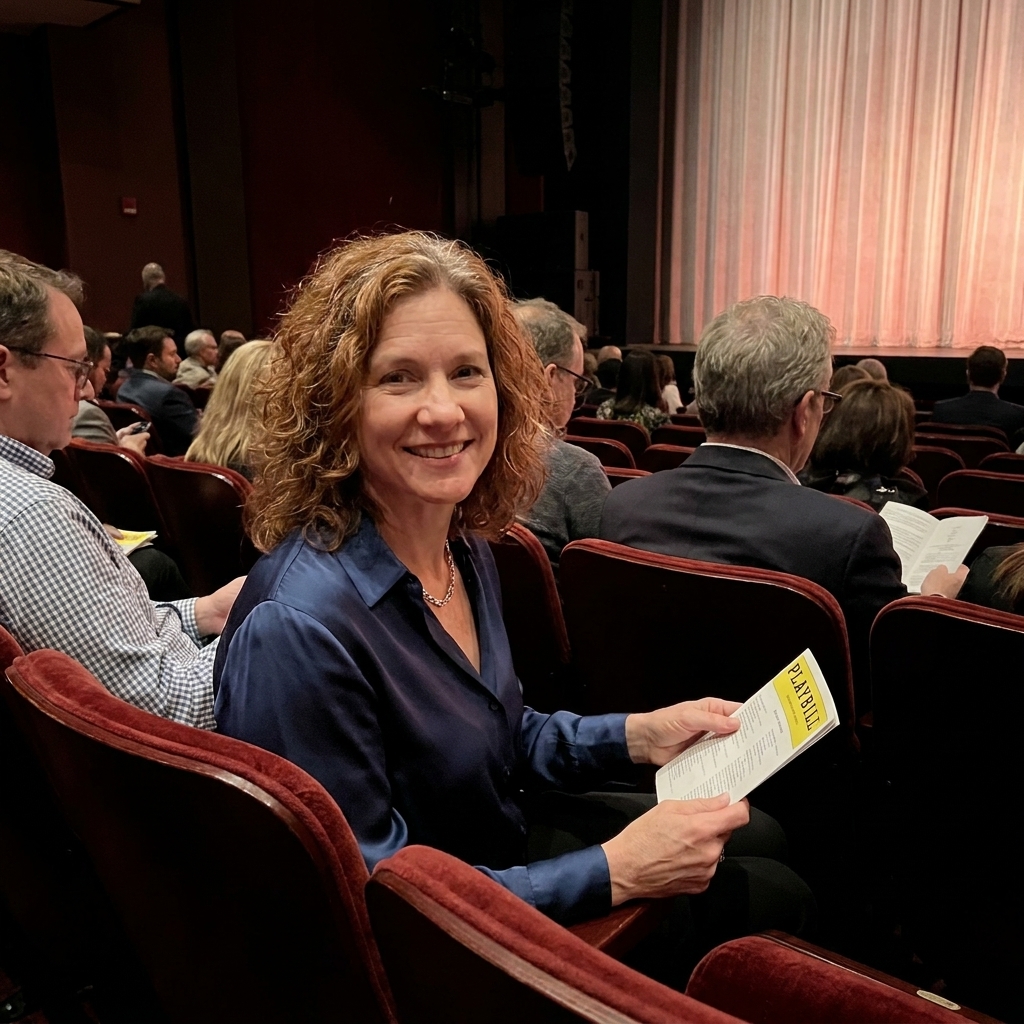
- Do: skim the cast list in the program before curtain, and revisit it at intermission. It is the lowest-effort clarity boost.
- Skip: deep annotation on a first encounter. Save it for your second date with the play.
Know what kind of play you are walking into
Shakespeare’s genres are less like neat shelves and more like weather patterns, but it still helps to know the forecast.
- Comedy: not “nonstop jokes,” but a world where identity slips and social order gets mischievously rearranged.
- Tragedy: a character’s strength becomes their undoing, and the consequences are not abstract.
- History: politics as theater, theater as propaganda, and people trying to survive proximity to power.
- Romance: late plays with shipwreck energy, forgiveness arcs, and a sense of time doing something strange.
In the seat: watch like it was written for you
A few practical choices can turn “I hope I keep up” into “I cannot believe that line just hit me.”
Choose your anchor
Pick one thing to track for the whole performance:
- A relationship (mentor and mentee, spouses, rivals, friends turning).
- An image (storms, animals, sickness, money).
- A moral question (what does ambition cost, what counts as loyalty, who gets believed).
This gives your attention a home base. When the language gets dense, you return to your anchor and keep moving.
Trust the clown, fear the flatterer
This is one of my favorite Shakespeare shortcuts. The “fool” character often tells the truth with a wink, and the character who flatters too smoothly is usually selling you something.
Let modern staging translate
Updated costumes, contemporary settings, even radical cuts are not automatically “dumbing it down.” They are dramaturgical choices, and the question is whether they clarify the play’s engine.
When you see a modern production choice, ask: what problem is this solving? Sometimes it solves pace. Sometimes it solves clarity. Sometimes it sharpens the politics. Sometimes it simply makes the comedy more legible to a room full of people with notifications, a 21st-century attention span, and real life on their minds.

Common sticking points, gently unstuck
“I can’t tell who is who.”
Give yourself permission to simplify. In the moment, you only need: protagonist, antagonist, love interest, confidant, chaos agent. Most productions help with costume or staging. If you are reading at home, write a tiny cast list on a sticky note with one adjective each. That is enough.
“The jokes go over my head.”
Some will, and that is fine. Shakespeare’s humor often relies on puns, double meanings, and cultural references. But physical comedy, social humiliation, and romantic miscommunication still land. If the actors commit, your body will understand before your brain catches up.
“It’s all talk.”
In Shakespeare, talk is action. A monologue is not a pause. It is a character alone with their appetite, convincing themselves to do something they already want to do. Listen for the turn: where thought becomes decision.
“Thou and you confuse me.”
Good news: you can get 80 percent of the benefit with one simple idea. “You” is usually formal or distant. “Thou” is usually intimate, insulting, or emotionally direct. Characters can switch between them as a power move. If someone drops from “you” to “thou,” pay attention. The temperature just changed.
“The histories are a blur of Henrys.”
They can be, even for people who love them. Your survival tip: track titles more than first names (King, Prince, Duke), and listen for who is “in favor” versus “out.” If you catch nothing else, catch the alliances. Histories are relationship chess with crowns on top.
Try this at home: read a scene without fear
If you want to build confidence before seeing a play live, take one short scene and do this once. It is oddly calming.
- Read the scene quickly for the vibe. No stopping.
- Circle unknown words, but only look up the ones that repeat or feel crucial.
- Underline verbs that signal action (swear, promise, accuse, forgive, betray).
- Write a one-sentence summary in plain speech.
- Read it aloud, even if you feel silly. Shakespeare is built for mouths, not margins.
You will feel the difference immediately. The language stops being a wall and starts being weather.
FAQ
Do I need to read Shakespeare before I see it?
No. A synopsis and a cast list can be plenty. If you enjoy reading, previewing Act 1 can help your ear settle, but it is not required.
Are subtitles cheating?
If a production offers them and you want them, use them. Shakespeare played as popular entertainment across social strata in his own time, and it also played at court. Accessibility is not a compromise, it is continuity.
What is the best first Shakespeare to see live?
If you want laughter and momentum, start with Twelfth Night or A Midsummer Night’s Dream. If you want a clean, gripping tragedy, Macbeth is often the most propulsive. If you want romance and dread in one glass, Romeo and Juliet still does what it does.
What if a production makes big changes?
Ask whether the change clarifies stakes, relationships, or themes. If it does, it is doing its job. If it muddies the story, that is a legitimate critique. Shakespeare can take a lot of interpretation, but the emotional logic has to stay intact.
Appreciating Shakespeare is less about decoding every word and more about staying in the room with the people onstage, letting their wants and fears translate the poetry.
If you take anything with you, take this: you are allowed to enjoy Shakespeare in motion. You are allowed to laugh. You are allowed to be confused for ten seconds and then rejoin the river. The plays were built for crowds, for weather, for interruptions, for breath.
And when a line finally catches in your chest, when you feel it before you fully parse it, that is not you failing to understand. That is theater working exactly as it should.