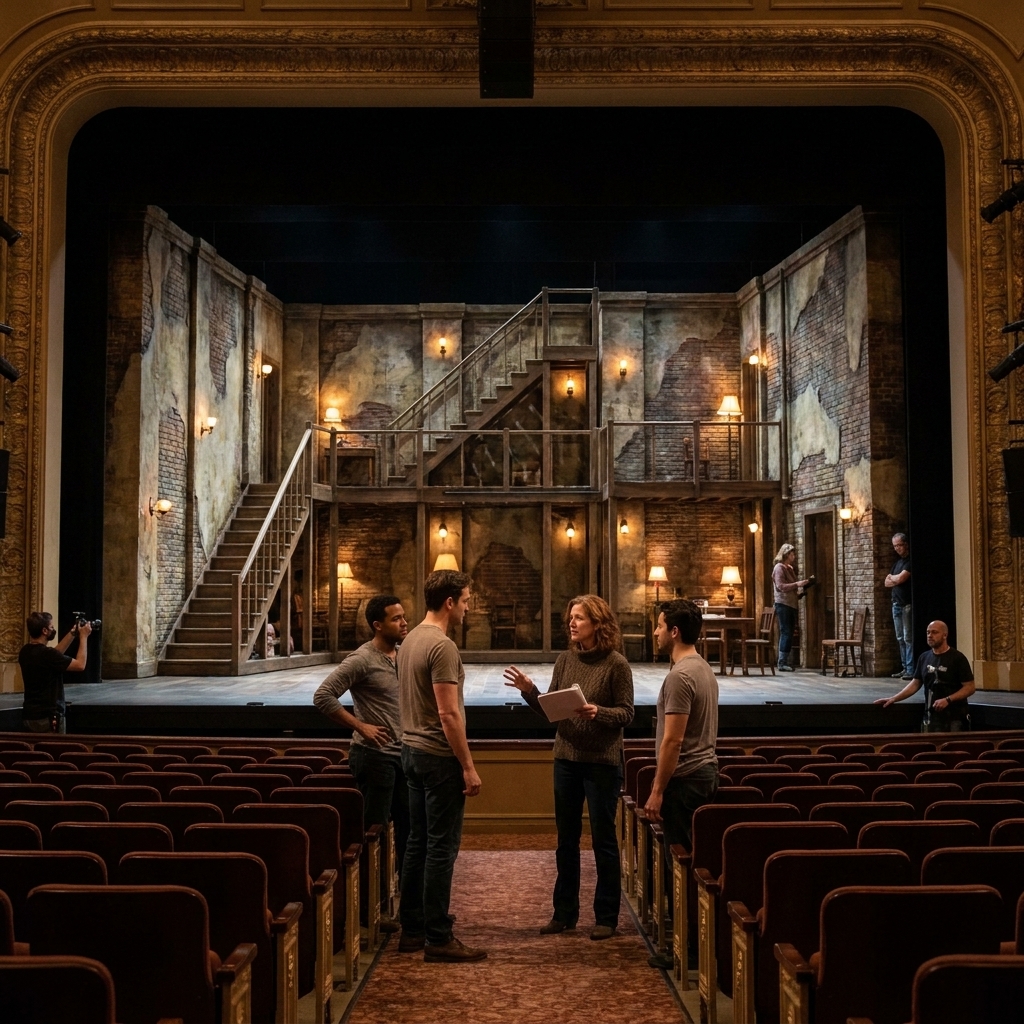
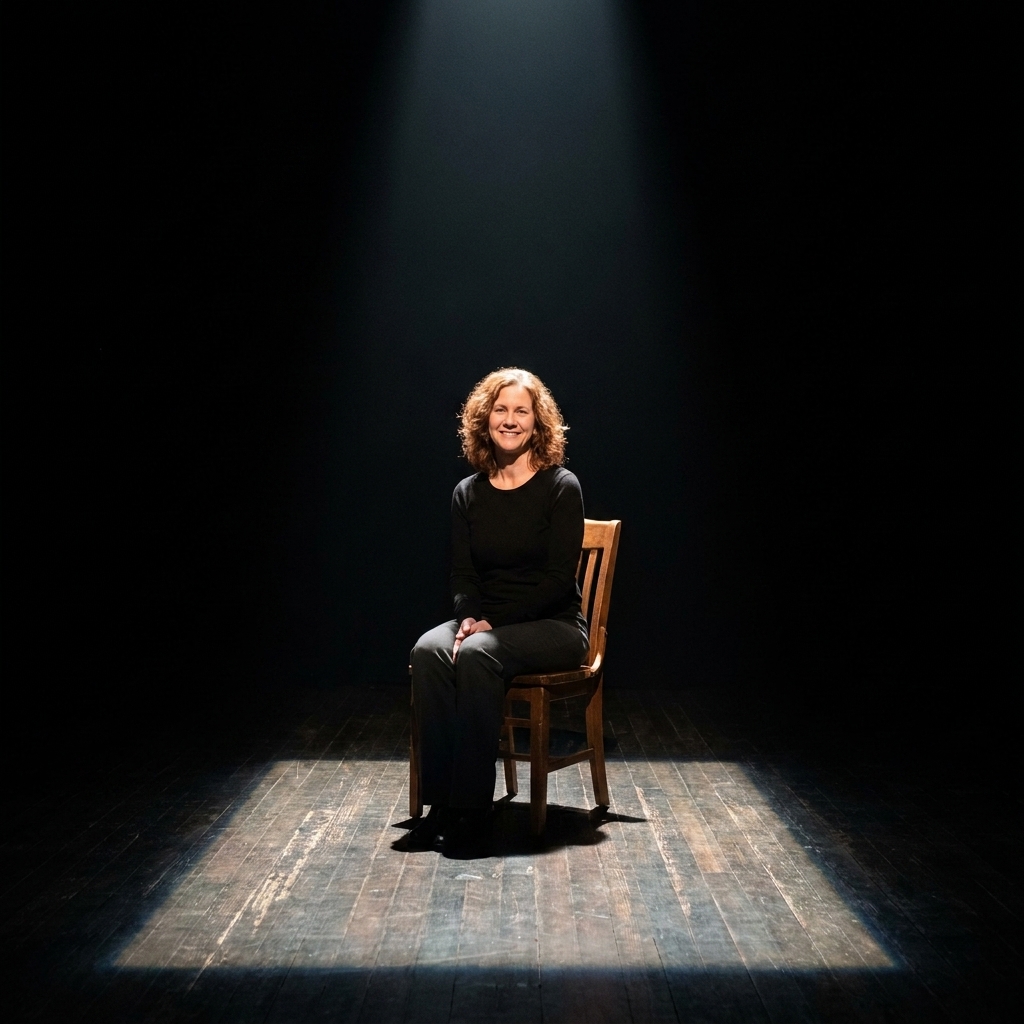
There is a particular hush that falls over a theater when the curtain rises and there is… almost nothing. Not the cozy nothing of “they have not finished loading in,” but the deliberate nothing of a stage that has been stripped down to its bones. A bare floor. A single chair. A rectangle of cold light. In that instant, the room changes temperature. Your eyes sharpen. Your body leans forward as if to say: fine, then. I will bring my full attention.
Minimalist visual design in modern theater is often discussed like a style preference, as if it is simply a tasteful choice for directors who like clean lines. But in practice, empty space is an argument. It is a pressure system. It can dignify a performer, expose a text, or make an audience suddenly aware of their own restlessness. And in an era when most of our daily life comes with an endless scroll of imagery, the stage that refuses to fill itself can feel radical.
What empty space does
When we call a set “minimal,” we are usually describing the absence of things. But what matters is what that absence creates. A sparse stage reassigns meaning to the remaining objects and to the bodies moving among them. A doorframe without walls is no longer just architecture. It becomes a threshold you can feel in your chest.
It makes the audience a collaborator
Naturalistic scenery gives you a complete world. Minimalism gives you a prompt. The rest is completed by your imagination, and that is not a soft, optional add-on. It is the engine. In a bare room, a performer lifting a glass to their lips can conjure an entire kitchen, an entire marriage, an entire lifetime of habits. The audience supplies the wallpaper.
It changes attention
On a crowded set, your gaze has options. On a spare one, your gaze has nowhere to hide. The smallest movement becomes loud. A hand that hesitates before touching someone reads like a confession. Designers who work with emptiness know this and they compose attention the way a cinematographer frames a shot, often using light as architecture.
It exposes power
Empty space can make relationships legible in a blunt, almost painful way. Who gets to sit? Who must stand? Who occupies the center, and who is pushed to the edge of the light? Minimal design has a knack for turning blocking into politics. With fewer visual distractions, the hierarchy in the room becomes the scenery.
A short lineage
Minimalism in theater is not a single movement so much as a recurring impulse. It tends to flare up when artists feel suffocated by spectacle or by inherited conventions, and it tends to travel across disciplines. You can feel its kinship with modernist painting, with the clean severity of certain galleries, with choreography that treats the stage as a field of forces.
Beckett and the bare
Samuel Beckett’s theater is often where people begin, and with good reason. Works like Waiting for Godot or Endgame do not merely tolerate emptiness. In many productions, they depend on it. Beckett’s stage directions are famously specific, and that discipline shapes the viewer’s experience. With so little “world” provided, the audience confronts time itself, repetition itself, the human need to invent meaning when none arrives on schedule.
In Beckett, minimal design is not a trendy aesthetic. It reads as rigor. Decoration can feel like an evasion.
Grotowski and the refusal of surplus
Jerzy Grotowski’s idea of “poor theatre” is often flattened into a budgetary myth, but it was never just about having less money. It was about having less noise, less technological spectacle standing between actor and spectator. Some of his work used intensely designed spatial arrangements and purposeful objects, even when it rejected conventional scenery. The point was not “blankness.” The point was encounter.
Robert Wilson and light
If Beckett gives us austerity and Grotowski gives us intimacy, Robert Wilson gives us a kind of visual music. His stages can be spare in objects and yet lavish in composition, where a single figure in a precise pool of light feels monumental. Wilson’s work is a reminder that minimalism is not synonymous with bleakness. It can be crystalline, even sensuous, when time, color, and light are treated as material.
Minimalism as a signal
We should be honest about something: minimalism carries social meaning. It can read as sophistication, restraint, purity. It can also read as withholding, coldness, or a refusal to “give the people what they paid for.” That tension is part of why minimalist stagecraft keeps returning to the center of critical debate.
Against visual overload
Contemporary life is visually saturated. Our eyes are trained to accept clutter as normal and acceleration as virtue. Minimalist theater, at its best, resists those habits. It asks us to look longer, to tolerate quiet, to notice what we usually skip. The empty stage becomes a critique of the crowded screen.
The politics of taste
Minimal design has often been coded as refined, even elite. That coding matters, especially when ticket prices already keep many people out of the room. A bare stage can be liberating, but it can also feel like a private language if the production relies on the audience already knowing how to “read” abstraction.
The most generous minimalist work meets viewers halfway. It does not punish you for wanting clarity. It uses simplicity to make emotion louder, not to hide behind cleverness.
Eco pressure and practical limits
There is also a pragmatic shift many theaters are navigating: sustainability. More companies are experimenting with reuse programs, rental stock, and lower-waste builds, and audiences are more likely than they used to be to ask what a one-night scenic miracle costs in landfill and freight. Minimalism can be an ethical response, though it is worth noting that minimal does not automatically mean low-impact. Lighting packages, touring freight, and specialized materials can complicate the picture. Still, the broader push toward reuse and restraint has made “less” newly persuasive.
How it is built
The most persistent misunderstanding about minimalist design is that it is easy. In my curatorial days, I used to hear the gallery version of this: “It is just a white wall.” Anyone who has ever tried to light a white wall knows that it is never “just” anything.
Negative space is composed
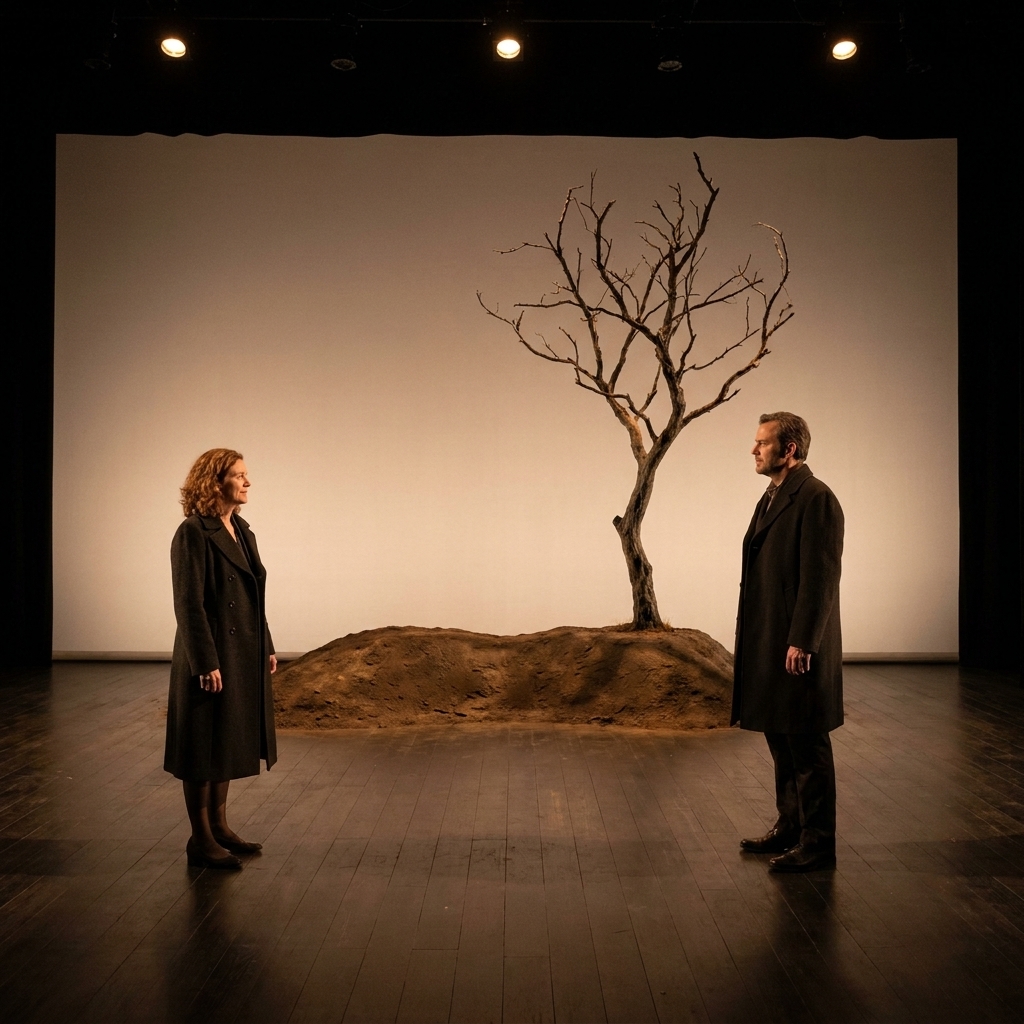
Designers choreograph emptiness. They decide where the audience’s eye can rest and where it cannot. They decide how far a performer must travel to reach another person, and what that distance will do to the scene. A ten-foot gap can be a love story. A twenty-foot gap can be an indictment.
Light becomes the set
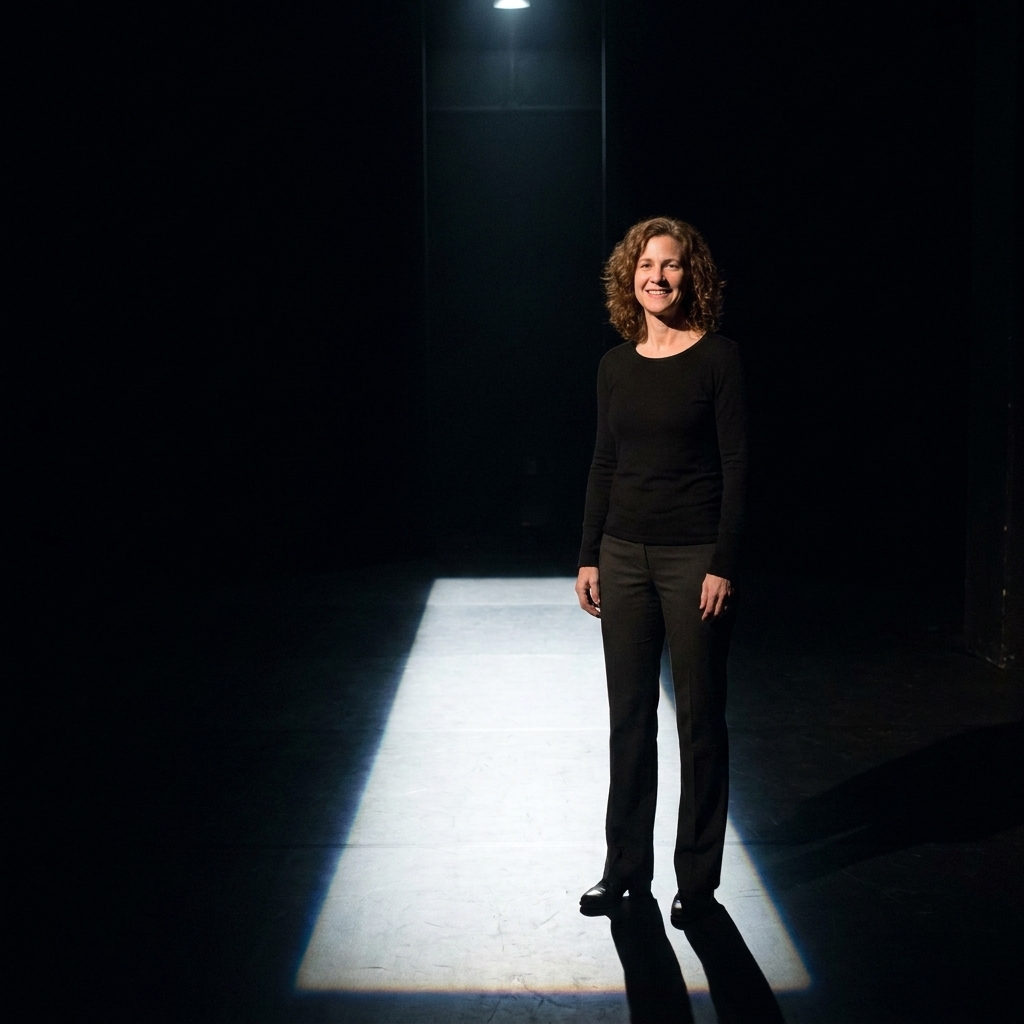
In minimalist theater, light does not merely reveal. It structures. It can carve a room out of darkness, shrink a world to a square, or make a body look suddenly alone even when others share the stage. Shifts in color temperature, intensity, and angle can function like scenic changes without a single piece of furniture moving.
Sound and texture work harder
When the eye has less to chew on, the ear becomes greedy. Minimal productions often lean on sound design and the texture of materials: the scrape of a chair leg, the amplified breath, the dull thud of shoes on a bare floor. Even costume fabric can read as architecture when everything else is restrained.
Why critics argue
Minimalist scenography tends to polarize because it changes the terms of what counts as “production value.” If you have been trained to equate value with visible labor, the empty stage can feel like a scam. If you have been trained to value conceptual rigor, the empty stage can feel like honesty.
The praise
- Clarity: The text and the performer come forward. The production does not compete with them.
- Intensity: Small actions land with greater force. Silence becomes meaningful instead of accidental.
- Trust: The audience is trusted to imagine, interpret, and sit with ambiguity.
The critique
- Sterility: Some minimalist stages feel emotionally refrigerated, especially if the acting does not provide warmth.
- Sameness: Minimalism can become a default look, a fashionable blankness rather than a considered choice.
- Conceptual armor: A spare set can be used to excuse thin storytelling, as if abstraction is a substitute for depth.
Both camps can be right. A minimalist set is a magnifying glass. It enlarges what is strong and it also enlarges what is weak.
Case studies
Rather than pretending minimalism is one thing, it helps to notice how differently artists use it.
The room as a trap
Think of the contemporary productions that treat domestic conflict like a specimen on a slide. Ivo van Hove, for example, often pares the stage down to clean geometry, glass, a few emblematic objects, and unforgiving light. The effect is not “empty” so much as exposed. Without realistic walls, characters cannot hide behind business. Their silences sit in open air, and the audience becomes uncomfortably close to the emotional mechanics of the scene.
The bare stage as myth
Some of the most striking modern stagings of Greek tragedy use spareness as a form of timelessness. Anne Bogart and SITI Company’s work, for instance, has often favored an uncluttered performance space where ensemble movement, rhythm, and shifts in focus do the world-building. Remove the period furniture and suddenly Antigone could be yesterday’s headline, or tomorrow’s. Minimal sets widen a story’s reach by refusing to pin it to a single decorative era.
The field as a canvas
Dance and physical theater have long understood that an uncluttered stage gives bodies room to draw. Pina Bausch could fill a stage with material, but she could also make a near-bare space feel immense through repetition and accumulation of gesture. Here, minimalism is not deprivation. It is permission. A leap becomes a scenic event. A group formation feels like architecture rising and collapsing.
Emptiness as a tradition
It is also worth remembering that “less” is not only a modern Western provocation. In Japanese Noh, the spareness of the stage and the precision of objects are structural, not trendy. The space is not trying to imitate a room. It is making a vessel for concentration, ritual, and transformation. Minimalism, in this light, looks less like a style and more like a long practice of attention.
How to watch
This is the part I wish someone had told me when I was younger and worried I was not “getting” the spare, cerebral productions my friends were raving about. You do not need a special decoder ring. You just need a slightly different kind of attention.
- Track distance: Notice how far people stand from each other, and when that changes.
- Watch the edges of the light: Who is allowed inside it? Who hovers outside it?
- Notice your impatience: Minimalism often uses time as material. If you feel restless, ask what the production is asking you to endure.
- Give objects extra weight: If there is only one chair, it matters. If there is one doorframe, it is a thesis.
- Listen for texture: Footsteps, breath, fabric, silence. These become part of the visual field.
The empty space paradox
One more distinction helps. Minimalist visual design is adjacent to, but not identical with, black-box simplicity, abstract scenography, or environmental staging. Not every bare stage is making a minimalist argument. Sometimes a stage is spare because it is portable, or because the room demands it. Minimalism, when it is deliberate, is a choice about what the production refuses, and what it insists we notice instead.
When it works, it does not feel like a lack. It feels like a clearing. A place where performance can land without getting swallowed by decor, where meaning can appear without being overexplained. The “empty” stage becomes a kind of honesty, a refusal to distract us from the human problem at the center of the room.
And maybe that is why it continues to matter culturally. Minimalism reminds us that attention is not infinite. It is precious. Theater, at its most elemental, is a group of people choosing to look at something together and to feel it in real time. Sometimes the most generous thing a designer can do is make space for that.