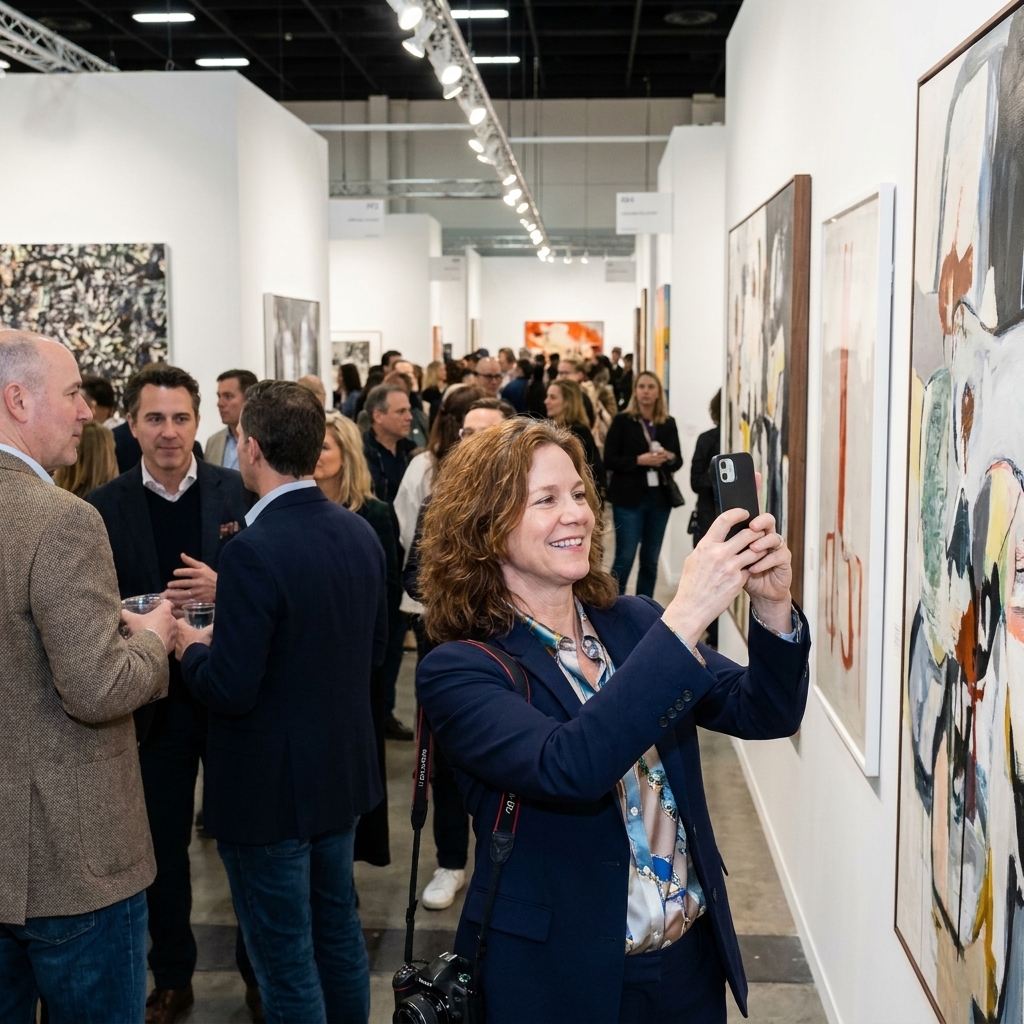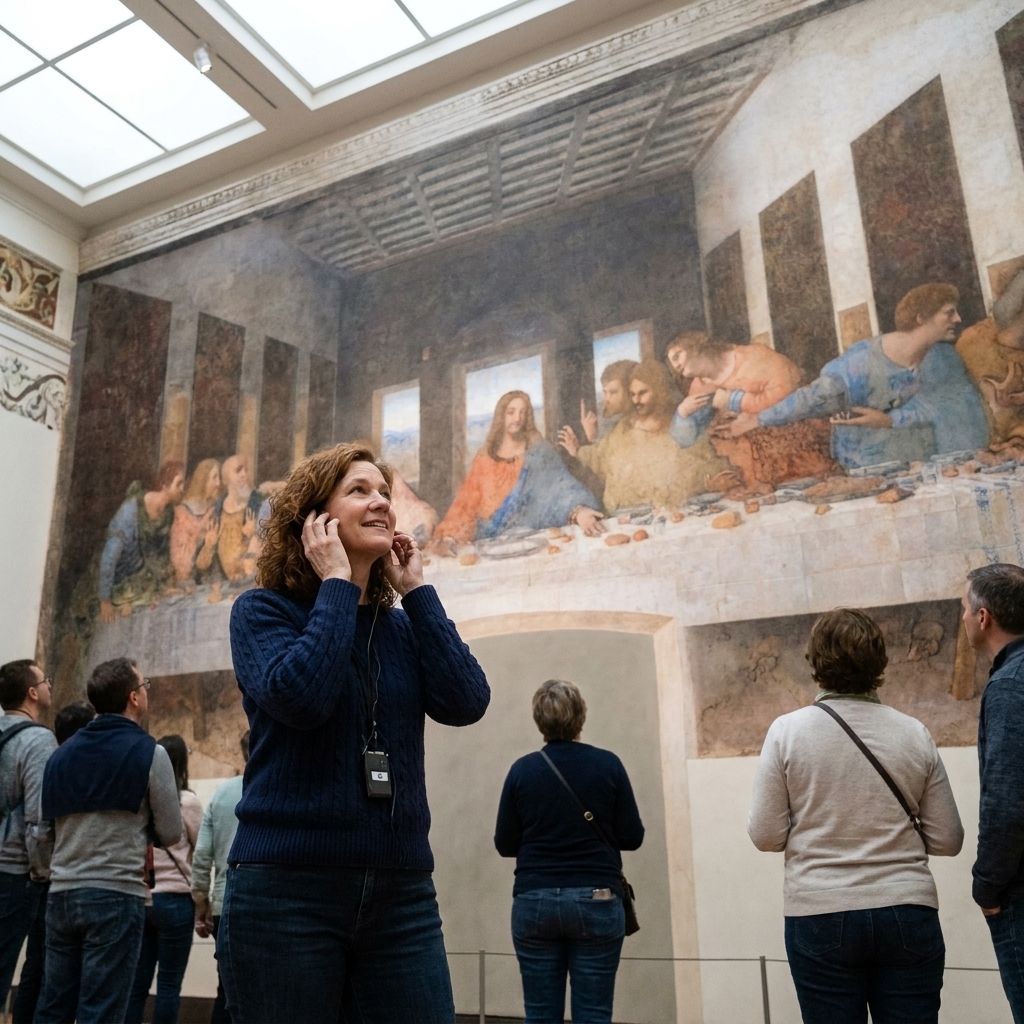
Welcome, I’m Julianne Mercer, and I’m so glad you found your way here. If you have ever stood in front of a painting and thought, I feel something, but I don’t know what to call it, or sat through a play and left buzzing with questions you could not quite phrase, you are exactly the kind of art lover I write for.
Fine Arts at Cult Rift is my corner of the internet where we treat art like what it has always been at its best: a shared human experience. Not a password-protected club. Not a test. Just a conversation we can all join.

How I got here
I grew up in a house where art was revered, but never placed on a pedestal. My mother was a classical cellist, the kind who could make a single note feel like a weather system. My father was a graphic designer with a drawer full of paper samples and a sharp eye for negative space. Between rehearsals, concert programs, and the quiet hum of making things, I learned early that art is not “extra.” It is part of how we understand ourselves.
I studied art history and fell hard for the rigor: the deep looking, the archival detective work, the way scholarship can illuminate a work’s context like turning a lamp toward a corner of a room. Over time, though, I also felt how easily academia can turn beauty into a closed circuit. I stepped away because I wanted to talk about art in a way that feels breathable, generous, and open to anyone who is willing to look and listen.
My twenties were a joyful zigzag between performance and visual art. I worked backstage on theater productions, learning how a show is held together by timing, trust, and the tiniest practical details. I also helped shape small gallery exhibitions, where I got to watch people fall into quiet, private relationships with artworks in real time. Those years taught me that art is never only about the object on the wall or the actor onstage. It is about the moment it meets you.
Why Fine Arts exists
Fine Arts is built on a simple belief: the museum and performing arts traditions we call “high culture” are not just for the elite. They are for the curious, the tender-hearted, the skeptical, the time-strapped, the first-timers, and the lifelong devotees. They are for the person who buys a museum ticket on a whim, and the person who has been meaning to go for years but worries they will “do it wrong.”
At Cult Rift, my job is to translate the magic without flattening it. That means no performative jargon and no shame if you do not already know the canon. We can absolutely talk about technique, history, movements, and meaning. We can also talk about the more slippery stuff: the mood in a room, the strange ache a sculpture can leave in your chest, the way a costume seam can tell you more about a character than a monologue.
I want you to feel like you are standing beside a friend in a museum, leaning in close, and whispering, “Do you see that? Look again.”

What to expect
Fine Arts pieces on Cult Rift are written to be lived in. Think of them as a five-minute primer before you step into a gallery or theater, or a soft landing after you leave.
- Exhibition and performance reviews that focus on what it felt like to be there, plus the context that makes the work click.
- Artist and movement spotlights that give you an entry point without requiring a graduate seminar.
- Looking guides that teach you how to spend time with art, even if you only have ten minutes and a distracted brain.
- Behind-the-scenes perspectives drawn from my years in galleries and backstage, where the real drama often happens under fluorescent work lights.
I keep my writing sensory and conversational on purpose. I want you to feel the quiet hush of a theater before the lights go down, or the particular museum smell of stone, old wood, and climate control. Art deserves language that is alive.
A promise
I will never write at you. I will never assume you are “behind.” If something is confusing, we will walk through it together. If something is moving, we will name that too, without apologizing for being affected. Empathy is not the enemy of intelligence. In the arts, it is often the doorway.
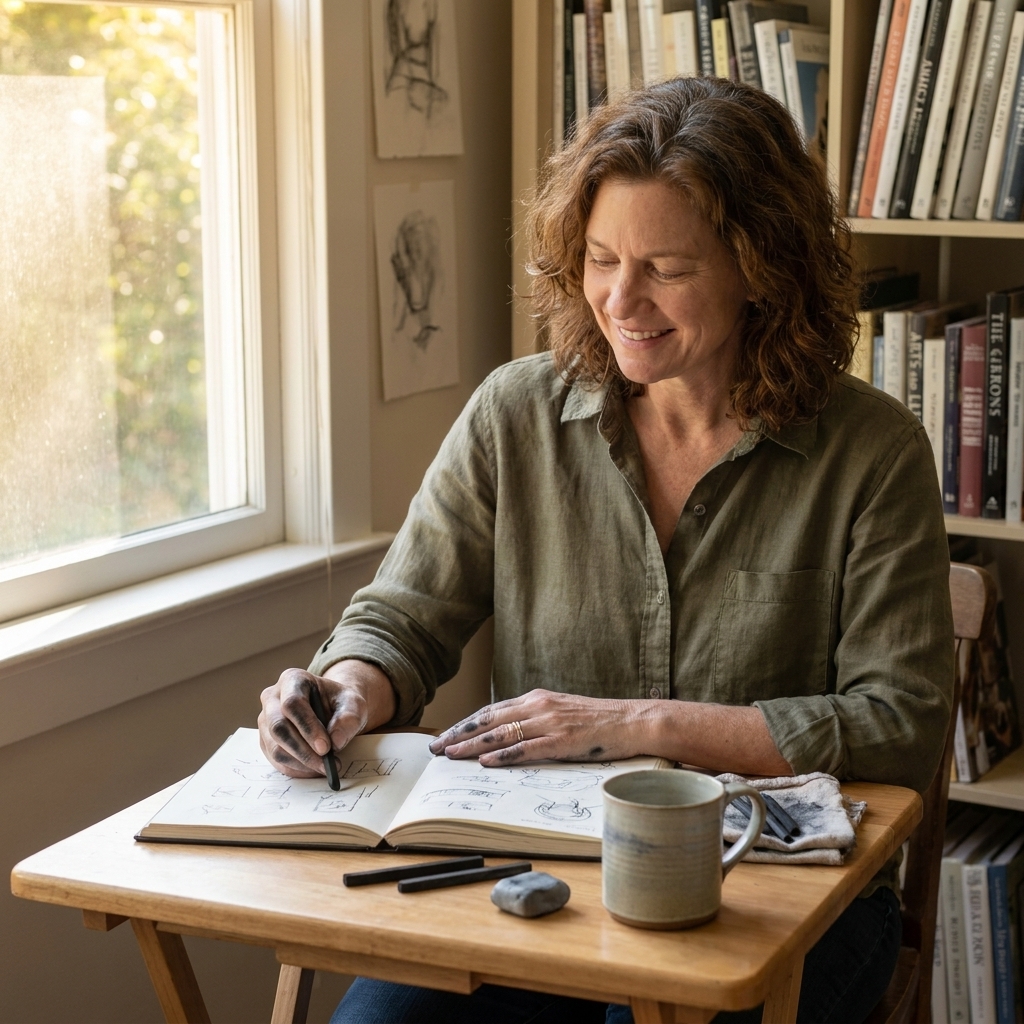
And yes, sometimes we will laugh. Sometimes we will disagree. Sometimes I will tell you about the antique shop poster I found on a rainy afternoon, or confess that I am once again drinking Earl Grey while trying, unsuccessfully, to keep charcoal off my cuffs.
Come on in
If you are new here, start anywhere that calls to you. Click the review of the play you are curious about. Read the piece on a painter you have always meant to understand. Or simply browse until something catches in your throat in that familiar way art sometimes does.
However you arrive, you are welcome. Fine Arts is not about having the right answers. It is about learning to ask better, kinder questions and letting art meet you where you are.
See you inside,
Julianne