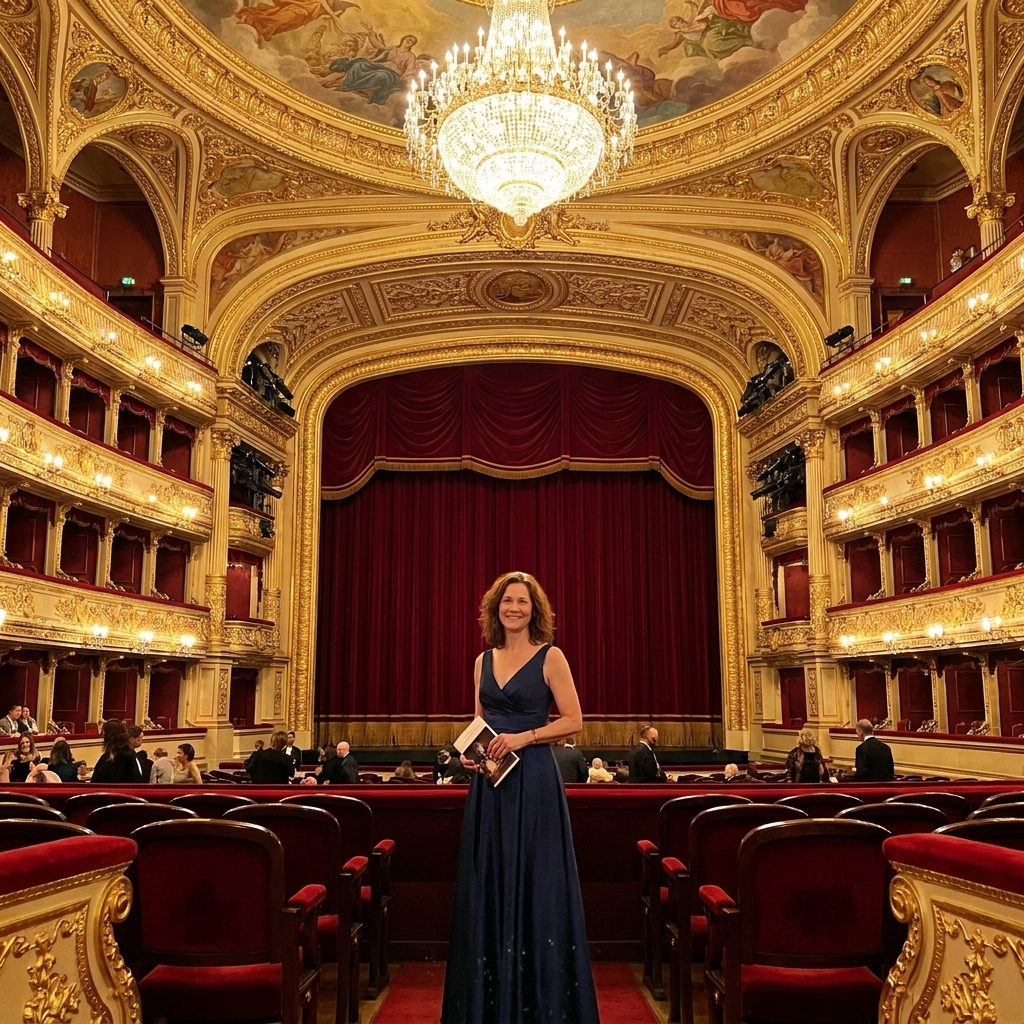
The first time I took a friend to the symphony, she whispered, “I don’t know what I’m supposed to listen for.” I told her the truth I wish more people said out loud: you are not “supposed” to do anything. You can simply let the sound wash over you.
But if you want to listen actively, to feel the orchestra click into focus like a painting you suddenly see in full color, there are a few gentle habits that make an enormous difference. Think of them as ways to give your attention a place to land.
Active listening, not academic listening
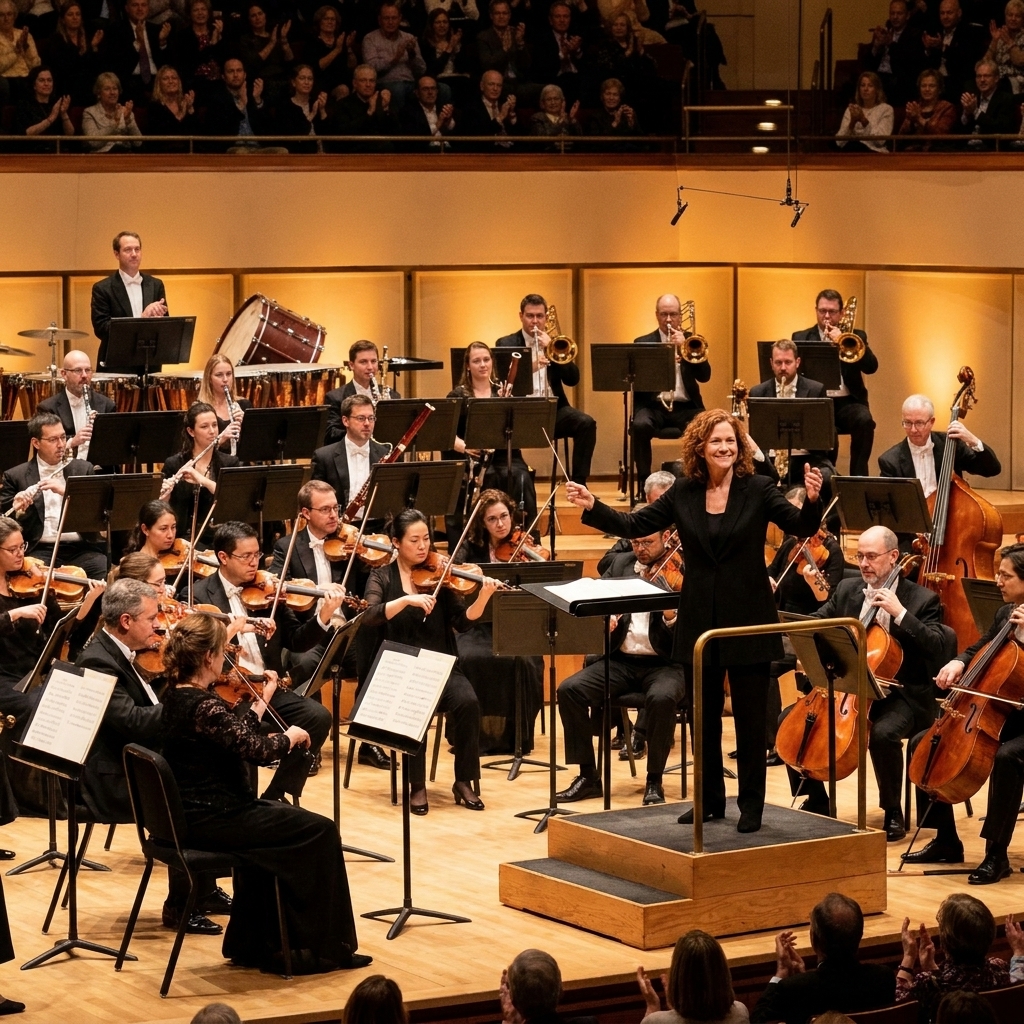
Active listening is not about knowing every composer’s biography or being able to name the key changes. It is about tracking relationships in real time: who is leading, who is responding, when the mood turns, and how the room itself becomes part of the instrument.
Here are three simple anchors to keep in your pocket:
- Texture: is the sound silky, grainy, airy, or dense?
- Direction: is the music building, floating, circling, or landing?
- Conversation: which section is speaking, and who answers?
Orient yourself: where the sounds live onstage
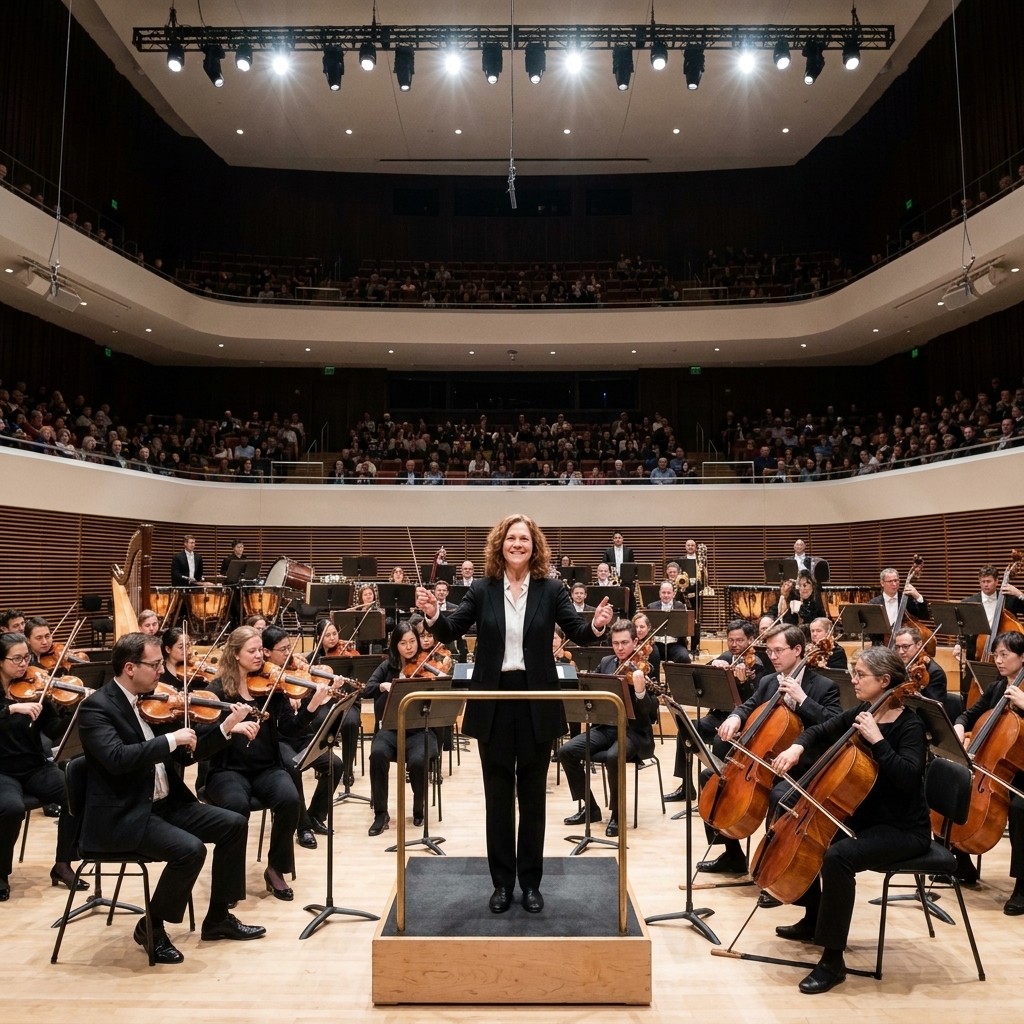
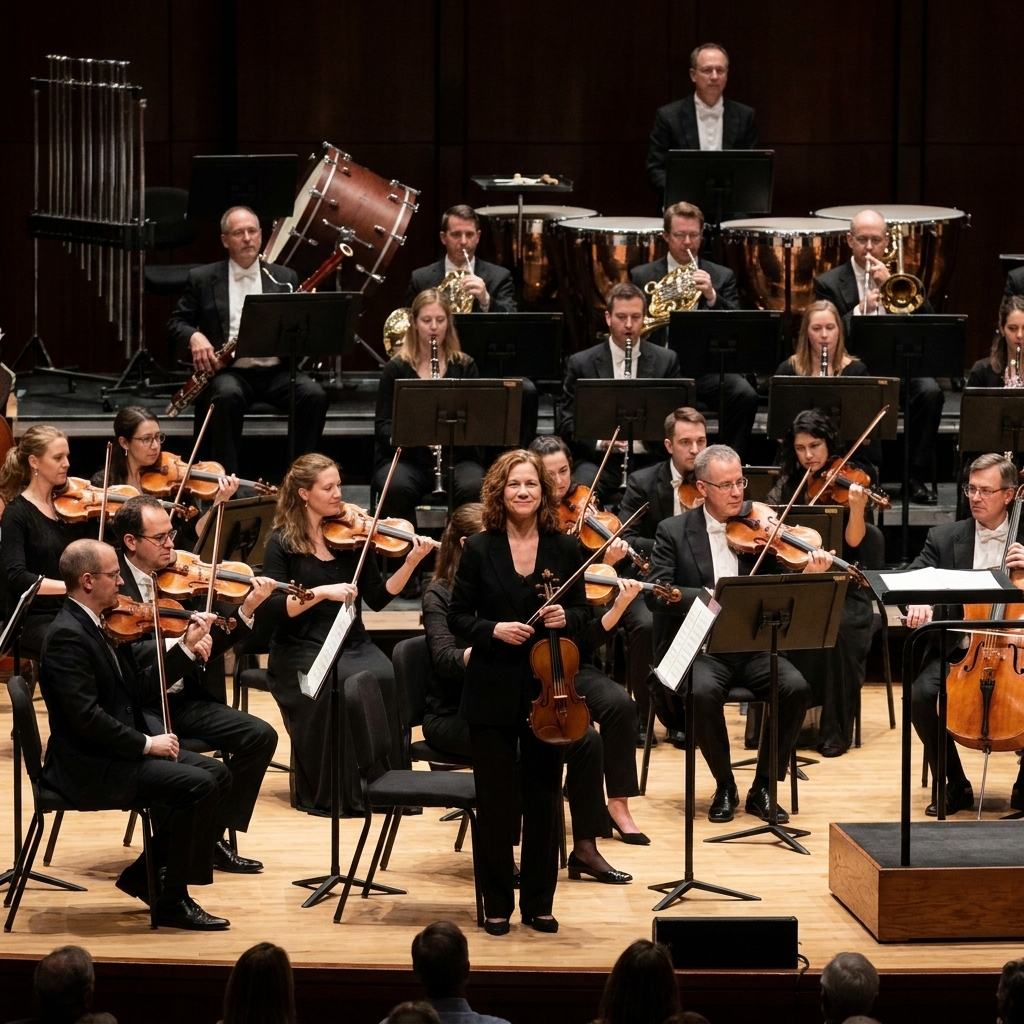
Before the conductor even walks out, take ten seconds to look at the stage layout. Many orchestras follow a familiar map, but seating can shift by venue, conductor, repertoire, or tradition. Once you have the rough geography, your ears start “seeing” faster.
The typical seating map (and what it means for your ears)
- Strings are closest to the front. Violins often sit to the left and center, with violas and cellos near the middle, and basses toward the back corners. Some orchestras swap violas and cellos, place basses on the left, or split the violins on both sides. Whatever the layout, strings often carry the main narrative.
- Woodwinds sit behind the strings, often in one or two staggered rows: flutes, oboes, clarinets, bassoons. Think of them as character actors, stepping forward with distinct colors.
- Brass sit farther back: horns (often left-middle), then trumpets, trombones, and tuba. They bring the architecture and the sunlight, and sometimes the thunder.
- Percussion lives at the very back, with timpani near center. They handle pulse, drama, and surprise entrances that feel like a door opening.
If you are close enough, you can also watch breathing and bowing. The orchestra tells you what is about to happen with their bodies before they tell you with sound.
Learn the sections by their signature sounds
If you have ever recognized a friend’s voice in a crowded room, you already understand how this works. Each section has a sonic fingerprint. Here is what to listen for, without turning it into homework.
Strings: the fabric
Strings can feel like a single enormous instrument, but they contain many voices.
- Violins: bright, agile, often carrying the melody. In fast passages they can glitter, like light on moving water.
- Violas: warmer and a little huskier, often filling the middle of the harmony. If violins are silver, violas are amber.
- Cellos: rich, human, and vocal. A cello melody can sound like someone speaking in a low, intimate register.
- Basses: the floorboards of the orchestra. You may feel them more than you “hear” them, especially in a resonant hall.
Woodwinds: the faces
Woodwinds are wonderfully easy to pick out because each instrument has a strong personality.
- Flute: airy and luminous, sometimes birdlike.
- Oboe: reedy, piercing, and very direct. It can sound like a single bright thread pulled tight.
- Clarinet: smooth and flexible, able to sound playful or smoky depending on the register.
- Bassoon: woody and dry with a gentle comic edge, like a wise narrator with a raised eyebrow.
Brass: the banners
Brass can sound ceremonial or terrifying, and sometimes both in the same phrase.
- French horns: round and burnished, a sound that seems to come from far away even when it is right in front of you.
- Trumpets: bright and declarative. They announce, interrupt, and ignite.
- Trombones: broad, weighty, often used for grandeur or menace.
- Tuba: deep and grounding, the brass equivalent of a bass line you can lean on.
Percussion: the plot twists
Percussion is not just “loud stuff.” In a great performance, it is the heartbeat and the special effects.
- Timpani: pitched drums that can rumble like distant weather or underline a cadence like a period at the end of a sentence.
- Snare drum, bass drum, cymbals: color and impact, often used to change the scale of a moment instantly.
- Mallet instruments (xylophone, glockenspiel, marimba): sparkle and precision, like light bouncing off glass.
Follow the story: movements made simple
Most symphonies and many orchestral works are divided into movements, which are like chapters. Some pieces are single, continuous spans, like certain modern symphonies, tone poems, concert overtures, and plenty of contemporary works. Either way, you can still follow the emotional logic: change, contrast, return.
What a movement is, practically
A movement is a self-contained section with its own tempo, mood, and ending. You will usually hear a clear sense of arrival at the end, and the conductor will lower their hands. That is the moment when you can exhale.
The common four-movement arc
- Movement 1: often energetic and substantial, where themes are introduced and tested.
- Movement 2: slower, more lyrical, a place for singing lines and long shadows.
- Movement 3: dance-like, playful, or rhythmically punchy.
- Movement 4: a finale that resolves, dazzles, or deliberately refuses to tidy things up.
A listener’s trick: choose one theme and track its returns
Early in a movement, you will often hear a melody or rhythmic idea that feels memorable. Mentally “bookmark” it. When it comes back, notice:
- Is it louder or softer?
- Has it moved to a new instrument?
- Is it sped up, slowed down, or turned inside out?
This is one of the great pleasures of symphonic music: recognition, transformation, and return.
How to read a concert program
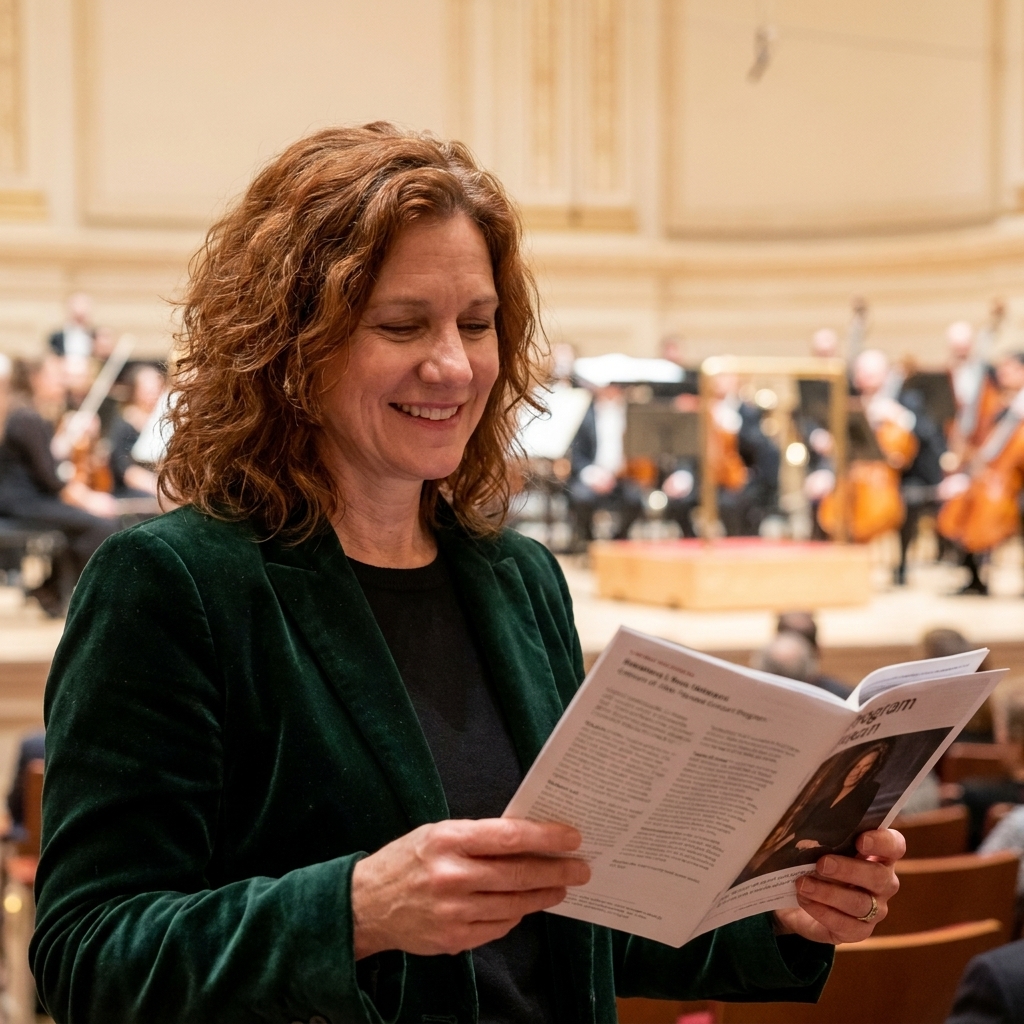
A program can look intimidating, like it is written for someone who already knows everything. You can skim it in a way that supports your listening instead of stealing your attention.
Start with the essentials
- Order of works: what you will hear, in sequence.
- Composer and dates: a quick sense of era and style, not a test.
- Movements: listed with tempo markings, which are clues to mood.
- Instrumentation: a list of instruments, especially helpful if something unusual is included.
Common tempo words
Tempo markings are often in Italian, but you will also see German, French, English, and composer-specific directions. You do not need to memorize them, but a few translations make the music feel less mysterious.
- Allegro: fast, lively
- Andante: walking pace
- Adagio: slow, spacious
- Moderato: moderate speed
- Presto: very fast
- Largo: very slow, broad
Common movement labels
- Scherzo: a movement type, often playful and quick, but not always
- Finale: the concluding movement
Program notes: use them like seasoning
If there are long notes, pick one paragraph before the piece begins and one paragraph at intermission. I love context as much as anyone, but your best insights will come from the stage, not the page.
What to look for in instrumentation
If you see extras like harp, piano, celesta, English horn, or contrabassoon, your ears can go hunting. It is like being told, quietly, that a new character will enter later.
During the music: a gentle routine
If you want something concrete to practice, try this in any piece, even one you have never heard before. Treat the timing as approximate, not a stopwatch, especially in short works or slow introductions.
Early on: find the pulse
Notice the tempo and where you feel it in your body. Is it a steady walk, a sprint, a slow tide? Percussion may help, but in many works the pulse lives in the strings.
Next: find the lead voice
Ask yourself: who is holding the melody right now? Strings? A single woodwind? Brass? If you lose it, do not panic. Just locate the lead again, the way you would rejoin a conversation at a dinner table.
After that: listen for handoffs
One of the most thrilling orchestral sensations is the handoff, when a melody moves from one section to another. A flute hands it to clarinet, clarinet hands it to violins, and suddenly the same idea feels newly lit.
When it gets loud: listen for layers
In big climaxes, instead of thinking “this is loud,” try “how is it built?” Often you will hear:
- Strings churning underneath
- Brass holding long pillars of sound
- Percussion punctuating the edges
- Woodwinds threading through with bright detail
When it gets quiet: listen for the room
A concert hall has its own hush. In very soft passages you can hear the orchestra painting with breath, bow pressure, and silence. This is where live performance feels most different from headphones.
Applause and etiquette
There is one anxiety that keeps people from relaxing at classical concerts: “When do I clap?”
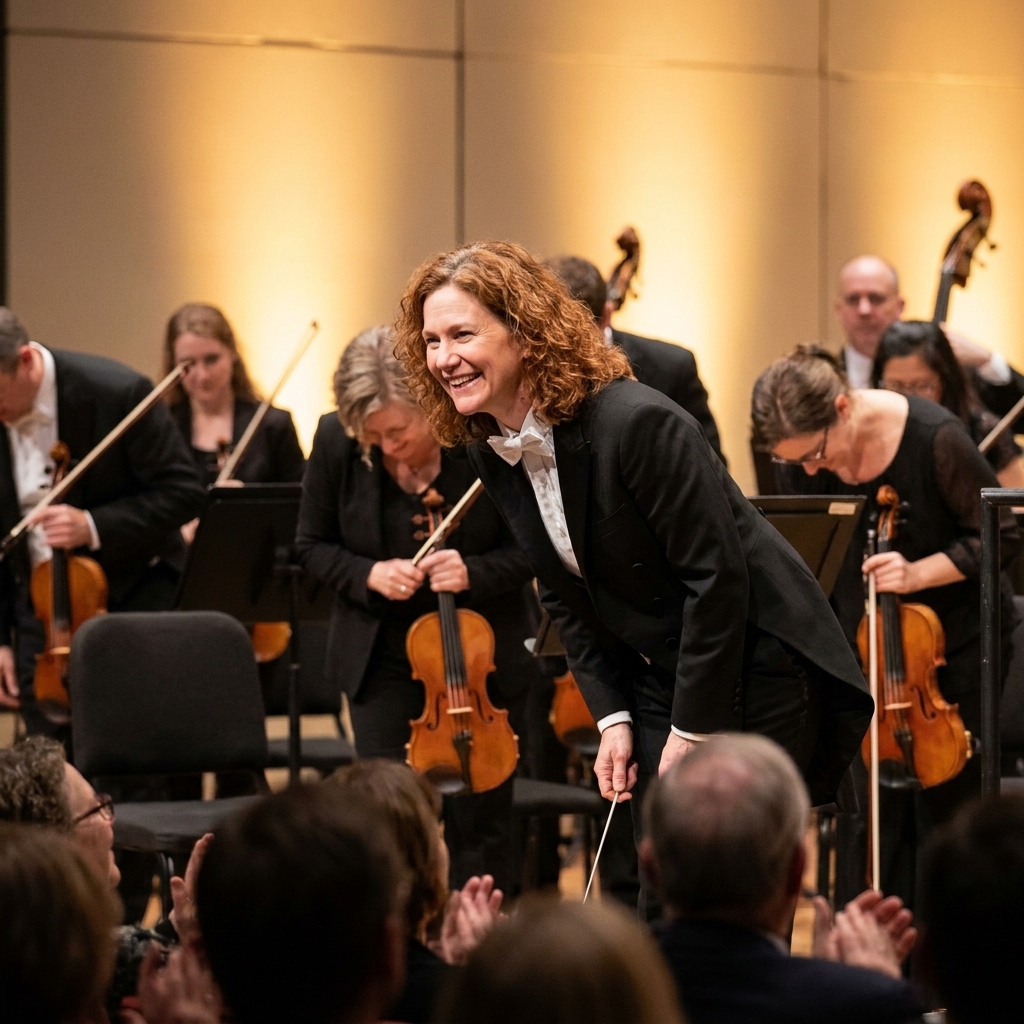
In many traditional symphonies, audiences wait until the entire work is finished, not between movements. But the easiest, kindest rule is this: follow the conductor and the energy of the room.
- If the conductor’s arms drop and they hold still, it might be the end of a movement. Many conductors keep their hands up to connect movements without a break.
- If you are unsure, let the first few seconds belong to silence. If applause starts, join in. If it does not, you have lost nothing.
- If someone claps early, do not glare. Everyone is learning, and enthusiasm is not a crime.
A practical note about coughing
Humans are human. If you can, save coughs and candy wrappers for between movements, or tuck them under a louder passage. The goal is not perfection. It is kindness to your neighbors and the musicians.
Encores and standing ovations
Sometimes a soloist or orchestra will return for an encore after the final applause. Standing ovations vary by city and culture. If you feel moved to stand, stand. If you do not, applause is still a real thank-you.
Prepare ahead (without homework)
You can walk into a concert completely cold and have a beautiful experience. But if you like a little preview, keep it light.
- Listen once at home and do not worry about “getting it.” Just notice one or two moments that catch your attention.
- Read the program’s first paragraph before you go. One guiding idea is plenty.
- Pick one instrument to follow during the concert. Maybe you decide, tonight I am a bassoon person. This kind of focus turns listening into a game.
If the concert includes a concerto
Not every orchestral night is a symphony. If there is a concerto, you will usually have a featured soloist, and part of the fun is listening to the relationship: the soloist stepping forward, the orchestra answering, the two arguing, flirting, or agreeing in real time.
Mini glossary
- Theme: a memorable musical idea that returns.
- Motif: a smaller musical cell, sometimes just a few notes, that repeats and evolves.
- Dynamics: volume, from soft to loud, and all the shades between.
- Timbre: tone color, the reason a flute and a violin sound different on the same note.
- Cadence: a musical “ending” gesture, like a period or a question mark.
One last thing: let yourself be moved
There is a particular kind of magic in watching dozens of people breathe together to create one living, shifting sound. Active listening is simply a way of saying, I’m here with you.
So if you lose track of the form or forget which instrument is which, it is fine. Come back to the sensation: the shimmer of strings, the burnished brass, the way a single oboe can make the whole room feel suddenly intimate. The symphony is not a puzzle you solve. It is a place you visit.