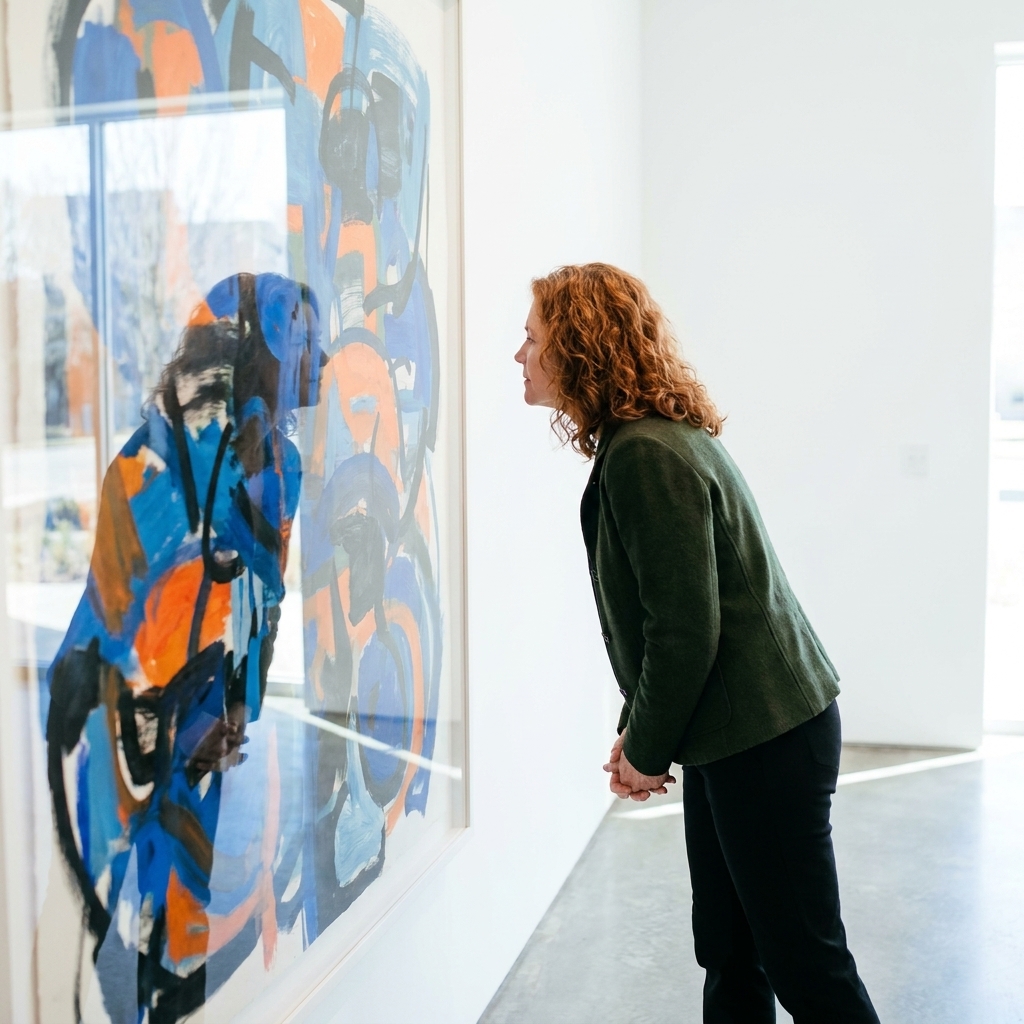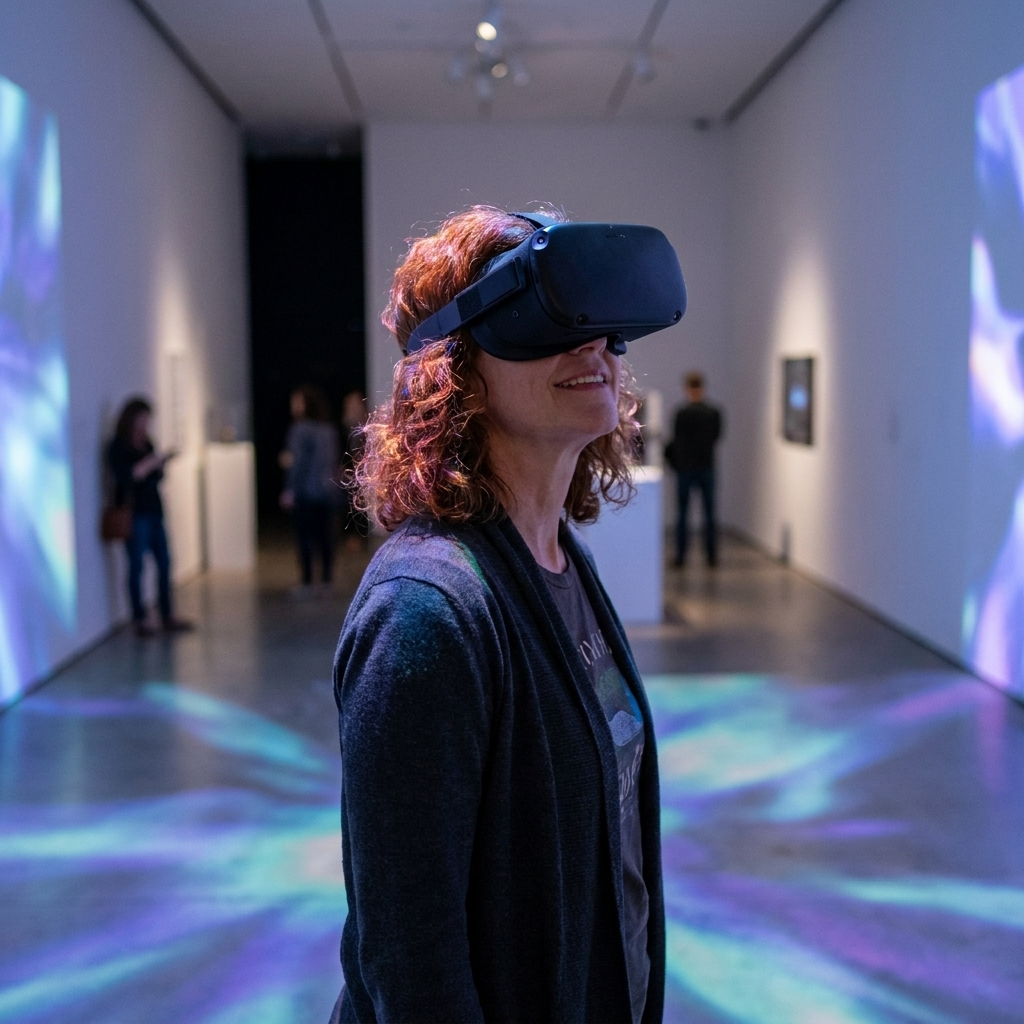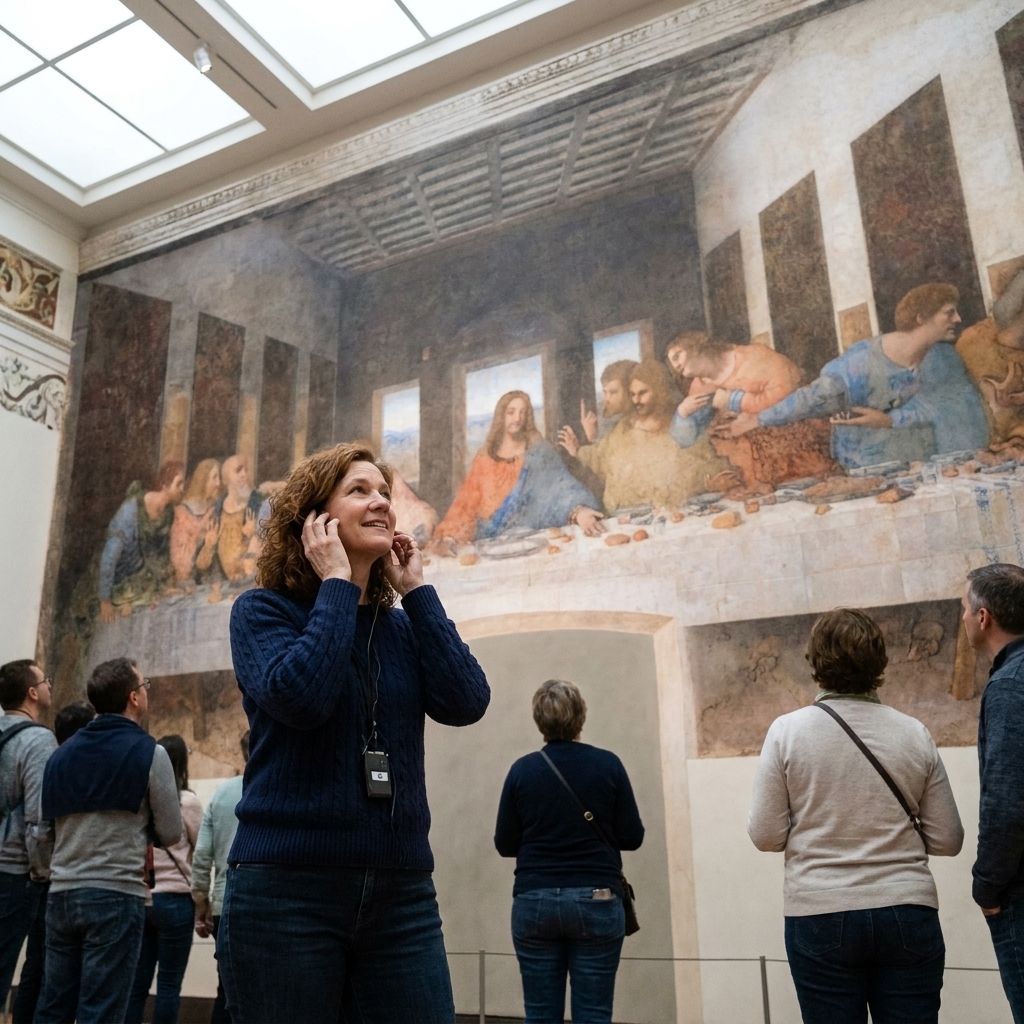
There is a particular kind of confidence that arrives when you can name what you are seeing. Not in a showy, trivia-night way, but in the quiet sense that your eyes have company: a few sharp thinkers who stand beside you in the gallery, on the subway scrolling, or halfway through a brand deck that just will not land.
Books and essays on art criticism, theory, and art history can sound intimidating, but the best ones are simply permission slips. Permission to linger. Permission to disagree. Permission to notice how power, desire, money, history, and pleasure all get folded into images.
This list is for designers and other visual people who want a sturdier cultural foundation, whether you are building interfaces, posters, packaging, sets, or a personal visual language. It leans on criticism, theory, and art history that all do the same thing: train your looking. These are the nine books and essays I return to when I need my eye to feel awake again.
How to use this list
If you are new to criticism, start with Berger or Sontag. If you are design-trained and want to unpack how images behave in culture, move next to Mirzoeff and Mitchell. If you want your eye to feel less alone in a museum, add Nochlin and Clark.
- Read with a pencil. Not for academic underlining, but for circling sentences that change how you see.
- Try the “one image test.” After each chapter, pick one image you love and write six sentences about it. Six is enough to get past the obvious.
- Let yourself disagree. Criticism is not scripture. It is a conversation with stakes.
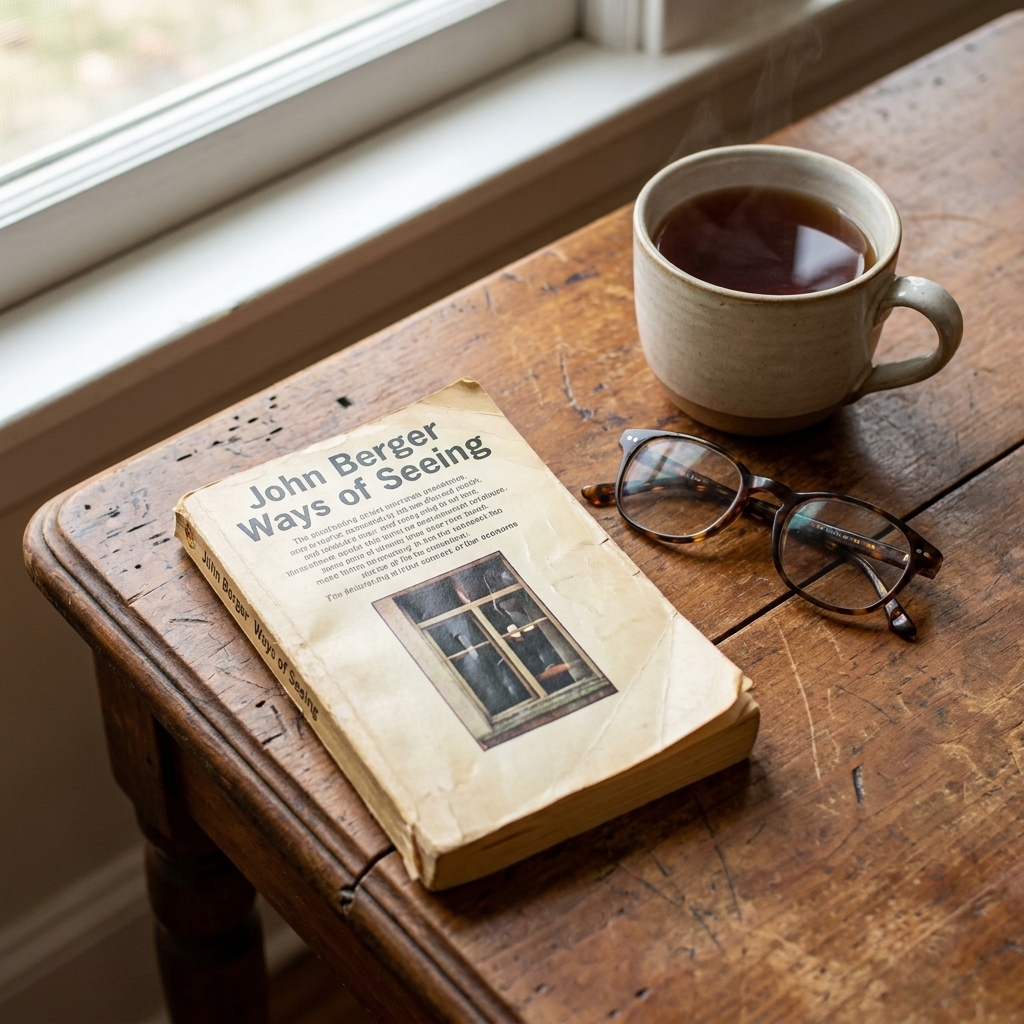
1) Ways of Seeing (1972) by John Berger
Difficulty: Easy
If I could hand every visually curious person a single book, it would be this one. Berger takes the museum off its pedestal and brings it into everyday life. He asks what it means to look at an oil painting, a nude, an advertisement, and why those categories are not as separate as we pretend.
For designers, Ways of Seeing is a masterclass in reading images as arguments. What is being sold here? Who gets to look, and who gets looked at? What does the frame hide?
Keep in mind
- Read it slowly, and pause on the examples. Berger’s power is in the pairing of words and images.
- It is also a reminder that “taste” is not neutral. It has a history.

2) Regarding the Pain of Others (2003) by Susan Sontag
Difficulty: Medium
Sontag writes like a bright light you cannot look away from. This book is about war photography, suffering, and the ethics of spectatorship. But if you work in visuals, you will recognize the deeper question running underneath: what do images do to us, and what do we do with them?
It is essential for anyone designing with documentary imagery, journalism, social campaigns, or even “authentic” brand storytelling. Sontag will not let you off the hook for thinking that an image is automatically empathetic just because it is true.
Design takeaway
- Impact is not innocence. A moving image can still be manipulative.
- Attention is a moral resource. Where you direct it matters.

3) The Work of Art in the Age of Mechanical Reproduction (1935) by Walter Benjamin
Difficulty: Hard
Benjamin’s essay is short, famous, and still startling. It is most often dated to 1935, and he revised it multiple times afterward. Depending on the edition and translation, you may see versions associated with the later 1930s as it circulated and changed.
He argues that reproduction changes an artwork’s “aura,” meaning its unique presence in time and place, and the sense of authenticity and distance that comes with that presence.
For design enthusiasts, this is foundational. It helps explain why a poster can be more politically charged than a painting, why mass media can feel intimate, and why the same image looks different when it lives on a wall versus a feed.
Read it for
- The origins of so many modern conversations about authenticity, virality, and cultural power.
- A vocabulary for what changes when art becomes portable.

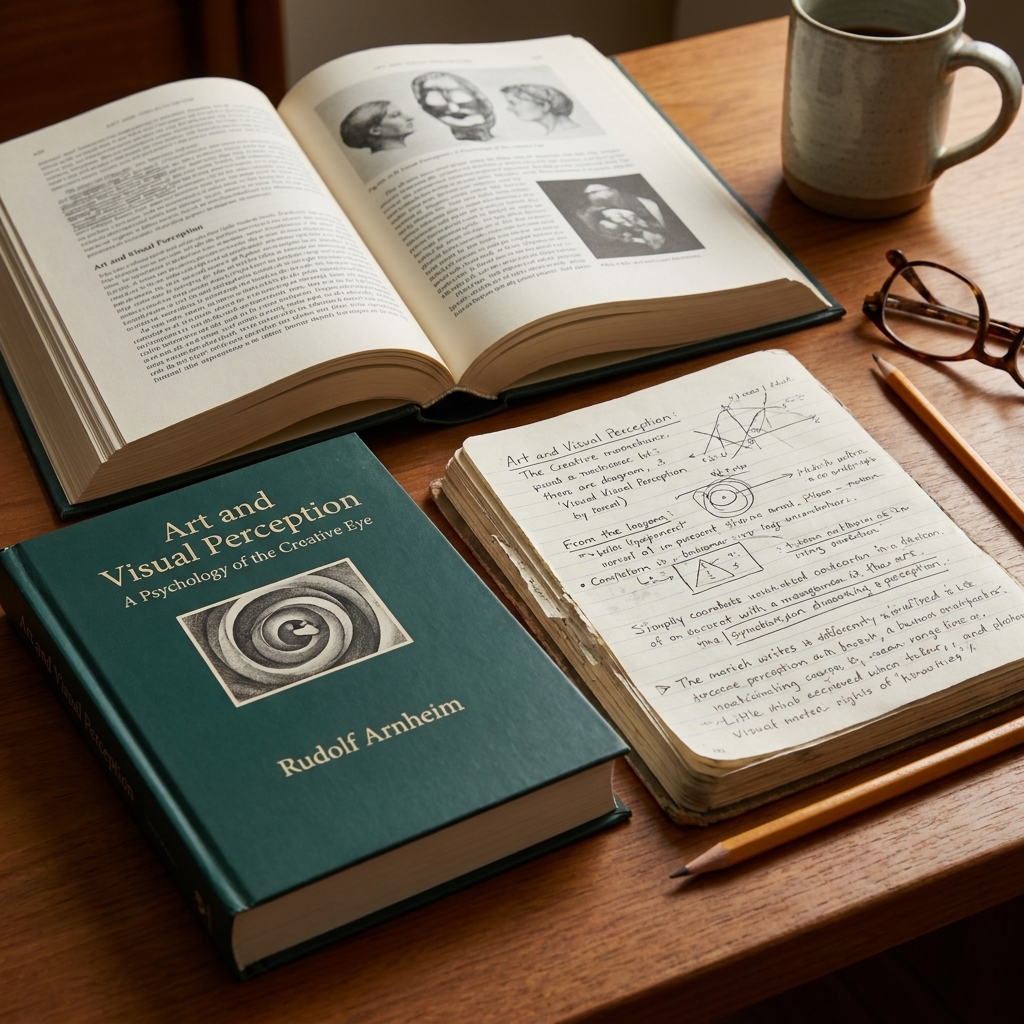
4) Art and Visual Perception (1954) by Rudolf Arnheim
Difficulty: Hard
Arnheim is the book I wish every design student encountered before a single critique session. He treats perception as active, not passive. Seeing is a kind of thinking, and form is never “just” form.
This is not quick bedtime reading. It is a rich, patient walk through balance, tension, shape, and movement. If you have ever struggled to explain why a composition feels dead or alive, Arnheim gives you handles.
Best for
- Designers who want a deeper grasp of composition beyond rules and grids.
- Anyone who wants language for visual force, not just visual style.
5) The Story of Art (1950) by E.H. Gombrich
Difficulty: Medium
This one is a doorway. Gombrich’s tone is famously clear, and while parts of the canon he reinforces deserve critique, the book remains a useful timeline for orienting yourself. It gives you a sense of sequence: how one visual problem leads to another, how styles react, and how innovations travel.
For design enthusiasts, it is less about memorizing “movements” and more about understanding that images are solutions. Different eras have different constraints, audiences, and technologies, and the art changes accordingly.
How to read it today
- Use it as a map, not a verdict.
- Pair it with Nochlin below, which helps you question who gets included in “the story.”

6) The Nude: A Study in Ideal Form (1956) by Kenneth Clark
Difficulty: Medium
Clark is not writing a neutral history. He is writing a history of ideals, and that is precisely why it is worth reading. The nude is one of the most charged subjects in Western art: desire, virtue, power, shame, beauty, spectacle. Clark traces how “naked” becomes “nude,” meaning culturally shaped, framed, and sanctioned.
If you work in design, you will recognize the mechanism: what counts as tasteful, what counts as vulgar, and who gets to decide. Even if your practice is far from figurative art, the book sharpens your sense of how aesthetics and ethics braid together.
Read with care
- Notice what Clark assumes about gender and tradition, and where you want to push back.
- Use it to spot “idealizing” habits in contemporary imagery, especially in advertising and fashion.

7) Why Have There Been No Great Women Artists? (1971) by Linda Nochlin
Difficulty: Medium
Nochlin’s essay is a hinge in art history. She flips the question on its head: instead of hunting for overlooked “geniuses” as proof, she asks what systems made genius possible for some and nearly impossible for others.
This is cultural critique at its most practical. It teaches you to look for the structures behind the visuals: access to training, patronage, studio space, time, networks, and the stories institutions choose to tell.
Why designers should care
- It trains you to see representation as infrastructure, not just imagery.
- It helps you question brief assumptions like “universal audience” and “neutral taste.”

8) Visual Culture: An Introduction (1999) by Nicholas Mirzoeff
Difficulty: Medium
If Berger hands you the tools, Mirzoeff hands you the whole workshop. This is a broad, accessible introduction to visual culture studies, which is a fancy term for a very simple habit: taking images seriously as forces in the world.
Mirzoeff helps you move fluidly between “high” and “low” without snobbery. Fine art, television, photography, digital media, spectacle, surveillance, identity. If your design life includes screens, this book will feel like someone finally turned the lights on in the room you were already standing in. Note that this is the first edition date, and later editions are revised and often easier to find.
Great for
- Readers who want a framework for analyzing images across media.
- Designers who sense that aesthetics and politics are inseparable and want language for it.

9) Iconology: Image, Text, Ideology (1986) by W.J.T. Mitchell
Difficulty: Hard
Mitchell is for the moment when you are ready to go deeper. He asks what pictures want, how images and words compete, and why ideology is not only in content but in form. This is the book I reach for when an artwork, advertisement, or interface feels persuasive in a way I cannot quite articulate.
For design enthusiasts, Mitchell is especially useful when thinking about mixed media: captions, UI microcopy, headlines, packaging claims, museum labels, and all the subtle ways text steers the eye.
Try this while reading
- Pick one poster, one homepage, or one album cover you love.
- Ask: What does the text instruct me to feel? What does the image resist?

A simple reading plan
If your schedule is more “stolen minutes” than “long afternoons,” here is a gentle route that still builds momentum.
- Week 1: Berger, Ways of Seeing (read in short bursts, revisit the images)
- Week 2: Sontag, Regarding the Pain of Others
- Week 3: Benjamin (one sitting, then a second pass with notes)
- Week 4: Nochlin (and write one page about a museum wall you have seen differently)
Then add Arnheim when you want formal tools, and Mirzoeff and Mitchell when you want cultural depth.
FAQ
Do I need to read these in order?
No. Think of them as nine different lenses. If you like practical, start with Berger and Arnheim. If you like ethics and media, start with Sontag. If you like theory, start with Benjamin and Mitchell.
Are these all standalone books?
Not quite. Benjamin and Nochlin are widely read as essays, and they often appear in collected editions or course readers. If you cannot find them as slim standalones, look for reputable anthologies of cultural theory or art criticism, or library database access.
Are these only for “fine art” people?
Not at all. They are about images, and images are everyone’s business. If you make visual decisions for a living or simply care about what you consume, you are already in the conversation.
What if I get stuck on the denser ones?
Pair a dense chapter with a real object. Read Benjamin, then look at a famous artwork reproduced on a tote bag. Read Mitchell, then analyze a single Instagram post like it is a painting. The friction is part of the learning.
Is this list too Western?
It leans Western, yes, and that is worth naming. If you add one more title to widen the frame, make it Tina M. Campt’s Listening to Images, which offers a contemporary way to think about images, power, and attention beyond the usual canon.
If you want a few more options, here are three additions I often recommend as companions:
- Ariella Aïsha Azoulay, The Civil Contract of Photography
- Okwui Enwezor (editor), Contemporary African Art Since 1980
- Hito Steyerl, The Wretched of the Screen
If you end up picking one of these up, I would love to know which one changed your looking the most. For me, it is always Berger. I return thinking I will skim, and twenty minutes later I am still there, arguing with the page, grateful that criticism can be that alive.