There is a particular hush that falls over a gallery when you are about to ask the question: “How much is it?” Even seasoned collectors can feel that little flutter, the sense that there are secret rules everyone else memorized in grad school.
Here is what I learned on both sides of the white wall, first as a curator and later as a person who still sometimes has charcoal under her fingernails at dinner: the gallery art market is not a private club. It is a conversation. And like any good conversation, it gets easier once you know how to listen.

Below are five practical, human tips for curating your first collection, with the goal of helping you buy work you love, understand what you are paying for, and build a group of pieces that hang together like a well-cast ensemble.
1) Start with your why
Most first-time collectors begin with measurements. I prefer to begin with mood. Before you open a spreadsheet or pull out a tape measure, ask yourself two questions:
- What do I want to feel when I live with art? Calm, provoked, softened, electrified, steadied.
- What do I want my collection to say about my attention? That you notice light, or bodies in motion, or geometry, or tender domestic scenes, or political rupture.
This is not woo. It is a curatorial through-line. A strong collection is rarely “all one style.” It is more often one consistent set of curiosities.
Try this: pull five images of artworks you already love (museum shots, book reproductions, screenshots). Ignore price, era, and fame. Then write one sentence that connects them. If the sentence feels true, you have your first curatorial thesis.
2) Look at the work formally
When someone tells you an artwork is “strong,” they usually mean it holds together visually. You do not need jargon to test that. You need a few reliable questions you can carry into any room.
Composition: does your eye know where to go?
Stand still and notice how your gaze moves. Do you keep returning to one focal point, or do you skid around the surface? Both can be intentional. The key is whether it feels composed rather than accidental.
Value and contrast: is there a clear structure underneath the style?
Even the most delicate palette has bones. Squint at the work. If the structure disappears entirely, it may rely on surface charm alone. If it still reads, it has an internal architecture.
Color: is it doing something, or just being pretty?
Color can create temperature, time of day, emotional pitch. Ask what the palette is arguing for. Warmth? Distance? Tension? Nostalgia?
Material decisions: do the choices feel intentional?
Paper quality, paint handling, print registration, how a photograph is mounted, the edges of a canvas, the finish of a frame. These are not fussy details. They are where seriousness lives.
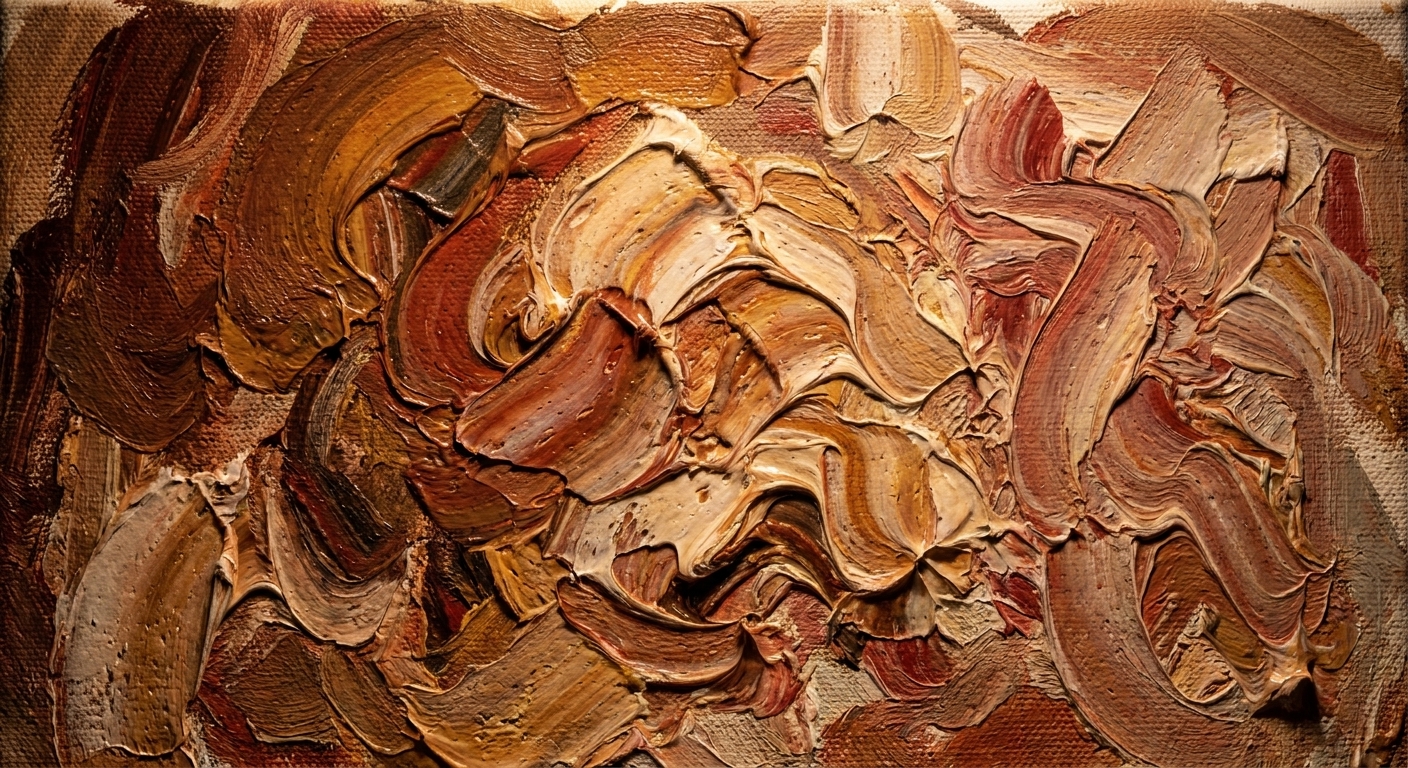
A small collector’s trick: if you love the work from across the room, take a closer look (when appropriate). A well-made piece rewards proximity.
3) Understand pricing
Pricing can feel mystical because galleries do not always display numbers on the wall, though some spaces do post prices, especially for editions or smaller programs. Either way, the logic is more grounded than people assume, and knowing the basics helps you advocate for yourself while respecting the ecosystem that supports artists.
What you are usually paying for
- The artwork itself: materials, studio time, expertise, and the artist’s career development.
- Gallery support: rent, staffing, marketing, art fair costs, shipping logistics, documentation, and the relationship work that places artists in collections and institutions.
In many primary-market galleries (meaning the work is being sold for the first time), the split is often around 50/50 between artist and gallery, though arrangements vary by region and career stage. Some galleries also handle production costs differently, for example by recouping certain expenses before a split or by setting separate production agreements.
Budget note: ask whether the price includes sales tax or VAT, framing, shipping, insurance, and any import duties. These are often separate and they add up quickly.
Why two works by the same artist can be priced differently
- Size: bigger is often more expensive, but not always linearly.
- Medium: higher production costs can raise pricing, especially for complex processes or large-scale work.
- Uniqueness and labor: a monotype differs from an editioned print; a densely worked painting differs from a quick study.
- Career stage and demand: museum acquisition, press, and sold-out shows can shift pricing over time.
How to ask about price like a pro
You can simply say: “Could I see the price list?” or “Is there a range for works like this?” If you are interested but not ready, try: “I’m learning. Can you tell me what drives the pricing for this piece?” A good gallerist will welcome the question.
About negotiation: sometimes there is flexibility, especially for emerging collectors, multiple works, or works on paper. Sometimes there is not, particularly when the gallery is maintaining consistent pricing for an artist. A respectful way to ask is: “Is there any room on the price?” If the answer is no, it is not a personal rejection. It is often a commitment to fairness across collectors.
4) Get the story and the basics
Art is not a toaster. The paperwork matters, but so does the narrative. Your job is to leave the transaction with both: a piece you emotionally understand and a purchase you can prove.
What to request before you pay
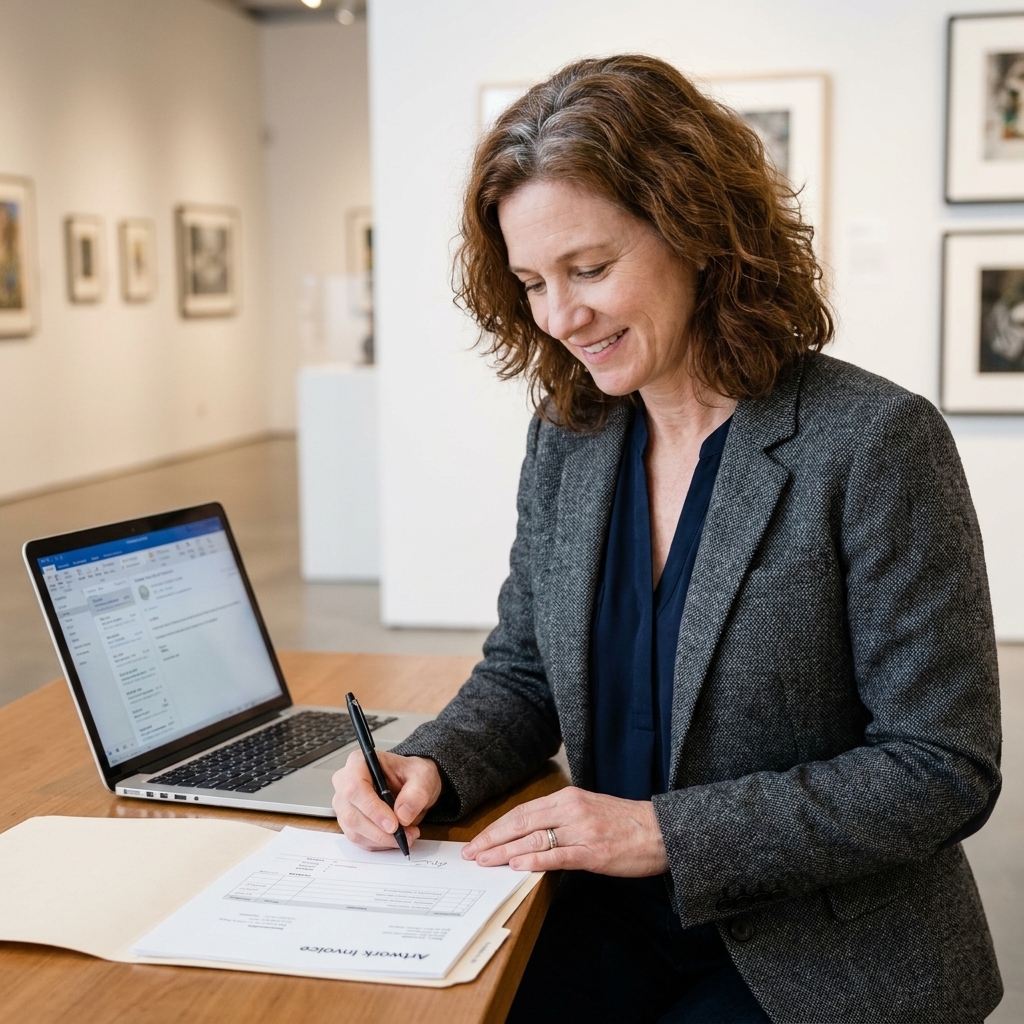
- Invoice with artist name, title, year, medium, dimensions, and price. A reputable invoice is the baseline proof of sale.
- Condition report for anything not brand new, or for delicate media.
- Certificate of authenticity when applicable and when the artist, gallery, studio, or publisher provides one. COAs are not universal, and their formats vary, but they can be helpful for editions and certain higher-value works.
- Edition details for prints and photographs: edition size, number (for example, 3/20), what other formats exist (AP, PP, HC, unique variants), and who printed or published it when relevant.
- Provenance if the work is secondary market (resale): prior ownership history and exhibition history if known.
- Conservation or restoration history if any work has been repaired, relined, cleaned, or otherwise treated.
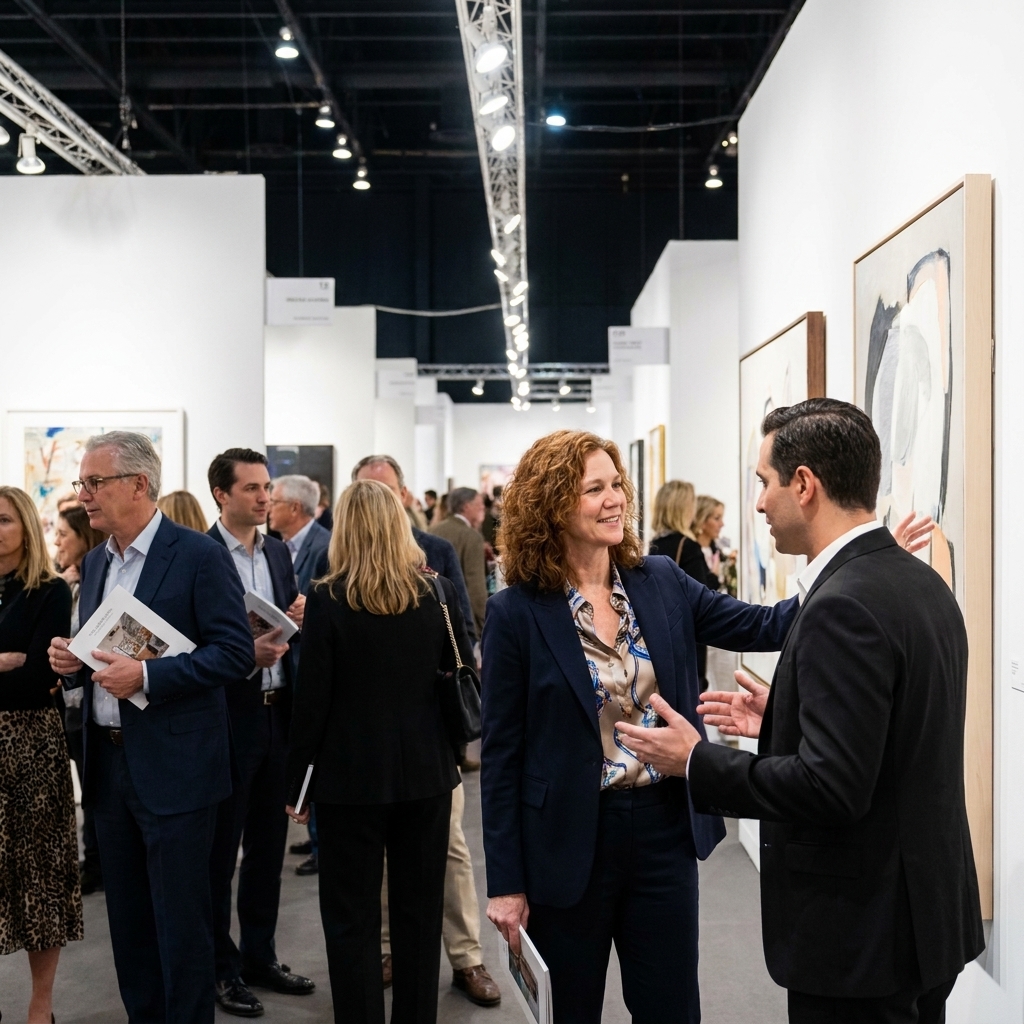
If you are buying at an art fair, the pace can feel like theater improv, quick and bright. Slow it down. You are allowed to ask for an email follow-up with documentation.
One more layer of due diligence: know who has the authority to sell. On the primary market, that is typically the representing gallery or the artist’s studio. On the secondary market, ask what the attribution rests on, and for higher-value works consider checking catalog raisonnés, the artist’s studio, or the estate when applicable.
Shipping, framing, and care
Ask early: “Does the price include framing?” and “What will shipping and insurance cost to my location?” A modestly priced work can become expensive if it requires custom framing, museum glass, or crating. None of this is a deal-breaker. It is simply part of the real budget.
If longevity matters to you, choose archival framing for works on paper and photographs (acid-free materials, UV-filtering glazing). At home, be mindful of direct sun, humidity, and heat sources. A beautiful piece can be fragile in the wrong light.
Holds, returns, and red flags
Policies vary. If a gallery offers a hold, a viewing period, or a return option, ask for the terms in writing.
Quiet red flags: no invoice, evasive answers about condition or editioning, pressure to wire immediately without documentation, or a seller who cannot clearly explain their relationship to the artist or artwork.
5) Build cohesion
When I dramaturg a production, I think about how each character changes the temperature of the room. Building a collection is similar. Each piece you add either harmonizes, interrupts, or deepens the conversation on your walls.
Three easy ways to create cohesion
- Repeat one element: a recurring color family, a shared subject (hands, windows, horizons), or a consistent scale.
- Keep one rule and break one rule: for example, all works on paper, but across different eras; or all monochrome, but across different media.
- Build in a pivot piece: one work that bridges two aesthetics, like a photograph with painterly light that connects your figurative drawing to your abstract canvas.
Live with it before you lock it in
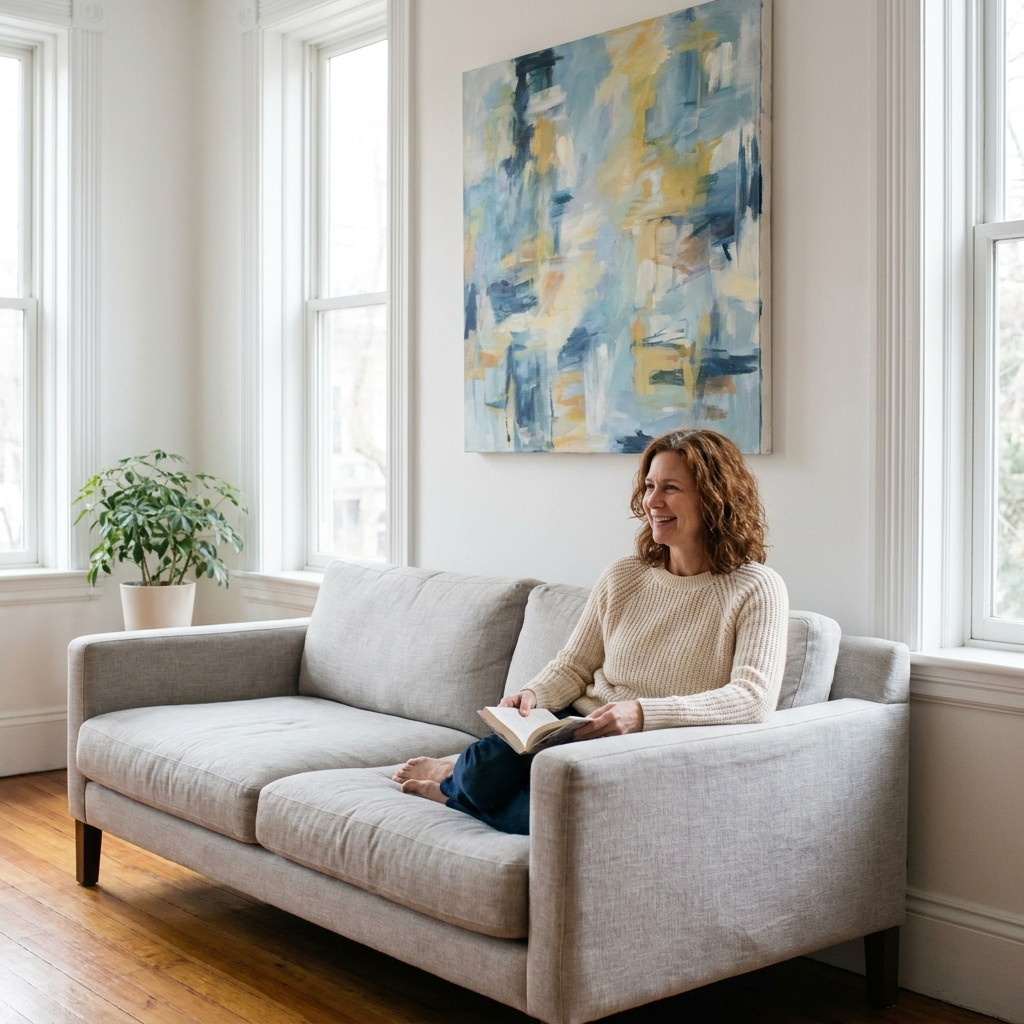
If possible, ask whether the gallery offers a short hold or a viewing period. Even a day can teach you something. Notice:
- Do you keep looking at it, or do you stop seeing it?
- Does it change with morning versus evening light?
- Do you feel calmer, braver, more attentive when it is nearby?
The best first purchases are the ones that make your daily life feel slightly more awake.

A first collection does not need to be expensive or encyclopedic. It needs to be honest. Buy what you want to spend time with, and your walls will start teaching you what you love.
Quick FAQ
Is it smarter to buy emerging artists?
It can be, but “smart” depends on your goal. If your goal is to live with work that feels urgent and close to the present, emerging artists are a joy. If your goal is stability, you might mix emerging work with more established names or editions. The best strategy is not prediction. It is commitment to what you genuinely respond to.
What is the difference between primary and secondary market?
Primary market is the first sale of an artwork, usually through the artist’s studio or representing gallery. Secondary market is resale, often via auction houses or dealers. Documentation and pricing behavior differ between the two, so it helps to know which world you are in before you buy.
Should I buy art as an investment?
Buy art first as a relationship. If value grows over time, that can be a lovely outcome, but it is a volatile and unequal market. If you need a guaranteed return, a retirement account will treat you more gently than a speculative canvas.
How do I avoid buying something I will regret?
Give yourself a pause. Take photos of the label information, ask for a PDF of the price list, and sleep on it. If you wake up still thinking about the work, that is not hype. That is attention.