
There is a particular heartbreak to watching a print quietly change. Whites warm into cream, deep blacks lift into gray, and a once-crisp edge begins to ripple like it is exhaling. The good news is that most of that damage is preventable. Preserving a fine art print is less about owning “fancy” supplies and more about making a few careful choices: stable materials, gentle handling, smart light control, and mounting that lets paper behave like paper.
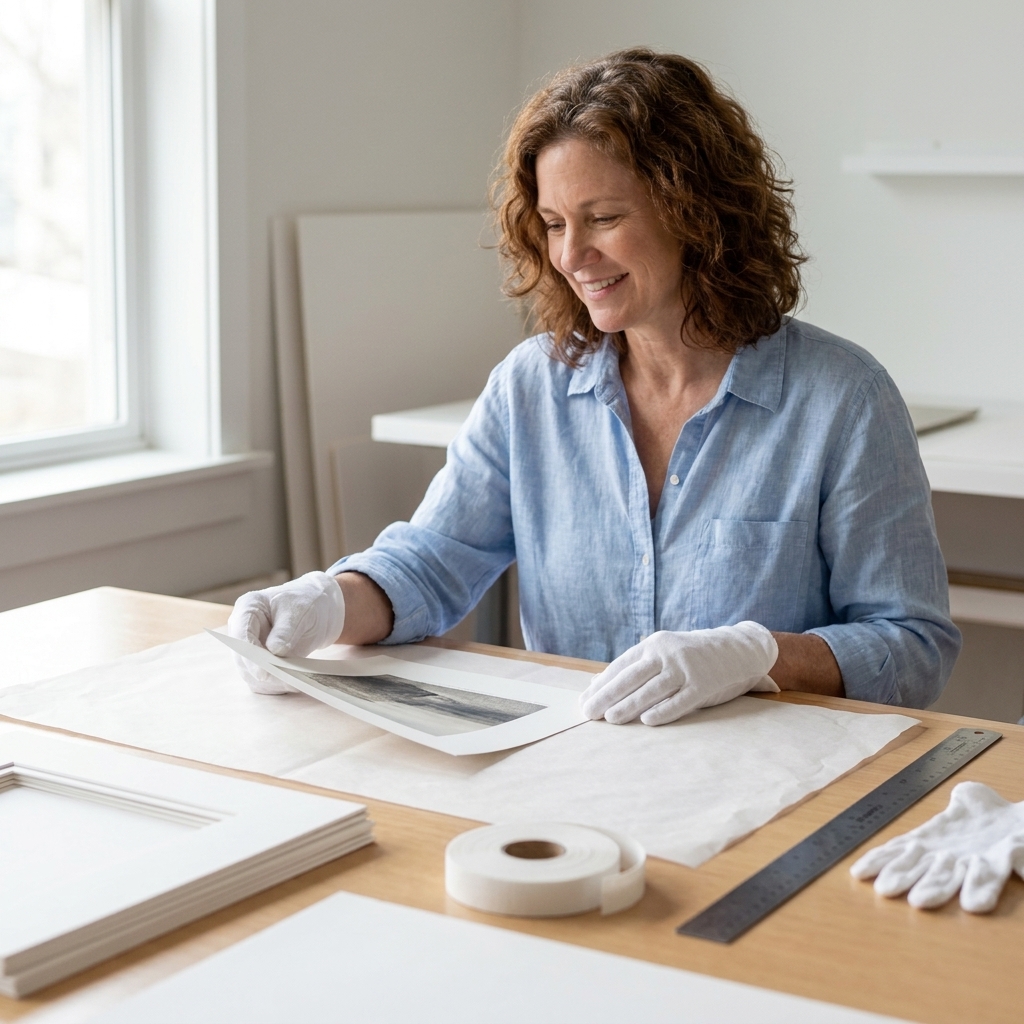
Below are the essentials I come back to again and again, whether I am helping a friend frame a new lithograph or re-housing a beloved print that has lived too long in a bargain frame.
Know what you are protecting
Before you buy anything, identify the basics. Different papers and printing processes age differently, and the “right” materials sometimes depend on what the artwork is made from.
- Paper type: Cotton rag papers are generally more stable than wood-pulp papers, which are more prone to yellowing if acids are present.
- Process: Etchings, lithographs, screenprints, and letterpress pieces usually hold up well when kept away from high light and acidity. Inkjet prints vary widely depending on inks and paper coatings. If it is an inkjet, ask the artist or printer whether it is pigment or dye ink, and what paper was used. Longevity ratings assume controlled conditions, so your display choices still matter.
- Media on top: Pastel, charcoal, and some graphite can smudge. These often need a little more spacing from the glazing and extra care during handling.
If you are unsure, a reputable framer can usually tell you what you are looking at in minutes. A quick identification now can prevent an expensive mistake later.
Acid-free is the baseline
When people say “archival,” they often mean “acid-free.” But those are not always the same thing, and marketing language is… enthusiastic. Your goal is to keep acids and reactive materials away from your paper.
What to use
- Mat board: Choose 100 percent cotton rag mat board when you can. It is a reliable, museum-standard choice for most fine art prints.
- Backing board: Look for acid-free, lignin-free backing. A sturdy conservation-grade backing board helps prevent warping and protects against punctures.
- Interleaving tissue: Acid-free tissue is useful for temporary storage, transport, or separating works in a flat file. It is available buffered or unbuffered. Choose based on the item.
Buffered vs unbuffered
Buffered papers and boards include an alkaline reserve that helps neutralize acids over time, which is often helpful for many paper prints. Unbuffered materials are often recommended for items that can react with an alkaline environment, including some photographs, dyed or tinted papers, and certain textiles (especially protein-based materials like silk or wool). If your print is a standard fine art print on paper, cotton rag mat board and an acid-free, lignin-free backing board are usually an excellent start. If you are framing a photograph, a mixed-media piece, or anything unusual, ask specifically whether buffered or unbuffered materials are recommended for that process.
When in doubt, choose high-quality cotton rag and consult a conservator or an experienced framer for anything photographic, dyed, textile-based, or mixed-media.
Light is beautiful, and risky
Most fading and discoloration come from light exposure over time. Ultraviolet (UV) is a major culprit, but high light levels (including visible light) also do real damage. You cannot reverse light damage, so prevention is everything.
Choose UV-protective glazing
- UV-filtering glass: A strong everyday choice. It reduces UV exposure significantly, and it is widely available.
- Museum glass: Typically offers excellent UV protection with anti-reflective coatings, which means you see the artwork, not your living room lamp reflected back at you.
- UV-filtering acrylic (Plexiglas): Lighter and safer for large works. Great when weight or shatter risk matters. It can scratch more easily than glass, so cleaning must be gentle.
UV protection is not the same as “fade-proof.” It buys you time, it does not grant immortality. Even with the best glazing, strong daylight day after day will still win eventually.
Hang with intention
- Avoid direct sunlight and strong, constant artificial light.
- Keep prints away from heat sources like radiators, fireplaces, and vents.
- If you have a bright home, consider rotating especially precious works seasonally, like you would rest a favorite coat between winters.

Mounting matters
Mounting is where preservation becomes physical. The goal is to support the print without stressing it, and to use methods that can be reversed later. A fine art print should be able to come out of its frame in the future without tearing, staining, or losing its dignity.
Use hinges, not glue
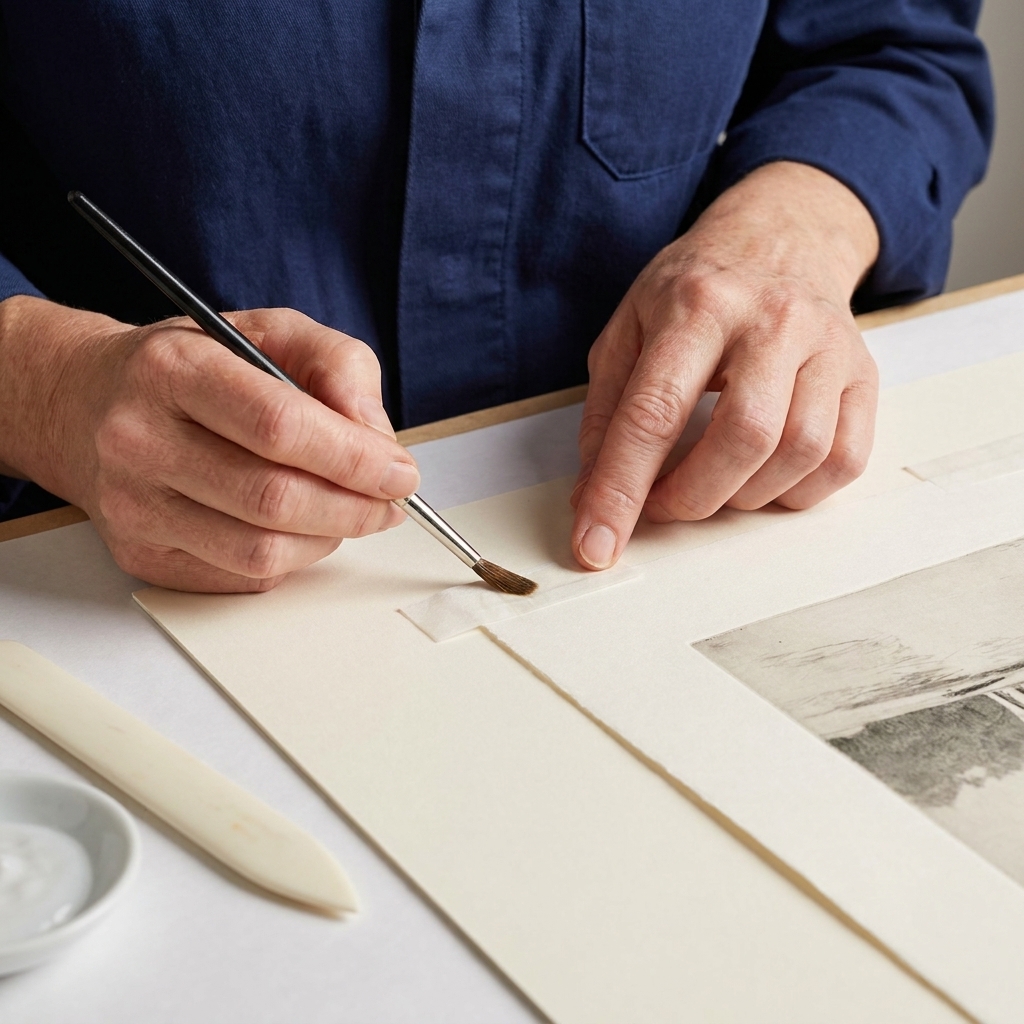
The gold standard for many paper works is hinge mounting. This means the print is attached to a backing board with small paper hinges at the top edge, allowing it to hang naturally and expand or contract with humidity changes.
- Hinge material: Japanese paper hinges are widely used because they are strong, thin, and gentle.
- Adhesive: Wheat starch paste is a conservation favorite because it is stable and reversible. Some framers use archival, reversible tapes designed for hinging, but avoid pressure-sensitive household tapes.
Avoid dry mounting for valuable prints
Dry mounting permanently adheres the artwork to a board using heat-activated adhesive. It can make a piece look perfectly flat, which is tempting, but it is generally not reversible without risk. For posters or decorative prints, it may be fine. For limited editions, signed works, or anything you would be heartbroken to damage, it is usually a no.
Give the art breathing room
Prints should not press directly against glazing. If the paper touches glass, humidity can cause it to stick, or encourage mold. A mat creates an air gap. For work framed without a mat, ask for spacers or a shadow-gap solution so the art stays separated from the glazing.
Materials checklist
If you are assembling supplies yourself, here is a practical checklist. You do not need everything at once, but these are the items that genuinely move the needle.
- Cotton rag mat board (or museum-grade alpha-cellulose if cotton is not available)
- Acid-free, lignin-free backing board
- UV-protective glazing (glass or acrylic)
- Archival hinging tissue or Japanese paper for hinges
- Reversible adhesive (wheat starch paste) or conservation-grade hinging tape as appropriate
- Photo corners for items you do not want to adhere at all (useful for ephemera, some fragile papers, or pieces you may swap out)
- Acid-free frame sealing tape to help keep out dust and slow air exchange
- Hanging hardware rated for the frame’s weight
One caution I say softly but firmly: if a product description leans hard on the word “archival” without naming specifics like acid-free, lignin-free, cotton rag, or UV-filtering, treat it like a scented candle that claims it is “clean.” Ask for the details.
Handling and cleaning
Handle prints like they are allergic to your hands
Oils and salts from skin can stain paper over time. For many tasks, clean, dry hands are perfectly safe and give you the best control. If you prefer gloves, nitrile is often the better choice for grip and to reduce snagging, especially on slick papers. Support larger prints with two hands and a backing board so the sheet does not bend under its own weight.
Do not clean the print surface casually
Dusting a framed piece is fine. Cleaning the artwork itself is where things get risky fast unless you have conservation training and the right tools. If a print is smudged, foxed, or stained, a paper conservator is your best friend.
Clean glazing correctly
- Spray cleaner onto a cloth, not directly onto the glass or acrylic, so liquid does not seep into the frame package.
- Use ammonia-free cleaner, especially around acrylic and delicate finishes.
- For acrylic, use a cleaner made for acrylic to reduce static and scratching.
Humidity and temperature
Paper expands and contracts as humidity changes. Too dry can make it brittle. Too humid invites waviness, adhesion to glazing, and mold. Aim for stability over perfection.
- Ideal range: Roughly 35 to 55 percent relative humidity, with minimal fluctuations.
- Avoid: Bathrooms, kitchens, and exterior walls that get cold in winter and warm in summer.
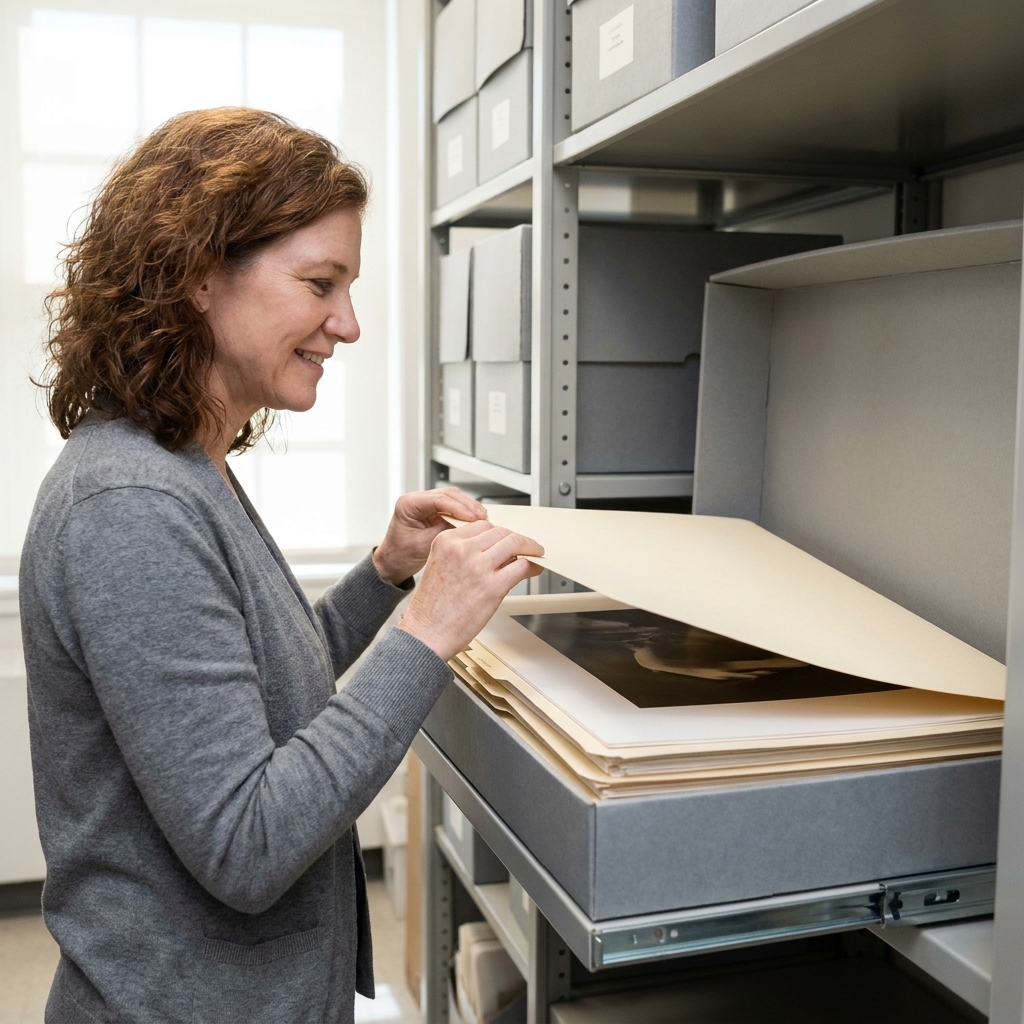
- Storage: If you are storing unframed prints, keep them flat in acid-free folders or archival boxes. Polyester (Mylar), polypropylene, and polyethylene sleeves are commonly used; avoid PVC. If rolling is necessary, use an archival tube and interleaving tissue, and do not store rolled prints long-term if you can help it.
Framing choices
A frame is not just a border, it is a micro-environment. A good frame package keeps dust out, holds materials steady, and avoids anything that can off-gas or leach into paper.
What matters in the frame package
- Rabbet depth: Enough space for glazing, mat, art, backing board, and a dust cover without compressing everything.
- Sealing: A dust cover on the back helps keep out debris and insects. Frame sealing tape can help, but frames are not truly airtight.
- Avoid direct contact with raw wood: Wood can be acidic. A barrier layer or sealed rabbet helps prevent migration into the artwork.
- Let new materials breathe: Fresh paint, varnish, and some new frames can off-gas as they cure. If possible, let them fully cure before housing valuable paper, or use barrier materials in the frame package.
When to hire a pro
If the print is valuable, irreplaceable, signed, or emotionally priceless, professional framing is usually cheaper than regret. A good framer will talk you through mat options, glazing, and mounting methods, and they should be able to explain their materials without defensiveness. If they cannot tell you whether a board is cotton rag or whether a mount is reversible, keep shopping.
Quick troubleshooting
My print is rippling inside the frame
This is often humidity, insufficient support, or a mount that is too tight. Check whether it is touching the glazing. A framer can re-mat with proper spacing and hinge mounting.
I see tiny brown specks on the paper
That may be foxing, which can be linked to moisture and paper chemistry. Do not scrub. Reduce humidity exposure and consult a conservator for treatment options.
The mat has yellowed near the artwork
Likely acidic mat board or backing. Reframing with cotton rag materials can stop further damage, though existing discoloration may remain.
The print looks faded on one side
Uneven light exposure is common near windows. Consider relocating the piece, upgrading glazing, and rotating displayed works.
A simple museum-ready recipe
If you want a straightforward set of choices that works beautifully for most fine art prints on paper, here is my go-to combination:
- Cotton rag mat board
- Hinge mount with Japanese paper and wheat starch paste (or conservation-approved alternative)
- Acid-free, lignin-free backing board
- UV-protective glazing, ideally museum glass for high-visibility spaces
- Spacers or mat to keep art from touching glazing
- Sealed back with a dust cover
It is not flashy. It is not complicated. It is simply kind to paper, and kindness is what preservation looks like up close.
Extra safety basics
A few quiet choices can save you from spectacular damage.
- Water and plumbing: Avoid hanging valuable work under bathrooms, kitchens, or anywhere a leak would drip straight down.
- Fire and smoke: Keep paper away from fireplaces, candles, and heavy smoke. Smoke residue is difficult to remove and loves to settle into mats and fibers.
- Storage position: Store framed works upright like books when possible, not stacked face-to-face. If you must stack, separate with clean board and avoid pressure.
FAQ
Is “acid-free” enough, or do I need “museum grade”?
Acid-free is the minimum. Museum-grade usually signals higher-quality materials, often cotton rag and more stable construction. If the print is limited edition, signed, or personally important, museum-grade materials are worth it.
Should I frame a print without a mat?
You can, but you still need an air gap so the paper never touches the glazing. That means spacers or a frame system designed for float mounting. A mat is the simplest, most protective solution.
Is acrylic safer than glass?
Acrylic is lighter and shatter-resistant, which is excellent for large frames or earthquake-prone areas. Glass resists scratching better. Both can be UV-protective. The best choice depends on where the work will hang and how big it is.
Can I use tape to mount a print?
Only conservation-appropriate, reversible methods should touch the artwork. Household tapes and most pressure-sensitive tapes can stain and become permanent over time.
What is the biggest mistake people make?
Hanging a beloved print in strong light, especially direct sun, and sealing it in a cheap frame with acidic materials. Light and acidity are a slow duet, but they are persistent.