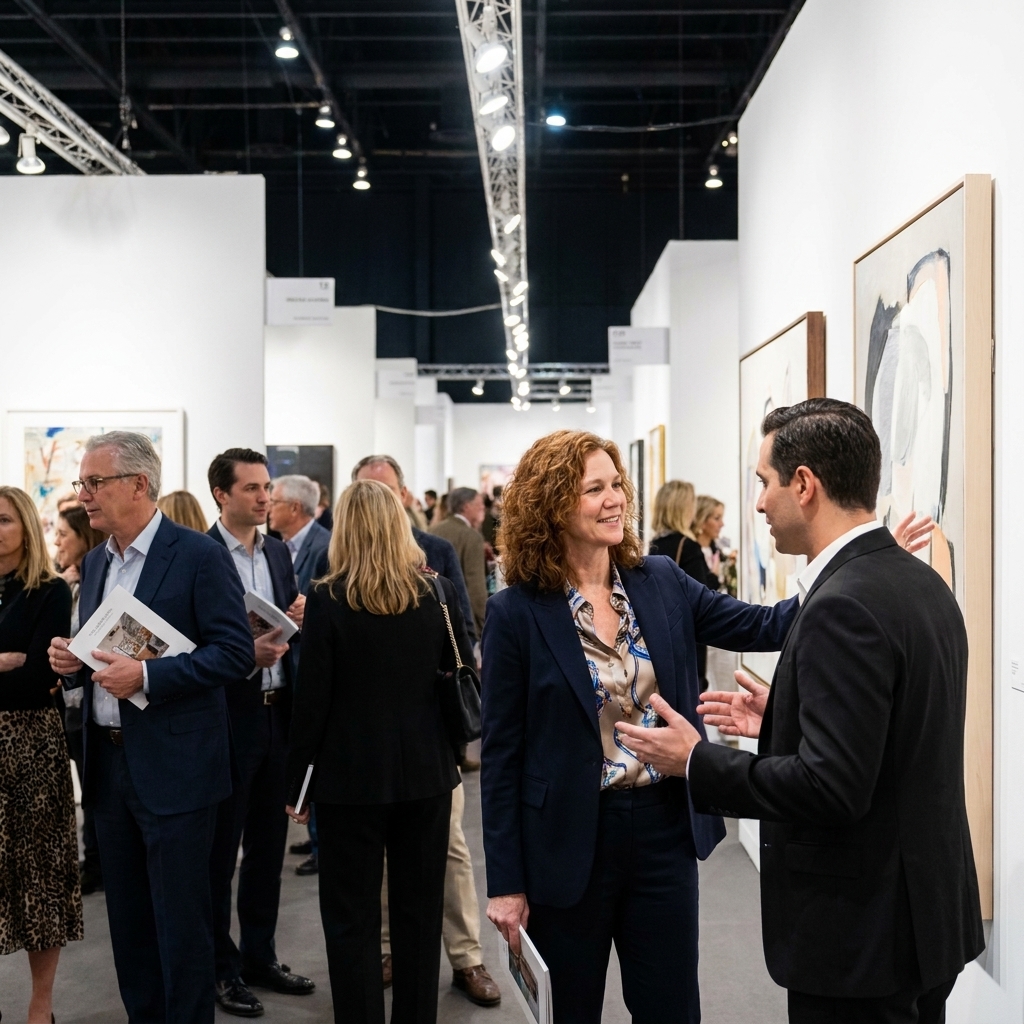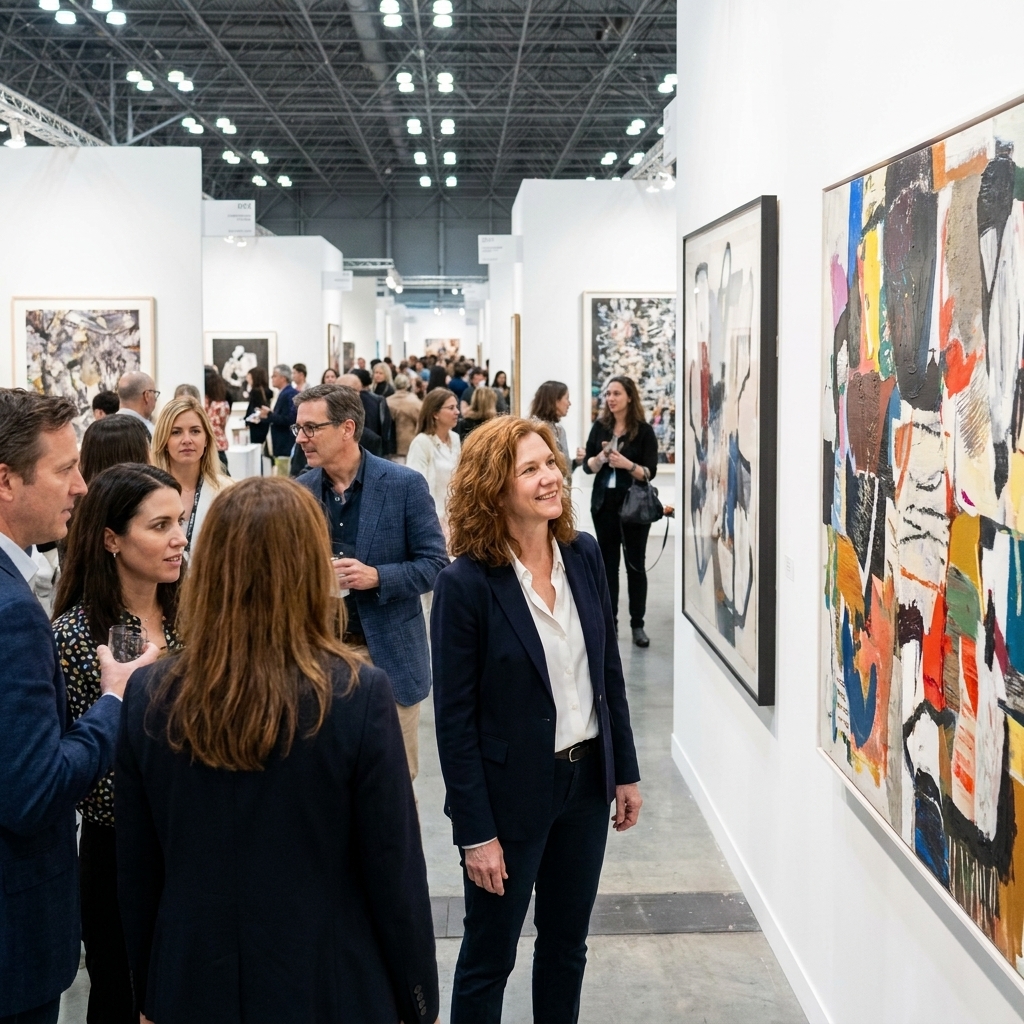
There is a particular electricity to a gallery opening : the first sip of white wine, the low hum of overlapping conversations, the way people pretend they are not looking around to see who else walked in. If you have ever stood by the doorway thinking, Do I belong here? let me gently reassure you: yes. The etiquette of these nights is less about knowing secret rules and more about being considerate, curious, and calm in a room full of expensive objects and human nerves.

Below is what I wish someone had told me before my first blue-chip opening, back when I was a young curator with a clipboard in one hand and panic in the other.
Before you go
RSVP like a person, not a placeholder
If there is an RSVP link, use it. If you were invited by email, reply with a simple yes or no. It helps the gallery staff plan, and it quietly signals that you understand this is a hosted event, not an anonymous public free-for-all.
- Bring one guest only unless the invitation clearly allows more. A surprise entourage is the fastest way to become memorable for the wrong reason.
- Know the basics: the artist’s name, the show title, and a quick look at the gallery’s website or Instagram. You do not need a dissertation. You just want enough context to ask intelligent, human questions.
Public or list-only
Some openings are open to the public, some are invite-only, and some are technically public but still run on a social list. If you are unsure, check the gallery’s website, call during business hours, or DM with a simple question: “Hi, is the opening on Thursday open to the public?” Polite clarity is always better than hovering in the doorway hoping you blend in.
Dress code
Aim for “polished, not performative.” Most openings live in the realm of smart casual with a clean silhouette. You want to look like you respect the room, but also like you can walk comfortably for two hours and still take the subway home.
- Wear: a crisp shirt or knit, tailored trousers or dark denim, a simple dress, a blazer, clean shoes you can stand in.
- Avoid: anything that sheds glitter, feathers, or loose fibers near artwork, and anything that forces you to constantly adjust it. If you are tugging at your outfit all night, you will not talk to anyone.
- Bag tip: choose a small crossbody or a slim shoulder bag that stays close to you. Large totes have a habit of swinging directly toward a painting.
- Scent: go easy on perfume or cologne. Tight rooms amplify everything.
Bring one useful thing
You do not have to bring business cards. If you already use them for work, bring a few, but do not treat the evening like a trade show. What you do need is a way to remember names.
Before you go, open a note titled “Opening” and leave it blank. After each conversation, jot two anchors: the person’s name and one detail you can follow up on. It is unglamorous, and it works.
Arriving
When to show up
If the opening runs, say, 6 to 8 pm, many people arrive about 20 to 45 minutes after start time. This varies by city, gallery, and how tight the list is, so treat it as a useful norm, not a rule. Early arrivals can feel like you are interrupting final setup. Very late arrivals can mean you miss the artist, the curator, and the breathing room needed for real conversation.
Coat check and personal space
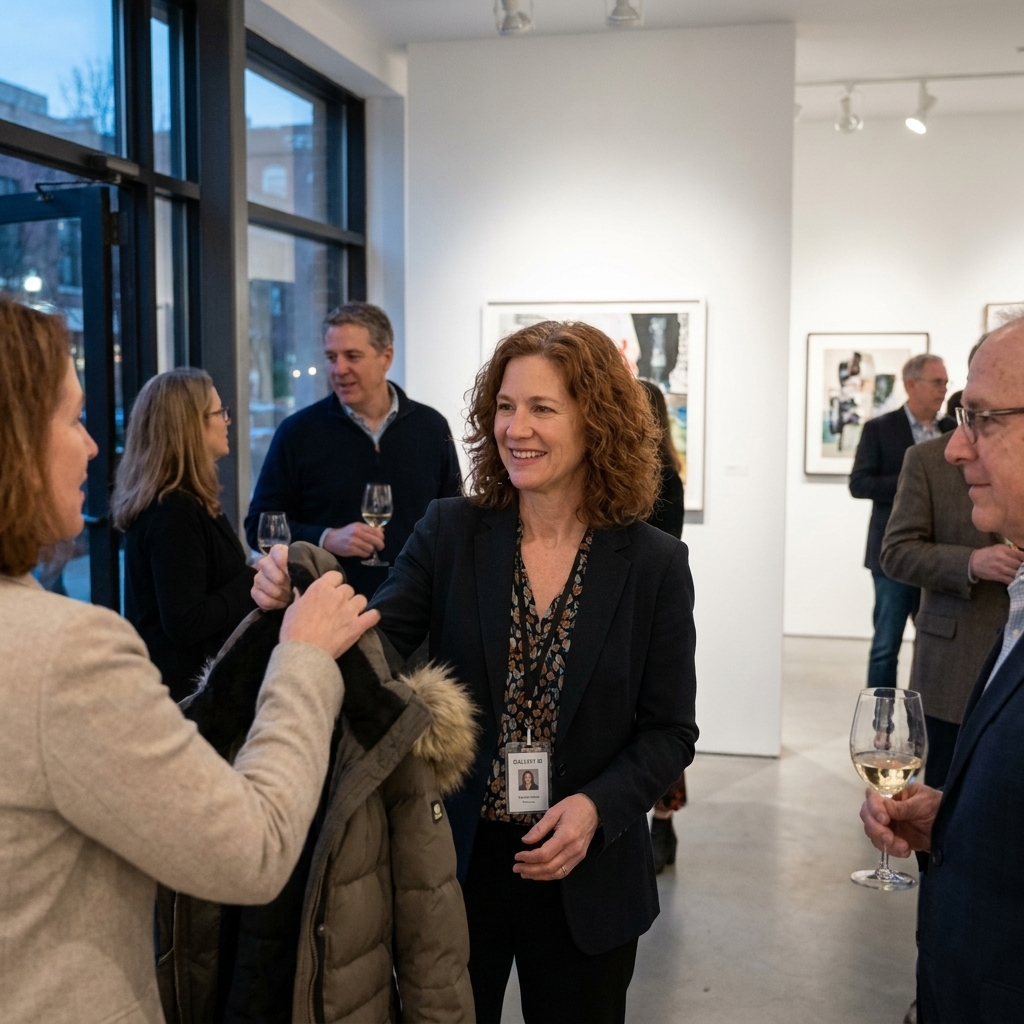
If there is a coat rack or a staff member offering to take your coat, accept. A bulky coat makes you wider in tight rooms and increases the odds you will graze a plinth. And yes, it matters. Galleries are small ecosystems of fragile objects and quiet logistics.
The first five minutes
Give yourself a small mission so you do not freeze. Mine is always the same: do one slow lap of the room before starting any conversation. Look at the work first. It gives you something real to say, and it keeps you from making networking the only point of being there.
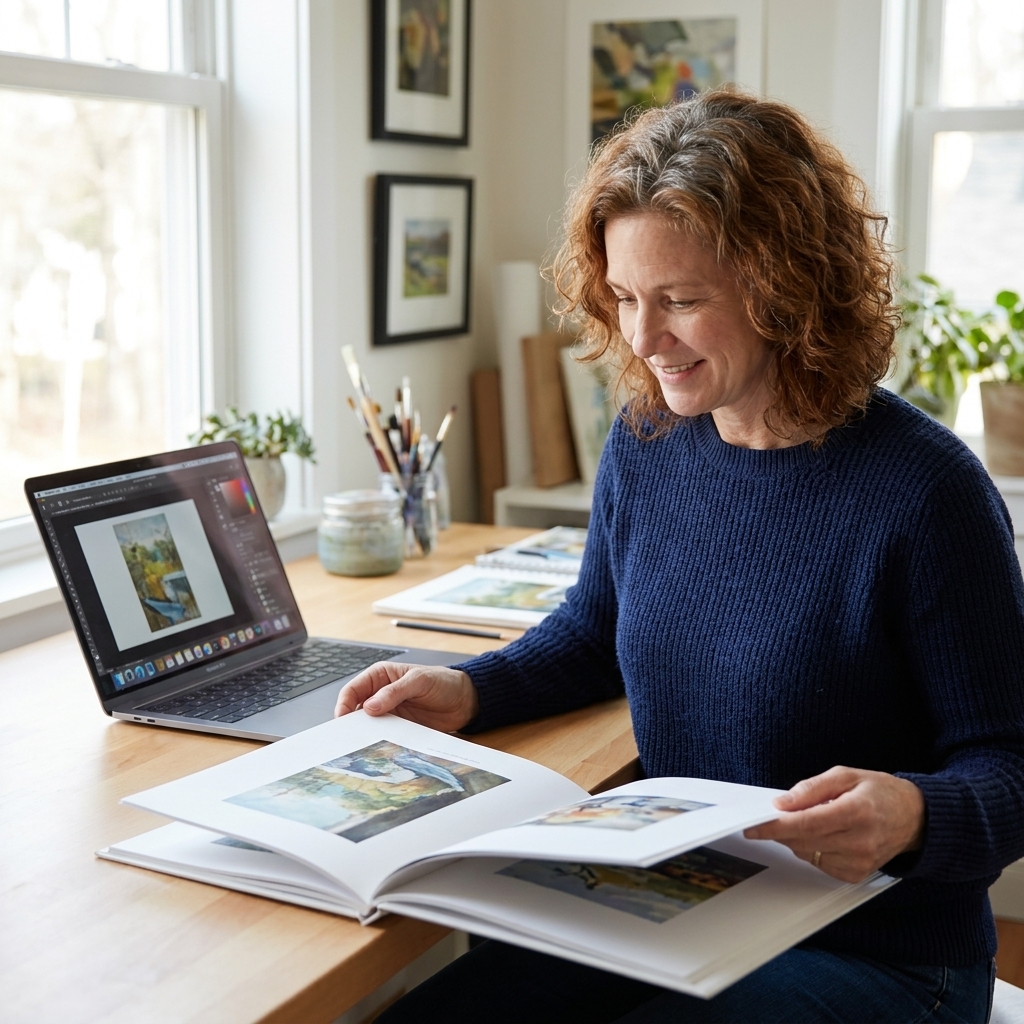
Looking at the art
Gallery openings can turn into a strange sport: people clustering directly in front of the best piece like it is a campfire. If you want to be gracious and also actually see the work, try this.
- Stand slightly to the side when you are reading a wall label so others can pass.
- Step back before stepping in. Take in the whole piece from a distance, then move closer for details.
- Keep a respectful radius. If your drink could splash, you are too close.
- Food and drink: keep cups away from pedestals and plinths, and never set a glass on any flat surface unless staff clearly indicates it is okay.
- Photos: if you take them, turn your flash off and be quick. If a “no photos” sign exists, treat it like a boundary, not a suggestion.
- People in photos: ask before photographing someone up close. Also avoid snapping price lists, collector names, or any paperwork on the desk.
Networking
Start with what is in front of you
The easiest conversation starter is the artwork itself, because it gives both of you a shared object to point at. You do not need to sound like an art historian. You need to sound like a person who is paying attention.
- “I keep coming back to this one. The surface feels almost like skin. What are you noticing?”
- “Do you have a favorite piece in the room, or is that a cruel question?”
- “I’m curious how you’re reading the materials. It feels very intentional.”
How to approach a curator
Curators are often hosting, troubleshooting, and doing emotional crowd control all at once. The best way to connect is briefly and specifically.
- Time it: approach when they are not mid-conversation, not actively greeting someone, and not holding a clipboard like it is a life raft.
- Open with gratitude: “Thank you for putting this together. The pacing of the rooms feels really thoughtful.”
- Ask one good question: “What was the first work that anchored the show for you?”
- Exit cleanly: “I won’t monopolize you. I’m Julianne, and I’m really enjoying it.”
How to talk to an artist
Artists at openings can look serene while internally vibrating. Compliments are lovely, but the best ones are grounded in something you genuinely experienced.
- Try: “This piece slowed me down. I didn’t expect to spend so long with it.”
- Try: “The color shifts feel so precise. Was that planned from the start or did it evolve in the studio?”
- Avoid: “So what does it mean?” asked like you want a password. Better: “What were you thinking about while making it?”
- Skip: asking how well it is selling. Let the first conversation be about the work and the experience of making it.

Introduce yourself
Keep it simple: name, what brought you, and a light personal thread. You can be interesting without being impressive.
- “Hi, I’m Julianne. I used to work in small galleries, so I’m always curious how exhibitions come together.”
- “I’m here because a friend mentioned the artist’s new series, and I’ve been thinking about material lately.”
- “I’m local and trying to see more shows in person, not just through my phone.”
Do not trap people
If someone’s eyes keep drifting, if their body angles away, or if they keep giving short answers, they may be ready to move on. Let them. The most elegant networkers are the ones who make it easy for others to exit.
A graceful close sounds like: “I’m going to do another lap, but I’m so glad we met.”
Small rules
- Drink hand: if you are right-handed, holding your drink in your left keeps your right hand free for greetings and reduces accidental splashes when you gesture. If you are left-handed, reverse it. Comfort and control win.
- Do not touch the art, even if the texture is begging you. If it is interactive, there will be explicit instructions.
- Mind the labels: do not block wall text while having a long conversation. Step aside once you have read.
- Be kind to staff: the person pouring wine today might be the person running the gallery tomorrow. Also, kindness is never wasted.
- Phone etiquette: texting is fine. Loud calls are not. If you need to take a call, step outside.
Money talk
Openings are social, but they are also business. If you are interested in purchasing, there is a way to do it that respects everyone’s role.
- In most commercial galleries, ask staff, not the artist: “Could I see the checklist or price list when you have a moment?”
- If you are in an artist-run space, the artist may be the one handling sales. Even then, keep it low-pressure and private: “Is there someone I should speak to about availability?”
- If you are browsing: “I’m interested in learning more about availability.”
- If you are serious: ask about edition details, materials, framing, and lead times, then request to follow up by email.
And if you are not buying, you are still allowed to be there. Looking closely and speaking thoughtfully is its own kind of support.
Following up
Send one good email
If you met someone you genuinely want to know, send a short message within 48 hours while the memory is still warm. Reference something specific so it does not read like a template.
Example:
Hi Mira, it was lovely meeting you at the opening last night. I keep thinking about what you said regarding how the installation changes the way we read the shadows. If you’re open to it, I’d love to stop by one afternoon when it’s quieter and hear more about the process. Best, Julianne
It is completely normal to follow the artist and the gallery after you attend. If you DM, keep it short and sincere. Commenting thoughtfully on a post can be a better first step than asking for something immediately.
Become a familiar face
Networking in “high culture” spaces is rarely about one dazzling conversation. It is about repeated, low-pressure encounters. Show up consistently. Learn people’s names. Ask good questions. Treat the work seriously and the room gently. Over time, the space that once felt intimidating starts to feel like a community.
Common dilemmas
What if I go alone?
Going alone is often easier. You are more approachable, and you can move freely. Give yourself a simple structure: one lap, one conversation, one follow-up.
What if I do not understand the work?
You do not have to “get it” instantly. Try describing what you notice before you interpret it: color, scale, material, repetition, mood. Then ask: “What drew you to it?” or “How did you read this piece?” You will learn more from that than from pretending certainty.
Is it rude to leave quickly?
No. A clean 45-minute visit can be perfect. Find the host or a staff member, offer a quick thank you, and slip out.
Can I bring my portfolio or pitch my work?
Not at an opening, unless you were explicitly invited to do so. If you are an artist, aim to build a relationship first. Ask for a studio visit protocol, or request a submission link . Openings are for the show at hand.
What if I get overwhelmed?
Step outside for two minutes. Find a quieter corner. Take a slow lap and give yourself a reset. If social anxiety, sensory overload, or neurodiversity makes openings feel like a lot, you are not doing it wrong. You are having a human nervous system in a crowded white room. It is also completely fair to visit the show during regular hours when it is calmer.
If you take nothing else with you, take this: the best etiquette is attention. Attention to the art, to the people in the room, and to your own boundaries. You are allowed to be curious. You are allowed to belong. And yes, you are allowed to have a second biscuit with your Earl Grey afterward, because social bravery deserves a small reward.