There is a particular hush that falls when you open an old theater program. The paper is softer than it used to be, the ink has settled into the fibers, and suddenly you are holding an evening that already happened. A cast list becomes a time capsule. An ad for a long-gone tailor becomes local history. A penciled note in the margin becomes a tiny human confession: she was extraordinary.
Collecting vintage theater programs is one of the most intimate ways to keep performance art close, especially because theater is famously fleeting. Below is a step-by-step path for building a collection with intention, learning what you have, and keeping it safe for the long haul without turning your living room into a climate lab.
A quick term note: “program” is the general word. “Playbill” is also a program, but it is specifically the well-known U.S. brand (and a term many people use casually for any program). Use whichever fits your collection, but be precise when you are cataloging or buying online.

Decide what kind of collector you are
Before you buy a single Playbill, choose a focus. It will save you money, space, and a surprising amount of decision fatigue when you are staring at a box of mixed ephemera at an estate sale.
Choose a collecting lane
- A single theater or company: A specific playhouse, an opera company, a regional repertory theater, a dance troupe.
- A single era: Depression-era touring productions, postwar Broadway, the downtown scene of the 1970s and 1980s, mid-century summer stock.
- A single genre: Shakespeare programs, modern dance, musical theater, avant-garde performance.
- Artists you follow: Programs tied to a director, playwright, choreographer, performer, or designer.
- Design history: Programs for their typography, illustration, photography, and ad layouts.
If you are unsure, start with one shelf rule: pick a scope that could fit on a single shelf for your first year. You can always widen later, but it is hard to edit once the paper piles up.
Where to find vintage programs worth keeping
The best sources depend on your patience and your tolerance for digging. Some collectors love the hunt. Others want a clean, curated purchase. The key is knowing what each source tends to offer.
Reliable places to source
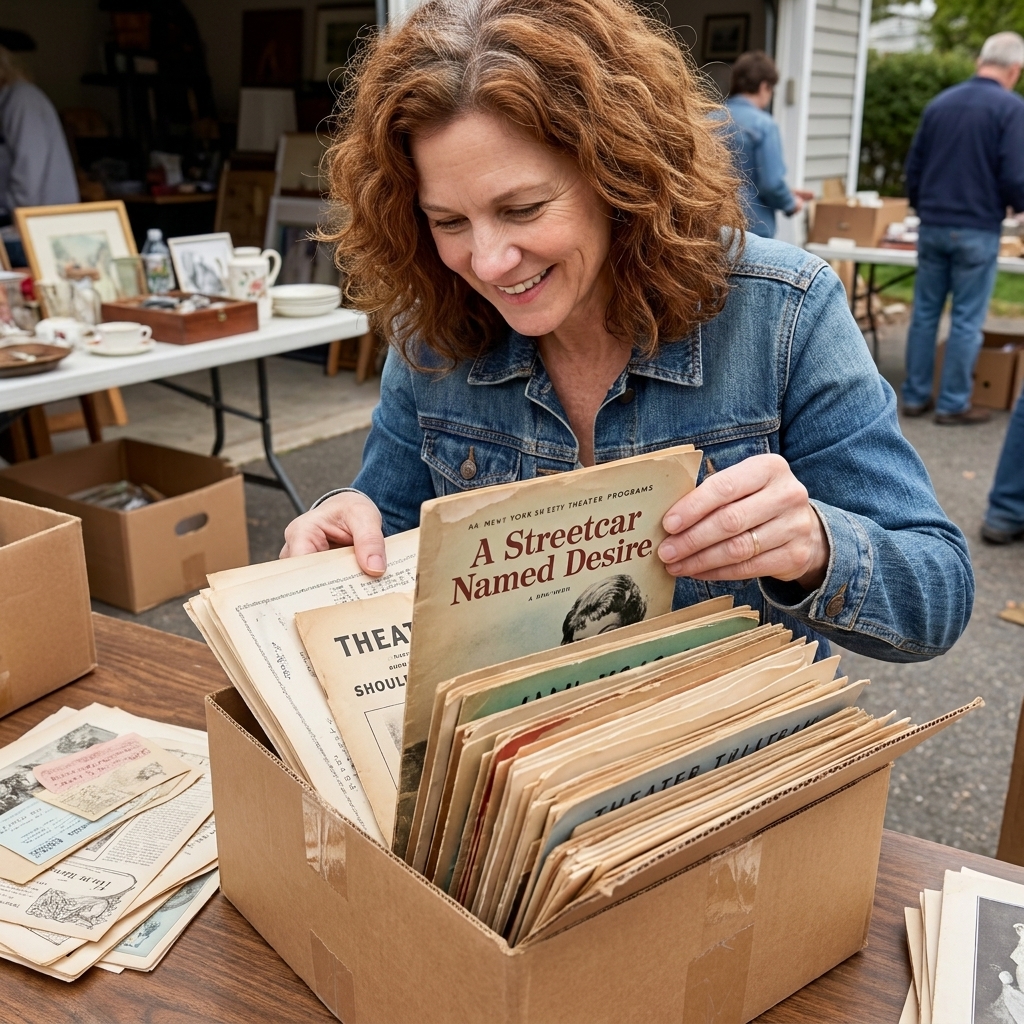
- Estate sales and house clear-outs: Often the richest for local theater history and handwritten notes. Bring a flashlight and a tote with rigid backing so programs do not fold.
- Antique shops and paper dealers: Typically higher prices, but someone has already done the sorting and basic condition screening.
- Bookstores with ephemera sections: A sleeper hit for older programs tucked in with sheet music or film memorabilia.
- Theater auctions and benefit sales: Great for signed items and special events programs.
- Online marketplaces: Excellent for filling gaps, but you need sharper condition questions and clearer photo requests.
- Library and university sales: Occasionally, depending on institutional policy, you may find duplicates, community donations, or general-stack materials at public sales. True special collections deaccessioning is less common and varies widely.
How to check authenticity calmly
Most vintage theater programs are less commonly forged than some other collectibles, but mislabeling and accidental mixing happen all the time, especially online. The biggest risk area tends to be high-profile items and signatures: celebrity-signed Playbills, major Broadway openings, and anything advertised as rare because it is signed. Authentication is less about paranoia and more about a few repeatable checks.
Start with the physical tells
- Paper and staples: Older programs often show gentle oxidation around staples and a different paper feel than modern glossy stock. Fresh, bright staples in an otherwise aged program can mean it was re-stapled.
- Printing and paper that fit the period: Many programs were produced with offset, gravure, or other commercial methods that may not leave any impression at all. Rather than hunting for a single “tell,” look for overall consistency: paper weight, dot patterns, ink density, and the general look you would expect for that decade.
- Smell is a clue, not a test: That vanilla-like “old paper” scent can come from natural paper aging, but storage environment matters too. Closets, basements, and smoke can all leave their own fingerprints.
Check internal consistency
Open the program and see if the story holds together:
- Dates and venues: Does the announced run match what you can confirm through a theater’s archive page, a library catalog listing, or reputable production databases?
- Cast list and billing: Names, roles, and ordering can change across previews, opening, revivals, and touring companies. A mismatch is not always “fake,” but it is a prompt to identify which version you have.
- Advertisements: Ads are wonderful timestamps. A phone number format, a neighborhood nickname, or a defunct business can corroborate period.
Ask smart questions when buying online
- “Can you photograph the centerfold and the back cover?”
- “Are there any loose pages, missing inserts, or writing inside?”
- “Has it been stored in a basement, attic, or smoker’s home?”
- “Can you confirm if the autograph is directly on the program or on an added slip?”
- “Do you know if the signature was obtained in person, or is it unverified?”
If a seller refuses basic photos or cannot answer condition questions, treat it as a polite no. There will be another program.
What to collect beyond programs
Programs are the spine of many collections, but performance memorabilia has a whole supporting cast. A thoughtful mix can deepen the story of a production without becoming clutter.
Companion pieces that archive well
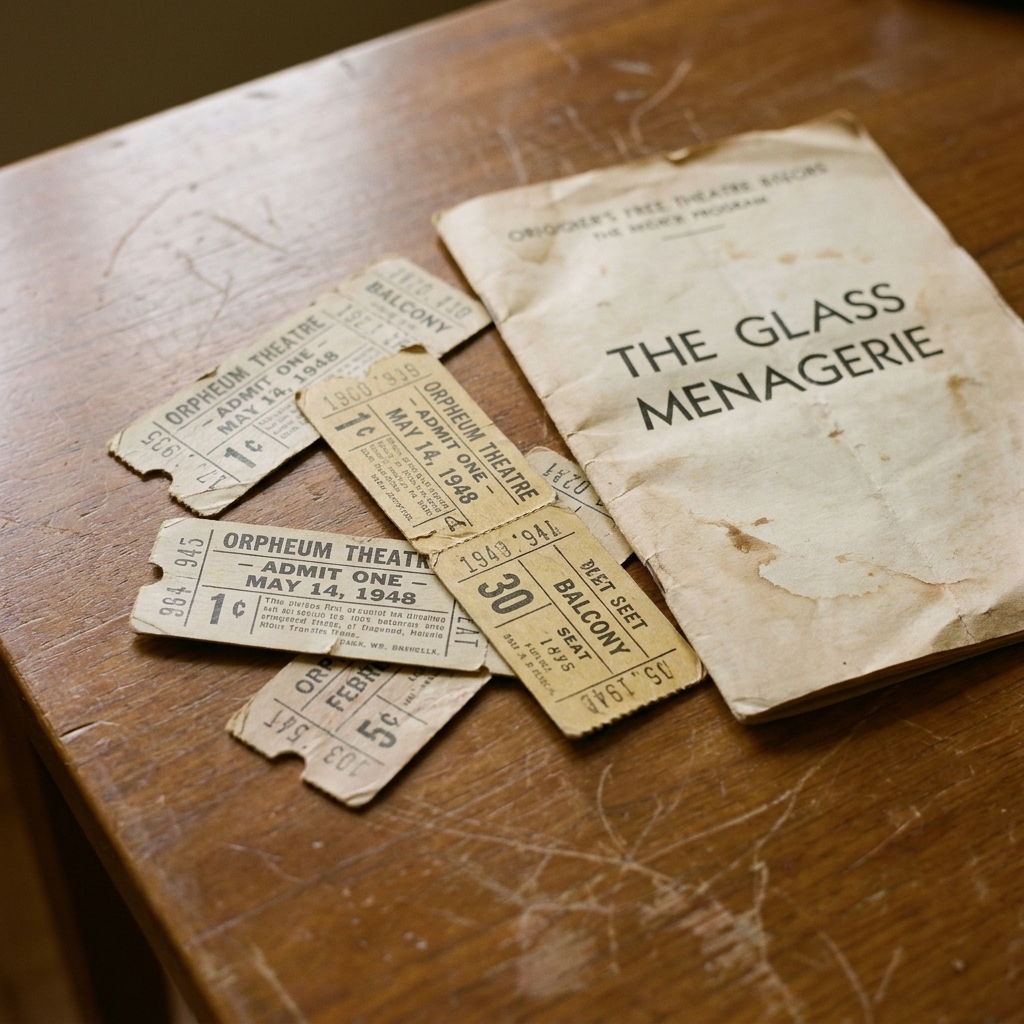
- Tickets and ticket stubs: Small, easy to store, and often printed with date and seat location.
- Press clippings: Best kept as photocopies or scans when possible, since newsprint is famously unstable.
- Production postcards and flyers: Especially valuable for fringe festivals and short-run work.
- Opening night menus and gala programs: A snapshot of theater as a social world.
- Signed inserts: Better than signing the cover, from a preservation perspective, because it lets you keep the main item in a stable sleeve.
Condition: how picky to be
Condition is a personal decision, and it depends on whether you are collecting for love, for historical completeness, or for resale value. Most of us are somewhere in the middle.
Common condition issues
- Creases and folds: Often acceptable for older items and can even signal real use. Deep creases may weaken paper and make tears more likely.
- Loose or rusty staples: Loose is manageable; rust can stain. If the staples are stable and not actively staining, leaving them in place is often safest. If rust is active, isolate the program in a sleeve and consider professional help for valuable items.
- Foxing (brown speckles): Usually permanent. Not necessarily “dirty,” but it indicates paper aging and possibly past humidity.
- Water staining: Can mean mold risk. Proceed cautiously and do not store it beside clean items until you are sure it is stable.
- Writing: Purists dislike it, historians adore it. A dated note like “first date with Anna” is provenance of a different kind.
My curator’s rule of thumb: if the item makes you want to read it, keep it. If it makes you want to apologize for it, pass.
How to handle paper ephemera
Preservation begins with touch. The oils on our hands and the habits of casual flipping do more damage over years than a single dramatic accident.
Simple handling habits
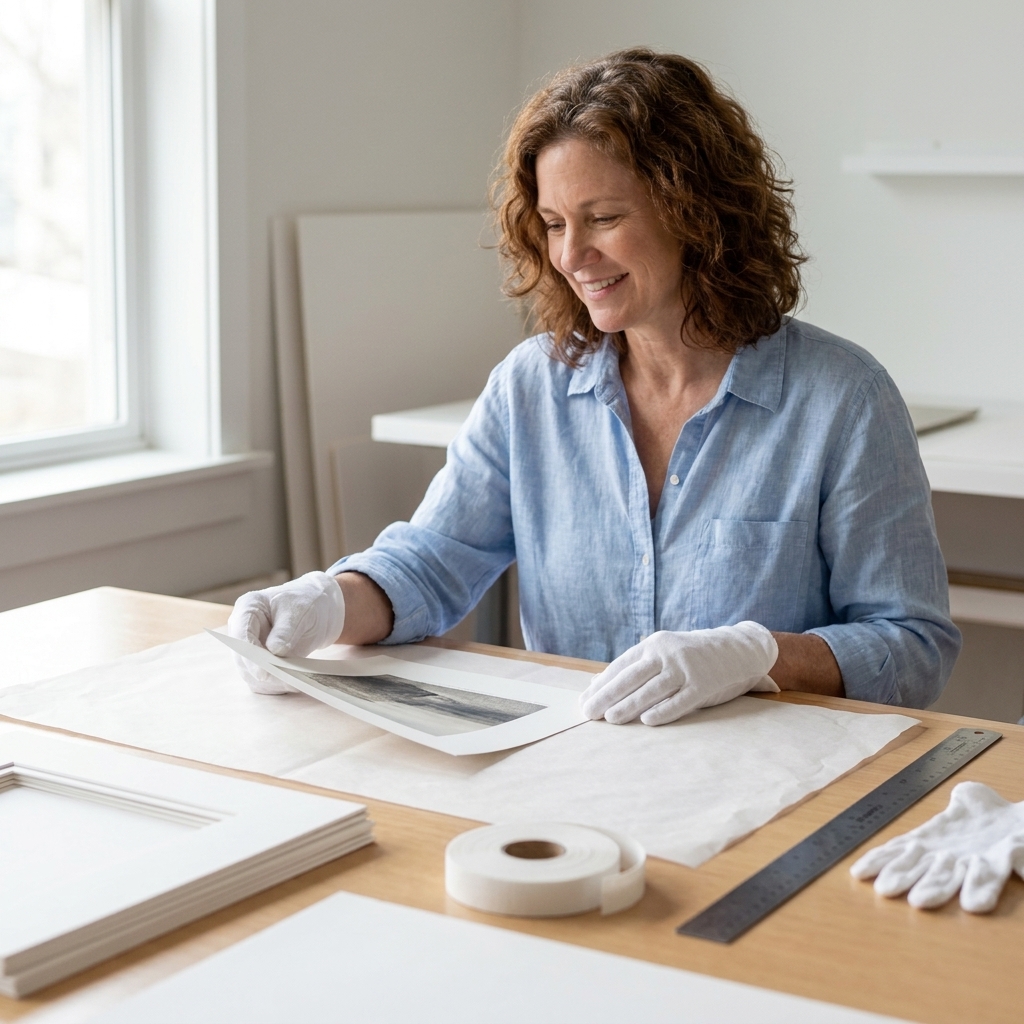
- Wash and dry hands thoroughly before handling. Cotton gloves can reduce fingerprints, but they also reduce dexterity and can cause tearing. Clean, dry hands are often safest for paper.
- Support fragile programs with a stiff board or a folder underneath when moving them.
- Turn pages slowly from the edges, never by pinching the middle of a page.
- Keep food and tea away. Yes, I am saying this as a person who loves Earl Grey. The tea stays on a different table.
Archival supplies that matter
You do not need a museum budget. You do need the right materials, because ordinary plastics and acidic paper products quietly eat collections from the inside out.
Look for these keywords
- Acid-free and lignin-free: For folders, boxes, and backing boards.
- Archival polyester, polypropylene, or polyethylene sleeves: Avoid PVC. If a sleeve smells strongly like plastic or feels oily, skip it.
- Buffered vs unbuffered: Buffered enclosures are commonly recommended for most paper items because they help counteract acidity over time. Choose unbuffered for photographs, protein-based materials (like silk), and some unknown mixed-media pieces. When in doubt, follow the supplier’s guidance or keep mixed items separated so each can be housed appropriately.
A starter kit for beginners
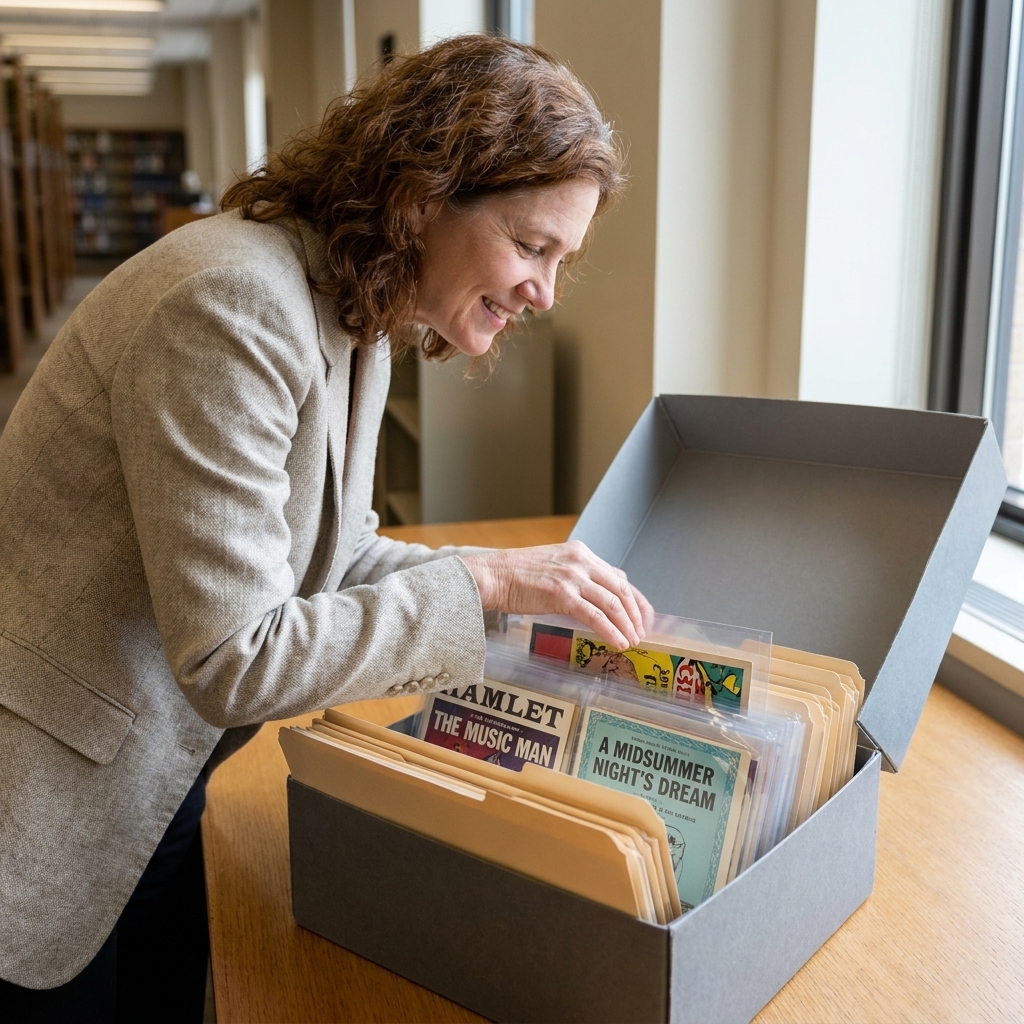
- Acid-free archival storage box (letter or legal size depending on your collection)
- Acid-free folders
- Archival sleeves sized for Playbills and larger programs
- Acid-free backing boards for thin or fragile items
- Soft pencil for labeling folders (avoid ink that can bleed or transfer)
How to store programs at home
The enemies of paper are light, heat, humidity swings, pressure, and pests. The goal is not perfection. The goal is stable and boring.
Storage basics
- Temperature and humidity: Aim for cool and consistent. Avoid attics, basements, and closets that share a wall with a shower.
- Light: Keep programs in boxes or drawers. If you frame one, use UV-filtering glazing and keep it out of direct sun.
- Flat versus upright: Store fragile or oversized programs flat. Standard Playbills can be stored upright in a snug archival box with folders as dividers.
- No overcrowding: Overstuffed boxes cause edge wear and spine stress. Leave a little breathing room.
Pests: quiet, real, preventable
- Keep the storage area clean: Dust and crumbs invite the wrong kind of audience.
- Quarantine new finds briefly: Store new acquisitions separately for a week or two so you can spot issues before they mingle with the rest.
- Monitor lightly: If pests are a known problem where you live, consider discrete sticky traps near (not inside) storage areas.
Framing and display
Displaying a program is a joy, and it is also a slow sacrifice if done casually. If you want to frame a favorite:
- Use an acid-free mat so the paper does not touch the glazing.
- Avoid pressure-mounted “floating” styles that rely on adhesives.
- Rotate what you display. Let the rest rest in the dark.
Staples, inserts, and repairs
This section is here because I have seen heartbreak in the form of Scotch tape.
What not to do
- No tape, ever: Household tapes yellow, harden, and stain. The adhesive migrates into paper fibers.
- No lamination: It is permanent and damaging over time.
- No glue sticks: They seem gentle, but they introduce moisture and chemicals.
- No “cleaning” with erasers unless you know what you are doing: You can abrade the surface and lift ink.
About removing staples
Staples are part of the object’s original structure. If they are stable and not staining, leaving them alone is often the safest choice. If you see active rust or staining, you can reduce risk by sleeving the program and keeping it away from clean items. For high-value or brittle items, consult a conservator before you attempt removal. If you do remove staples on a low-stakes item, use a microspatula or staple lifter, work slowly, and keep pages supported and in order.
When to consult a conservator
If you have mold, severe water damage, brittle paper that crumbles, or items of high value, consult a paper conservator. A professional treatment can stabilize an object and prevent damage to the rest of your collection.
Mold: what to do now
Musty odor and spotting can be a warning sign. Mold is not a DIY project, and it is also not something to ignore.
Immediate steps
- Isolate the item from the rest of your collection right away.
- Avoid brushing or wiping since you can spread spores and grind them into paper.
- Protect yourself with gloves and a well-fitting mask if you must handle it.
- Keep it dry and in a clean, ventilated space, away from other paper.
- Consult a conservator if you see active mold, feel dampness, or notice worsening spots.
Cataloging: make it a collection
Cataloging sounds fussy until the day you cannot find the program you know you own. A simple record also helps with insurance and makes your collection more useful to future researchers, including the future you.
What to record
- Production title
- Venue and city
- Date of performance or season
- Company or presenter
- Notable artists (director, choreographer, lead performers, designers)
- Condition notes (rust, tears, writing, missing pages)
- Where you got it and when (estate sale, gift, online purchase)
- Storage location (Box 2, Folder 6)
You can do this in a spreadsheet, a notes app, or a dedicated collecting database. The best system is the one you will actually use on a sleepy Sunday afternoon.
Digitize for backup
A scan will not replace an original, but it can preserve access and protect fragile items from repeated handling.
A simple approach
- Photograph or scan flat when you can: Avoid forcing a tight spine open.
- Aim for readable detail: Higher resolution is useful for cast lists, ads, and marginal notes.
- Name files to match your catalog: For example: Title_Venue_YYYY-MM-DD_Box2-Folder6.
- Store backups in two places: A local drive plus a cloud copy is a practical baseline.
Shipping and travel
If you buy remotely, your biggest risk is not authenticity. It is a careless bend in transit.
Ask for protective shipping
- Programs should ship flat between rigid boards, inside a waterproof sleeve, inside a mailer that does not flex.
- For valuable items, request corner protection and insurance.
- If staples are already loose, ask the seller to place the program in a sleeve so pages cannot shift.
When you are sourcing in person
- Bring an archival folder or a rigid portfolio case if you plan to hunt seriously.
- Do not roll programs unless they were originally issued as posters and are sturdy enough to tolerate it.
Value and ethics
Most collectors start for love, not resale. Still, value comes up, and it is worth holding it gently.
- Sentimental value is real value. A modest community theater program from your grandmother’s town can matter more than a famous revival to your personal archive.
- Rarity often hides in the margins. Short-run productions, small festivals, and experimental venues can be harder to find than big-name Broadway runs.
- Credit and context matter. If you post pages online, note the production, venue, and date. It helps preserve context, which is half the point.
- Consider rights before sharing full scans. Programs can contain copyrighted photos, artwork, and text. Sharing a few images for commentary is different from posting an entire interior as a downloadable copy. When in doubt, share selectively and add attribution.
FAQ
Should I remove rusty staples?
If the staples are actively rusting and staining the paper, removal can help, but it can also cause tears and disrupt the original structure. For most items, start by isolating the program in an archival sleeve and keeping it dry and stable. If it is valuable, brittle, or sentimental enough to make your hands shake, consult a conservator. If you remove staples yourself, keep pages in order and store them supported with an acid-free backing board.
Can I store programs in regular plastic page protectors?
Some office protectors are polypropylene and may be okay short-term, but many are not truly archival and can trap moisture. For long-term preservation, choose sleeves explicitly labeled archival and avoid PVC.
How do I deal with a musty smell?
Mustiness can indicate past humidity or mold. Isolate the item from the rest of your collection. If you see active mold or feel dampness, stop and consult a conservator. Do not try to deodorize with sprays, powders, or “freshening” sheets.
Is it okay to collect reprints?
Absolutely, as long as you label them clearly as reprints. They are wonderful for display and handling, while the originals can stay safely stored.
Start small, archive with care
A vintage theater program collection does not have to be expensive or exhaustive to be meaningful. Begin with a handful that genuinely move you. Give them stable storage and a simple catalog. Then let the collection grow the way theater does, one night at a time, one story after another.
If you want a personal challenge: pick one program you already own, research the production for fifteen minutes, and write a single sentence about what that night might have felt like in the room. That is how paper turns back into performance.