Your first gallery exhibition has two lives. One is the work itself, quiet and brave on the wall. The other is the social life around it: the invitations, the whispers, the screenshots, the friend who brings a friend who turns into a collector six months later.
If you are an artist or a first-time curator, it is tempting to treat promotion like an add-on, something a “real” gallery would handle. But promotion is simply hospitality. You are setting the table so the right people can arrive and stay long enough to truly look.
Below are five strategies I have watched consistently move the needle for new shows. Not vanity traffic, but high-value foot traffic: people who buy, people who write, people who program future opportunities, and people who become repeat visitors.
1) Start with a story, then build your press list
Press does not “cover art.” People cover stories. The artwork is the heart, but the story is the handle someone can hold onto.
Find your angle without forcing one
Here are story angles that are both honest and easy for editors to place:
- A local hook: your first solo show in a neighborhood, a return after moving away, a site-specific response to a building or street.
- A material hook: unusual process, reclaimed materials, darkroom techniques, handmade pigments, or a performance element.
- A human hook: collaboration, mentorship, a community partner, or a personal thread that shaped the series.
- A timely hook: an anniversary, a seasonal program, or a cultural moment your work speaks to without being opportunistic.
Build a press list that matches the show
For a first exhibition, you want a layered press list rather than one dream outlet.
- Local arts editors (city magazines, alt-weeklies, neighborhood newsletters).
- Community calendars (these can quietly drive serious foot traffic).
- Specialist writers (photography, painting, contemporary craft, performance).
- Culture-adjacent beats (design, architecture, food, nightlife, depending on your audience).
Send a pitch that feels like a gift, not a demand
Keep it short. Make it easy. Include:
- A subject line that states what it is: “Press invite: [Exhibition Title] opening [Date]”
- Two to four sentences on the story and why it matters now
- A single link to a press kit folder (no attachments unless requested)
- Dates, location, opening reception time, and any programming
- Two to three high-resolution images with captions inside the folder
Then follow up once, politely, about four to six days later. If you are ignored, it is not personal. Editors are drowning. Your job is to be clear, kind, and persistent without hovering.
Micro-template: press pitch email
Subject: Press invite: [Exhibition Title] opening [Date]
Body:
Hi [Name],
I am reaching out to invite you to [Exhibition Title], a solo exhibition by [Artist] at [Gallery] in [Neighborhood]. The show explores [one-line theme] through [medium/process], including [one specific detail that makes it newsworthy].
Opening: [Day, Date, Time]
Run dates: [Dates]
Location: [Address + link]
Press kit: [Link to folder]
If it is a fit, I would love to welcome you. Thank you for considering.
[Your name], [Role], [Phone]
2) Create a visual identity and use it everywhere
Your exhibition needs to be recognizable in a second, the way a playbill catches your eye from across a lobby. This is not about branding yourself into a logo. It is about consistency, which reads as confidence.
Choose three elements and commit
- One typeface pairing (serif plus sans, or two weights of the same family).
- One color mood drawn from the work or the space.
- One image style for promotional photos: consistent lighting, framing, and background.
Use these across your Instagram posts, Stories, email headers, printed cards, and your press kit. When someone sees a repost, they should instantly know it is yours.
Make assets that other people want to share
Do not just post a poster. Give your audience something to pass along:
- A clean square “save the date” image
- A Story-sized slide with the address and time clearly visible
- A short reel: hands installing work, a slow pan of texture, a 10-second glimpse of the space
- A portrait of the artist or curator in the gallery, not overly posed
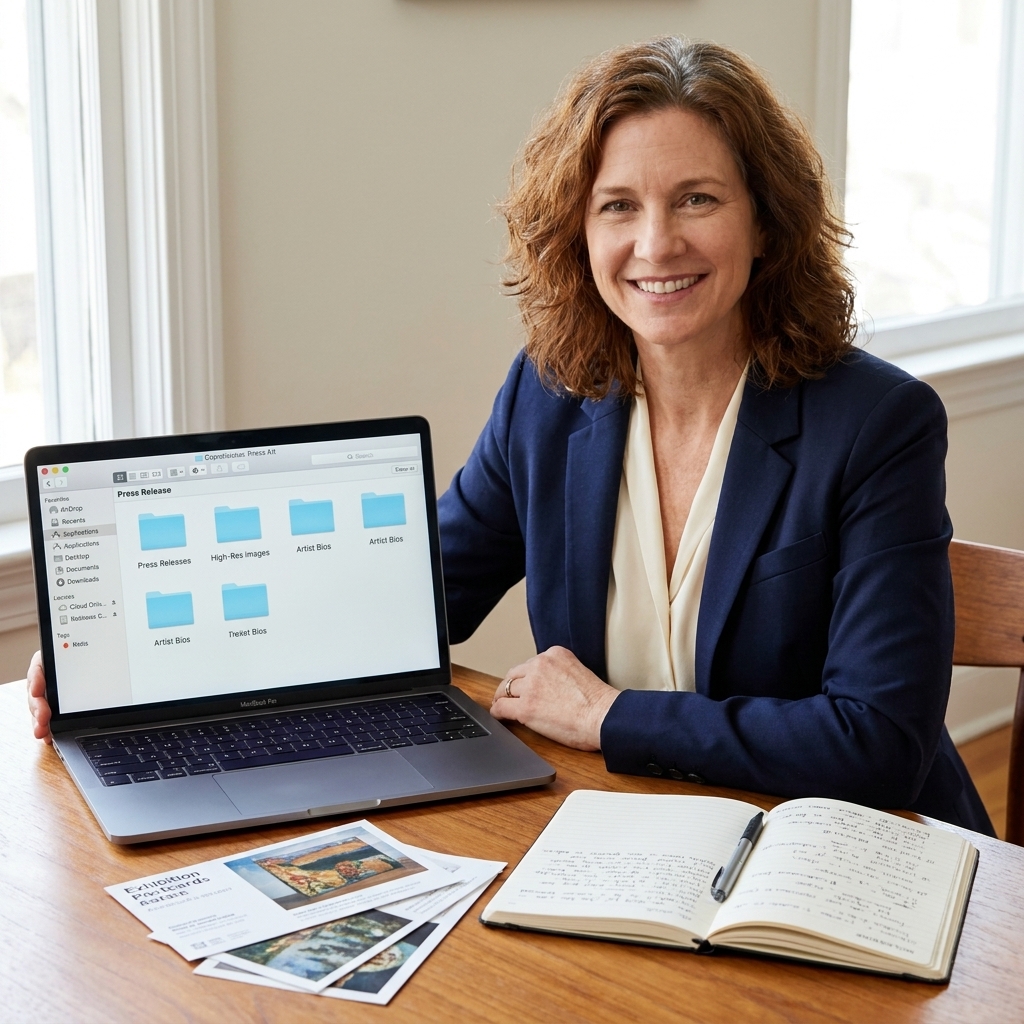
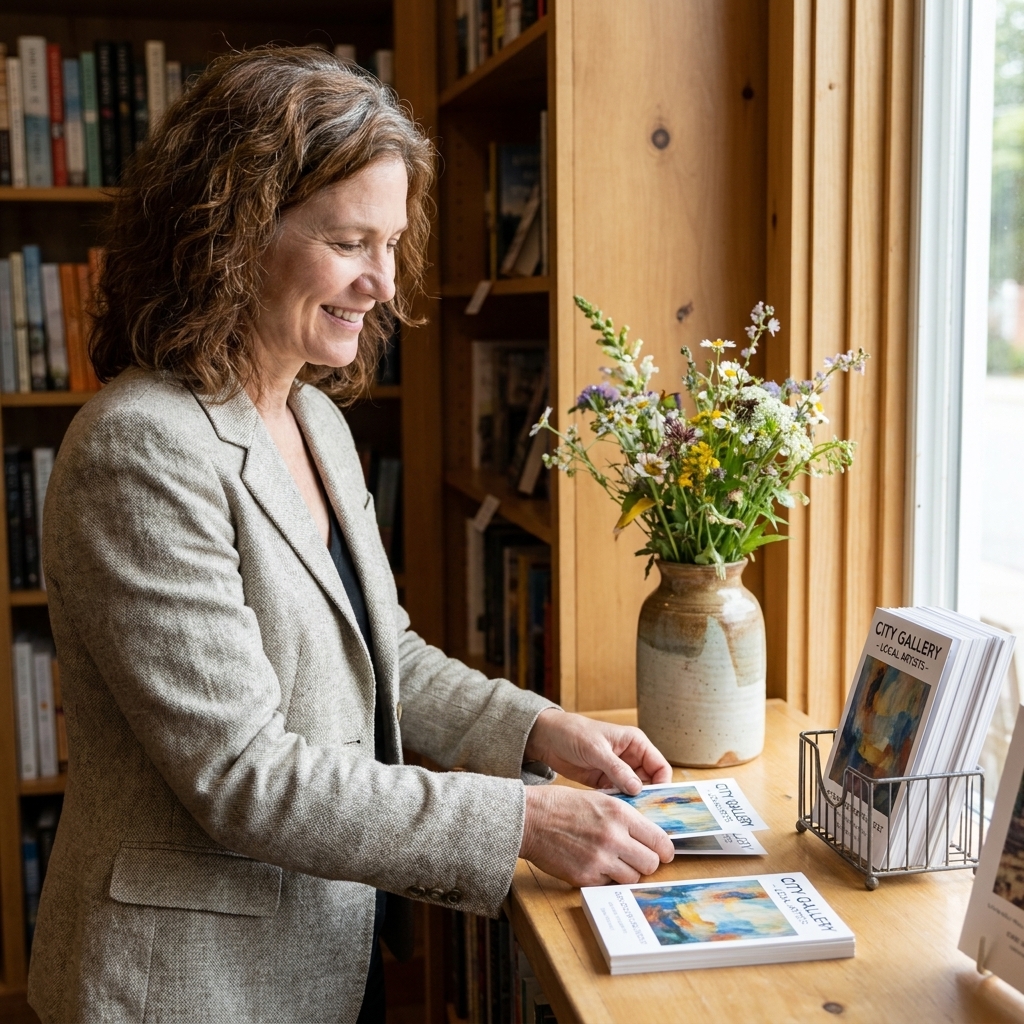
And yes, print matters. A small stack of beautifully designed postcards at cafes, bookstores, and design shops does a kind of slow magic that algorithms cannot replicate.
Accessibility belongs here too. Add alt text to posts when you can, and make sure your main event slide includes the basics: step-free access (or not), restroom access, and any fragrance or masking notes your space asks for.
3) Partner for credibility, not just reach
The fastest way to widen your audience is to borrow trust, not eyeballs. A partnership works when it makes sense for the work and genuinely serves both communities.
Smart partners for a first show
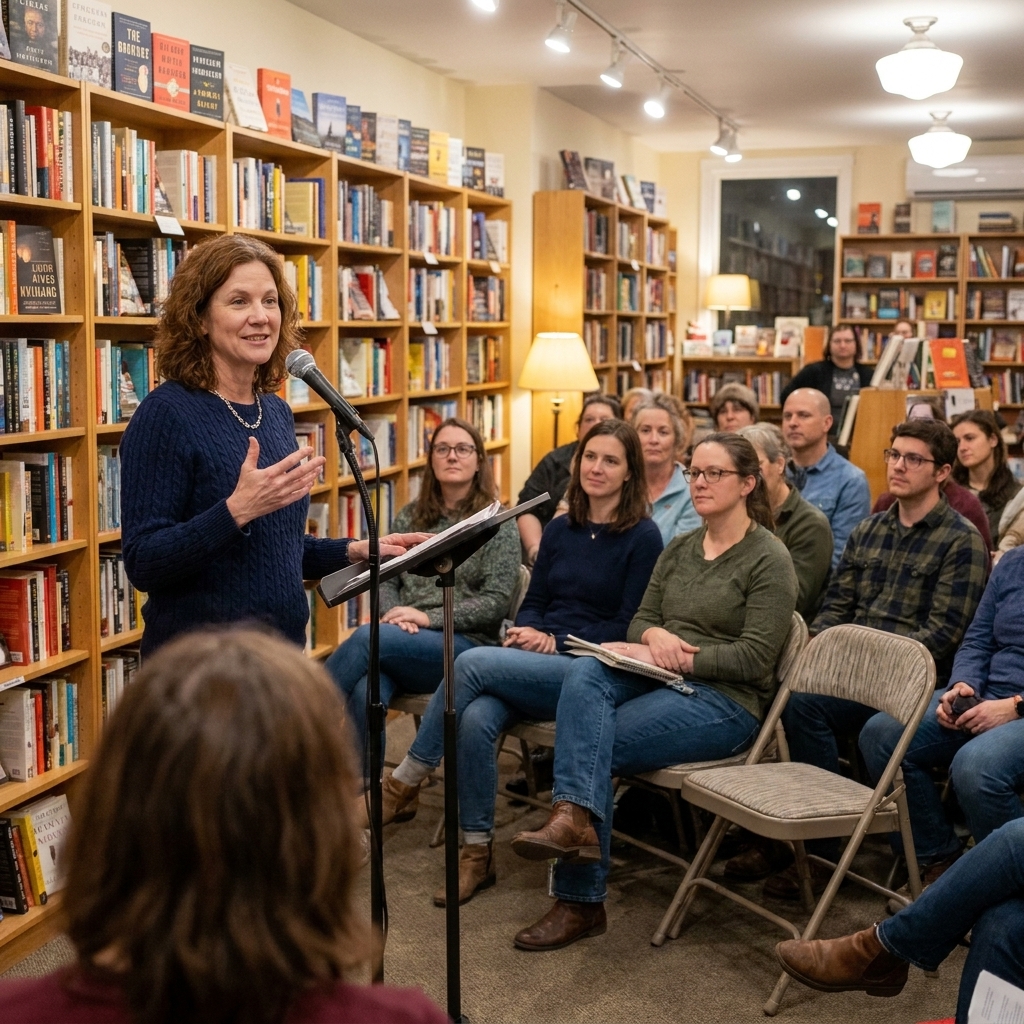
- Independent bookstores for a talk, signing, or reading connected to the themes.
- Specialty coffee shops for a mini preview wall or postcard distribution.
- Design studios or architecture firms if the work speaks to space, materials, or urban life.
- University departments for studio visits or a small critique event.
- Local makers for an opening-night collaboration, like ceramics cups for wine pours.
How to pitch a partner
Offer a clear, low-lift proposal:
- What you are asking for (a repost, postcards at checkout, hosting a 30-minute artist talk)
- What they get (their logo on the event slide, a private walkthrough for their team, a thank you mention in the press release, a small donation tie-in)
- Exactly when it happens
One note from the curator side of my brain: do not treat partners like bulletin boards. Show up for them too. Buy the coffee. Attend their events. Be a real neighbor.
4) Use email like a velvet rope, not a megaphone
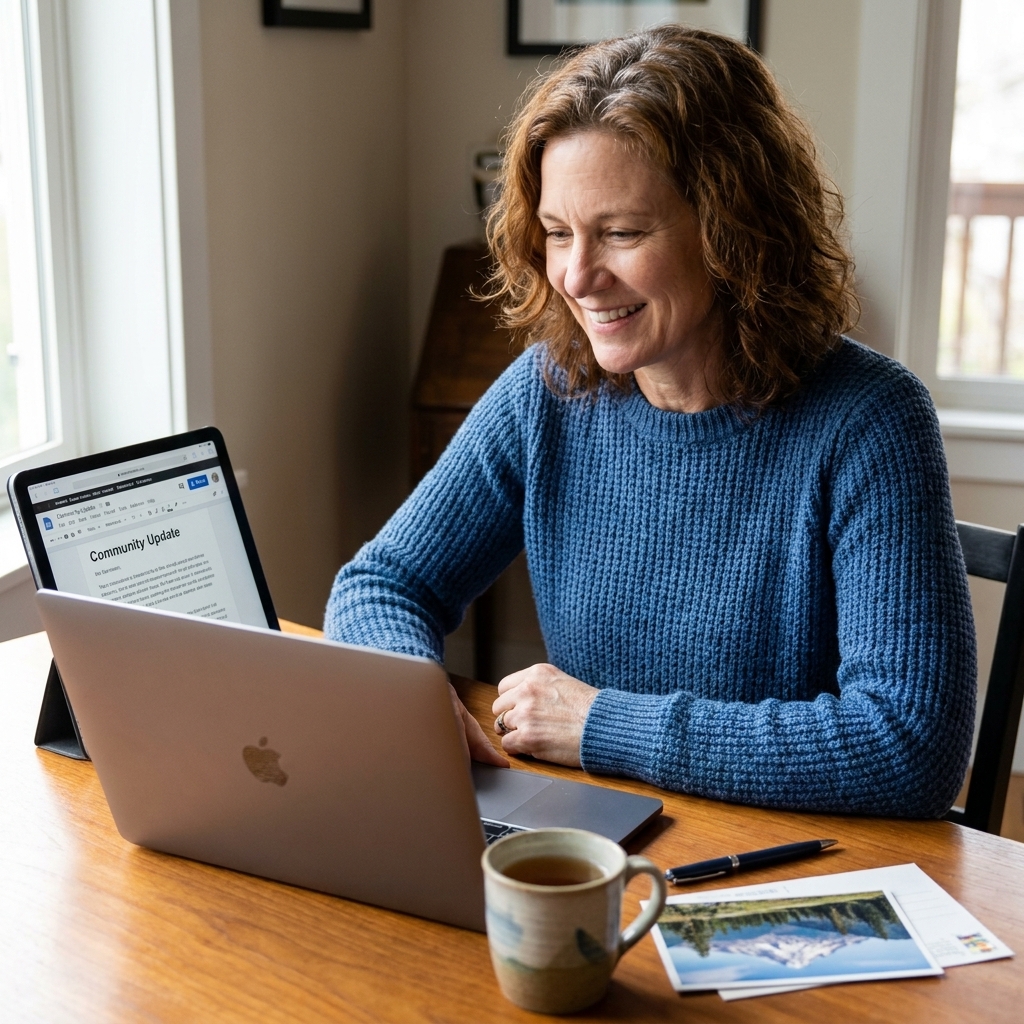
Social is where people discover you. Email is where people decide to come. If you do only one grown-up marketing action for your first show, make it a thoughtful email sequence.
Build a simple list fast
- Add a sign-up sheet at the gallery and at any preview events
- Use a QR code linking to your newsletter signup on postcards
- Ask friends and supporters to forward your announcement to one person who would genuinely care
Keep your list clean. Do not add people without permission. You are building a long relationship, not a single night spike.
A three-email sequence that works
- Two to three weeks out: announcement and story. Include one strong image and the dates.
- Three to five days out: the invitation. Include time, address, accessibility notes (step-free access, restroom info, captions or ASL if relevant), and what to expect.
- Two days after opening: thank you plus how to see the show if they missed it. Include hours, a few installation photos, and an option to book a walkthrough.
Micro-template: subject lines
- Announcement: “[Exhibition Title] opens [Date]”
- Reminder: “This week: [Exhibition Title] opening [Day]”
- Follow-up: “Thank you for coming, and how to visit the show”
Make it feel personal at scale
Write like you are inviting someone into a room you have carefully lit. A warm paragraph beats a loud flyer every time.
5) Treat opening night like a performance with an encore
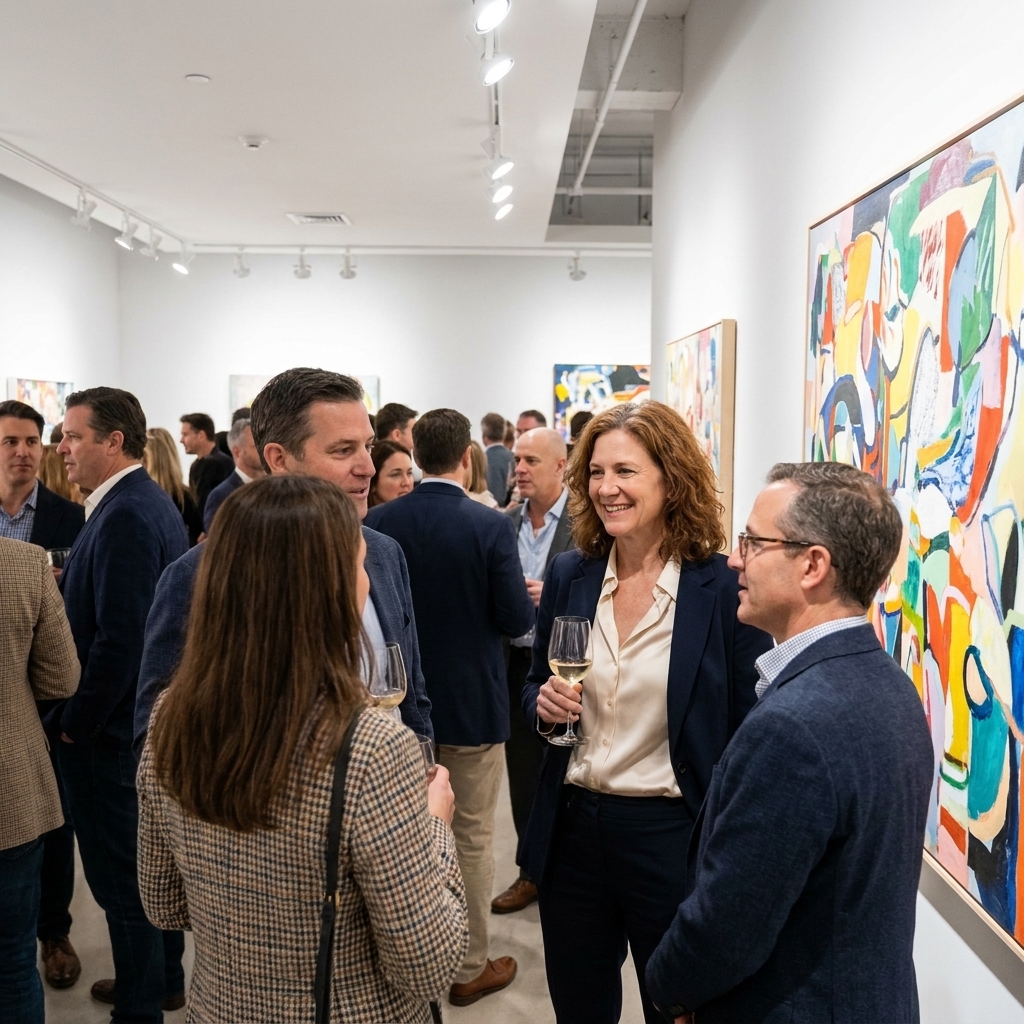
As a former theater person, I cannot help seeing openings as productions. There is pacing. There is mood. There is a front-of-house problem that can either welcome people or quietly push them out the door.
Design the flow
- Staff the entrance: one friendly person to greet, answer questions, and capture emails.
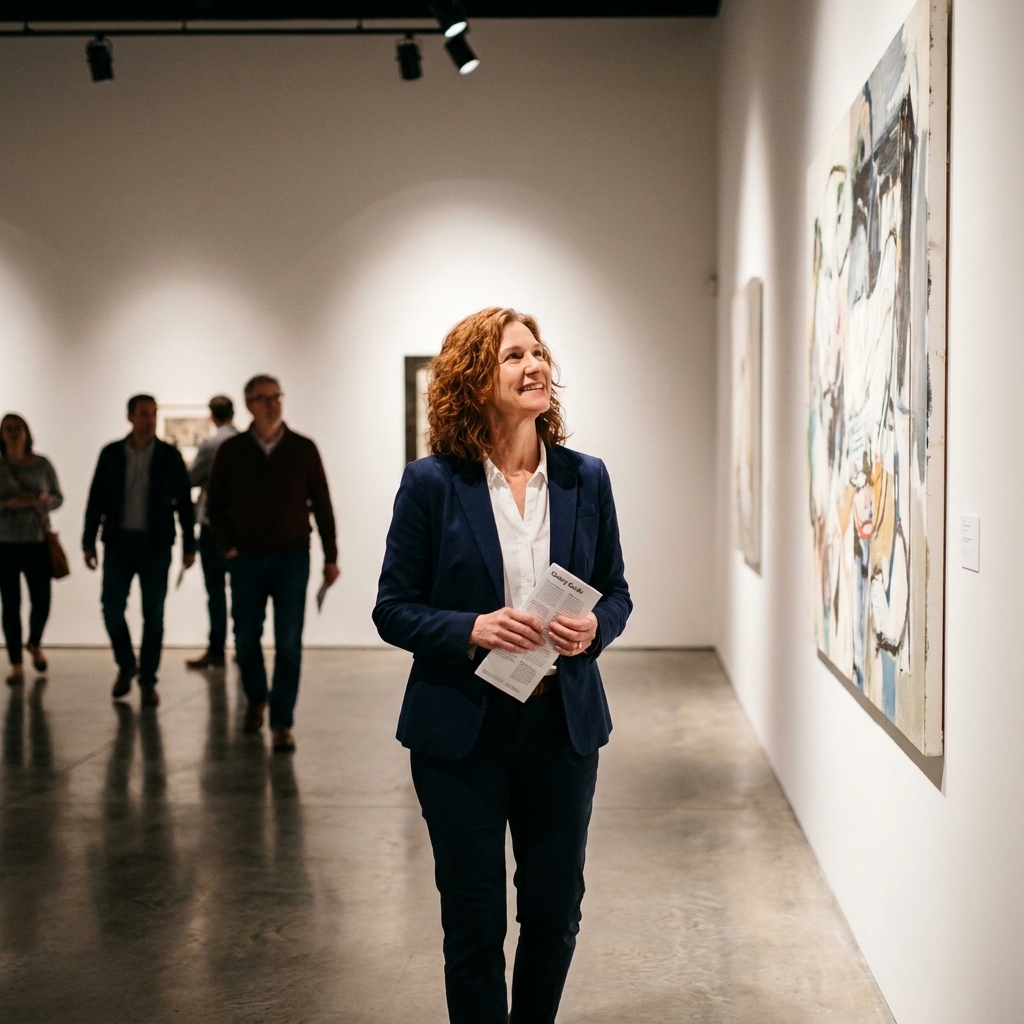
- Stage the sightlines: make sure the first work people see is a strong handshake.
- Sound matters: keep music low enough for conversation and enough quiet for looking.
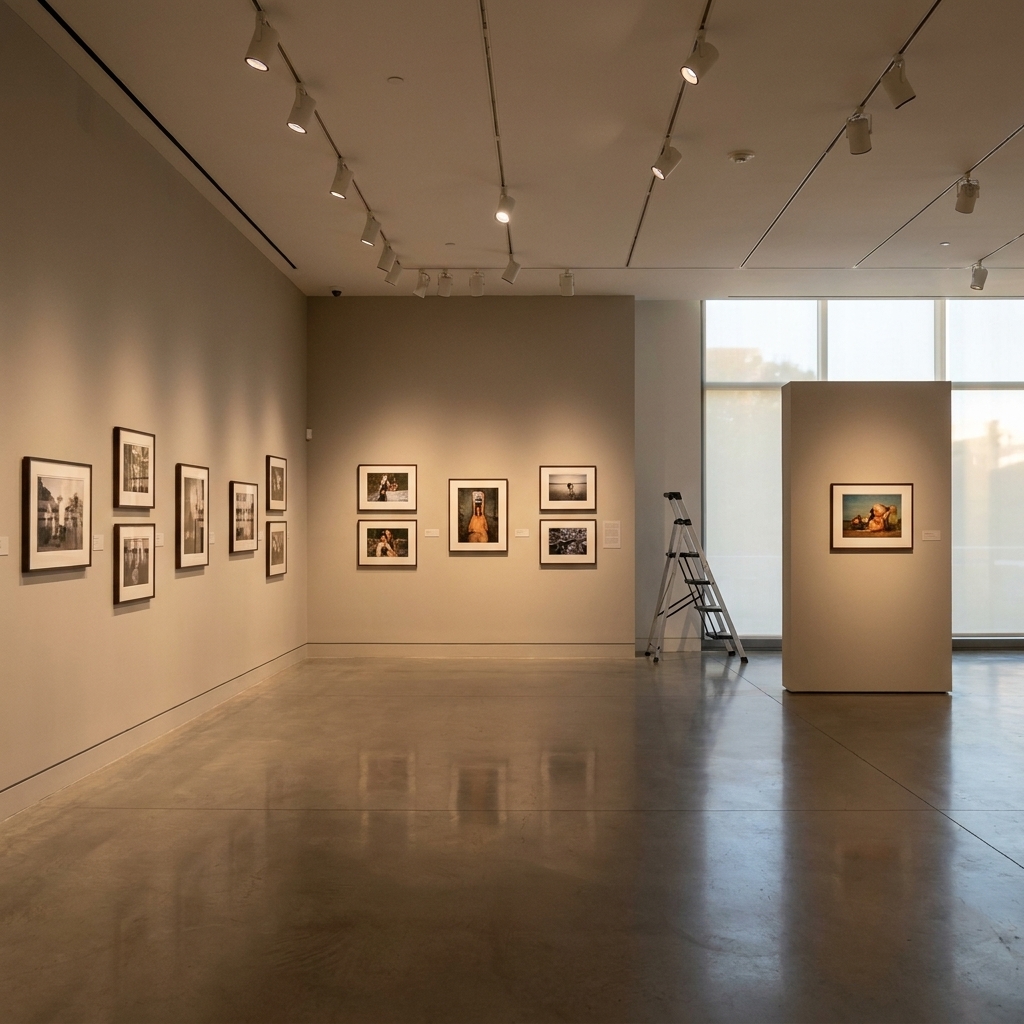
- Lighting is marketing: your photos will be shared more if the work is lit properly.
Capture content without turning it into a photoshoot
Ask one person to document the night. Tell them the priorities:
- Two wide shots that show the crowd and the space
- Three to five clean installation photos without people blocking the work
- One portrait of you in the gallery
- A few small moments: someone leaning in, a conversation near a piece, a detail close-up
This is your post-opening engine. It will power your follow-up emails, your grant applications, and your next pitch.
Plan the encore
Many sales and meaningful conversations do not happen in the loudest hour of opening night. Give your audience quieter ways to return:
- A Saturday afternoon walkthrough
- A short artist talk
- A closing event with a different tone, like a reading or listening session
Then follow up. If someone asked about a piece, email them the next day with the image, dimensions, price, and a simple offer to answer questions. Polite, professional, and human.
Sales basics
You do not need to turn your opening into a sales floor. You do need to make buying simple for the people who are ready.
- Label clearly: title, year, medium, dimensions. Consider a discreet number that matches a price list.
- Have a price list: printed, or a QR code to a clean PDF checklist. Clarity is kindness.
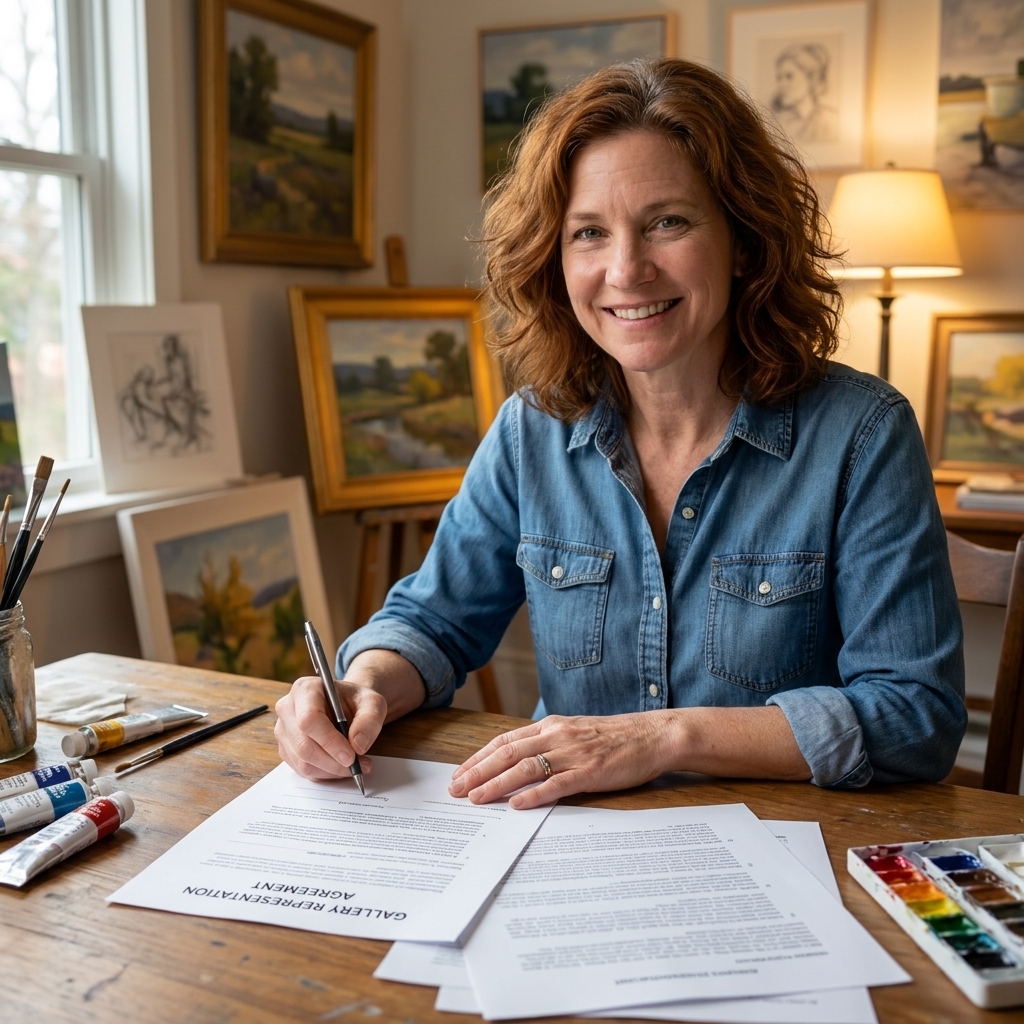
- Know your terms: edition sizes (if relevant), framing details, lead times, shipping, and the gallery split or commission structure.
- Plan payments: a point-of-sale option (Square), invoicing, or a secure payment link. Decide in advance whether you take deposits and how long you hold a work.
- Handle inquiries well: reply within 24 hours when you can, answer simply, and offer a viewing or a walkthrough.
Permissions and comfort
- Photos of attendees: if you plan to post crowd shots, consider a small sign at the door that photos may be taken, plus a simple opt-out option.
- Music: keep volume reasonable, and if you are planning anything more than background ambiance, confirm what your venue is allowed to play.
A quick checklist for the week before
- Press kit link checked, images labeled, captions included
- Google Maps pin and address verified
- Gallery hours posted everywhere
- Instagram Story slides prepared and scheduled
- Email reminder written and tested on mobile
- Sign-up sheet or QR code ready at the door
- Point-of-sale plan for purchases or deposits
- One person assigned to take photos and short video
FAQ
How early should I start promoting my first exhibition?
Ideally four to six weeks out for press and partnerships, and two to three weeks out for consistent social and email. If you only have two weeks, focus on email, community calendars, and direct invitations.
Do I need to pay for ads?
Not necessarily. For a first show, organic outreach plus partners and email can often outperform small, unfocused ad budgets, but results vary by city, audience, and genre. If you do run ads, keep them local, date-bound, and tied to a clear action like the opening reception.
What should be in a basic press kit?
A one-page press release, a short bio, 5 to 10 high-resolution images with captions, an exhibition statement in plain language, and practical details like dates, hours, address, and accessibility.
How do I attract collectors without feeling salesy?
Give clear information and make it easy to ask questions. Price lists available on request, a discreet QR code to a checklist, and a calm follow-up email are all professional. Collectors appreciate clarity and good manners.
Promotion is not begging for attention. It is building a doorway that people can actually find, and then holding it open long enough for them to step inside.